Every few years, someone declares that link building is dead.
Every time, the data proves them wrong.
In 2026, backlinks remain a confirmed top-3 Google ranking factor — sitting alongside content quality and RankBrain as the signals Google relies on most when deciding which pages deserve the top spots. A leaked Google API document in 2024 confirmed internal ranking signals including “linkCount,” “qualifiedLinks,” and “linkVelocity” — removing any remaining doubt about whether links still matter.
They do. And 94% of all published content receives zero external backlinks — meaning the websites that build links consistently are already competing against most of the internet with one hand tied behind everyone else’s back.
This guide explains exactly what link building is, why it works, which strategies produce real results in 2026, and how to avoid the mistakes that get websites penalized instead of ranked.
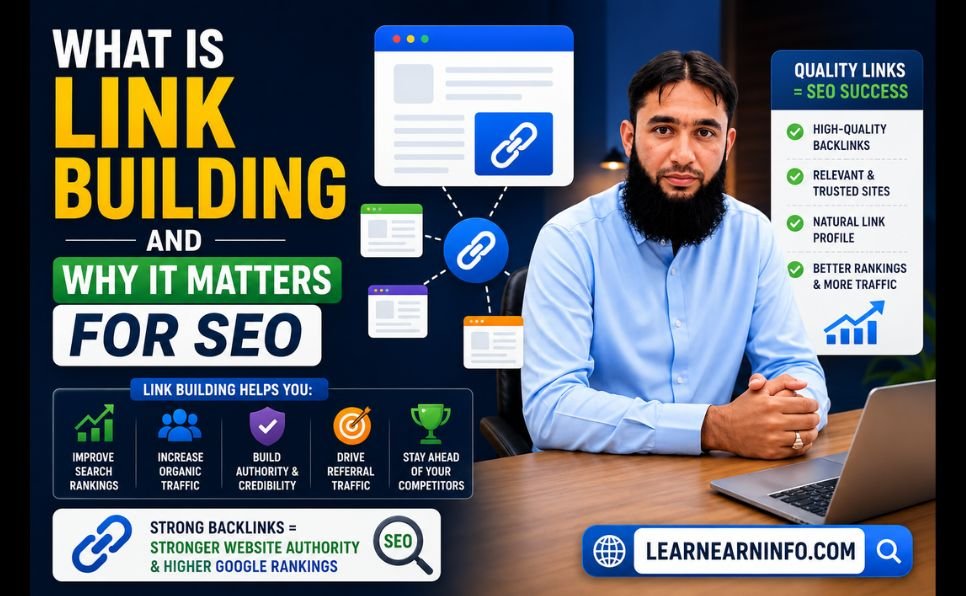
What Is Link Building?
Link building is the process of acquiring hyperlinks from other websites to your own. Every time another website links to one of your pages, that link — called a backlink — signals to Google that your content is credible, relevant, and worth recommending to searchers.
Google’s algorithm treats backlinks similarly to how we treat recommendations in real life. If one person recommends a restaurant, you might try it. If ten respected food critics recommend the same restaurant, you are going immediately. The more credible the source of the recommendation, the more weight it carries.
In SEO terms: a link from a high-authority, relevant website tells Google that your page is a trusted resource in your field. Accumulate enough of these signals from enough credible sources, and Google ranks your pages higher — sometimes dramatically higher — than competitors publishing similar content without that backing.
This is why learning how to rank on Google’s first page always comes back to link building. You can write the best article on your topic, optimize every on-page element perfectly, and still rank below weaker content if the competing pages have stronger backlink profiles. Authority matters — and links are how you build it.
Why Link Building Still Works in 2026
The SEO landscape has changed significantly over the past decade. AI-generated content, voice search, and Google’s Search Generative Experience have all shifted how information is surfaced. Yet link building has maintained its central role in SEO for one fundamental reason: it is very difficult to fake at scale.
Any website can publish content. Any developer can optimize title tags and meta descriptions. But earning genuine backlinks from real, trusted websites requires either creating something others actually want to reference — or putting in the relationship and outreach work to secure editorial placements. Both take real effort, which is exactly why Google continues to trust the signal.
The 2026 data makes the impact concrete:
- The #1 result on Google has 3.8x more backlinks than positions 2 to 10
- Pages with at least one backlink are 77% more likely to appear in Google’s top 10
- Long-form content of 3,000+ words earns 3.5x more backlinks than shorter posts
- 73.2% of SEO experts believe backlinks now influence visibility in AI Search Overviews as well
- Digital PR campaigns that earn editorial links report an average ROI of 312%
The competitive gap created by a strong backlink profile compounds over time. As your domain authority grows, it becomes progressively easier to rank new content — because every page you publish benefits from the authority your entire domain has accumulated.
Types of Backlinks — Which Ones Actually Help
Not all backlinks are equal. Understanding the difference between link types helps you invest your effort where it actually moves rankings.
Dofollow Links
A dofollow link passes “link equity” — the authority signal that influences rankings — from the linking website to yours. These are the links that directly improve your SEO. When someone links to your page without adding any special attribute to the HTML, it is a dofollow link by default.
Dofollow links from high-authority, relevant websites are the primary goal of any serious link building campaign.
Nofollow Links
A nofollow link includes a rel="nofollow" attribute in the HTML, instructing Google not to pass ranking authority through the link. Wikipedia, most social media platforms, and many news sites add nofollow attributes to outbound links by default.
Nofollow links do not directly improve rankings — but they are not worthless. They drive real referral traffic, contribute to a natural-looking link profile, and build brand visibility. A nofollow link from a major publication can bring thousands of visitors to your site even without passing direct SEO value.
Sponsored and UGC Links
Google introduced rel="sponsored" for paid links and rel="ugc" for user-generated content links (like blog comments and forum posts). These tell Google that the link was either paid for or created by a third party — and neither passes the same authority as an organic editorial link.
Editorial Links
The most valuable type. An editorial link is one a website places voluntarily because your content genuinely deserves to be cited — not because you paid for it or because you were given guest posting space. Original research, data studies, and genuinely exceptional guides attract editorial links naturally. These are the links Google values most and rewards most generously.
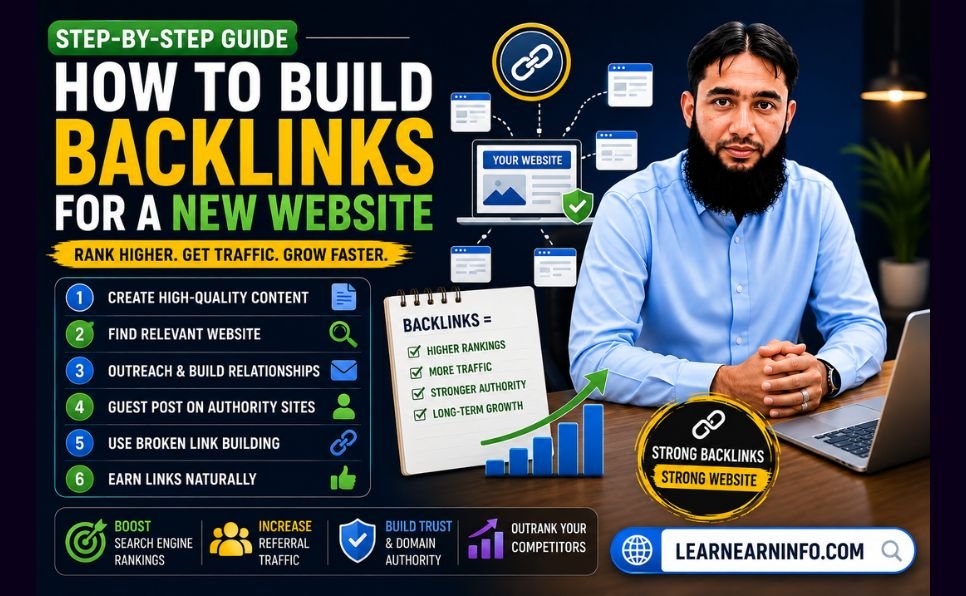
The 7 Most Effective Link Building Strategies in 2026
The strategies that dominated five years ago — mass directory submissions, low-quality guest posting networks, comment spam — are either ineffective or actively harmful today. Here are the methods that consistently deliver results in 2026.
Strategy 1 — Guest Posting on Relevant, High-Authority Sites
Guest posting remains the most controllable and scalable white-hat link building strategy available. You write an original article for another website in your niche, that website publishes it, and you receive a contextual backlink within the content.
The critical distinction in 2026 is quality over volume. A single placement on a genuine, high-traffic website with real editorial standards is worth more than twenty placements on sites that will publish anything from anyone. Read our complete guide on what guest posting is and how to write a guest post for the full strategy — from finding the right sites to crafting pitches that actually get accepted.
For websites that want the benefits of guest posting without managing the outreach process themselves, our guest posting services handle everything — from identifying niche-relevant, high-DA publishers to writing the content and securing the placement.
Strategy 2 — Digital PR and Original Research
Digital PR has become the single highest-ROI link building tactic for established websites. The concept is straightforward: create something genuinely newsworthy — original industry research, a data study, a survey with surprising findings — and pitch it to journalists and editors who cover your space.
When a major publication covers your research and links to your original data, you earn a high-authority editorial link that no amount of outreach alone could secure. These links carry enormous weight precisely because they cannot be manufactured — they have to be earned.
“What is” and “Why is” style posts earn 25.8% more backlinks than how-to guides or videos, and original research attracts 200% more links on average than standard blog posts. Investing in even one or two original data pieces per year can generate links consistently for months after publication.
Strategy 3 — Broken Link Building
Every website accumulates broken links over time — links pointing to pages that no longer exist, returning a 404 error. When a reader clicks a broken link, they get a dead end instead of useful content. Website owners and editors want to fix these.
Broken link building takes advantage of this:
- Use the Ahrefs backlink checker to find pages in your niche with broken outbound links
- Identify which of those broken links pointed to content similar to what you have already published
- Reach out to the site owner, let them know about the broken link, and suggest your existing content as a replacement
You are genuinely helping them improve their site while earning a relevant backlink. Success rates of 15 to 25% are achievable when the replacement content is a strong match for what the original link was pointing to.
Strategy 4 — Resource Page Link Building
Many websites maintain “resource pages” — curated lists of the best tools, guides, and references in a given topic area. A link from a resource page is typically highly relevant, often on a high-authority domain, and surprisingly straightforward to earn.
Search for resource pages in your niche using Google searches like:
- “your niche” + “useful resources”
- “your niche” + “recommended reading”
- “your niche” + “best tools”
When you find pages that include resources similar to what you offer, reach out to the site owner, introduce your content, and explain why it would be a valuable addition to their list. A polite, well-targeted pitch to a relevant resource page earns links at a higher rate than most cold outreach.
Strategy 5 — Competitor Backlink Replication
If a competitor is ranking above you for a target keyword, their backlink profile is one of the primary reasons. Instead of guessing where to build links, analyze exactly where their links are coming from and pursue the same sources.
Use Ahrefs or Semrush to run a backlink analysis on your top competitors. Identify websites linking to multiple competitors in your niche but not yet to you — these are warm prospects who have already shown interest in your topic area. Outreach to these sites with relevant content typically achieves success rates of 15 to 25% — roughly double cold outreach to completely new targets.
Strategy 6 — Linkable Asset Creation
A linkable asset is any piece of content so useful, unique, or comprehensive that other websites naturally reference and link to it without you having to ask.
The types of content that attract the most natural links in 2026:
- Original data and research: Industry surveys, market analyses, original studies
- Free tools and calculators: Interactive tools that solve real problems get linked consistently
- Comprehensive definitive guides: The most thorough treatment of an important topic in your niche
- Infographics and data visualizations: Visual content that communicates complex information clearly
The investment in creating one exceptional linkable asset often returns more backlinks over its lifetime than dozens of outreach campaigns. This is also the approach most aligned with EEAT signals — it builds authority through genuine expertise rather than outreach volume.
Strategy 7 — Unlinked Brand Mention Reclamation
As your brand grows, other websites will mention your company, your content, or your products without linking to you. These unlinked mentions are missed opportunities — the hardest part (getting mentioned) has already happened.
Use tools like Ahrefs Content Explorer or Google Alerts to find mentions of your brand name that do not include a link. Reach out to the author or website owner, thank them for the mention, and politely ask whether they would be willing to add a link. Because they already thought your brand worth mentioning, conversion rates on these requests are significantly higher than cold outreach.
What Makes a Backlink High Quality in 2026
Not all backlinks help your rankings equally. Knowing how to evaluate link quality helps you prioritize where to invest your link building effort.
Relevance Comes First
In 2026, topical relevance of the linking domain increasingly outweighs raw domain authority as a quality signal. A link from a mid-authority website directly in your niche is worth more than a link from a high-authority website with no topical connection to your content. Google has become increasingly sophisticated at understanding why a link exists — and context matters.
Domain Authority and Real Traffic
Check potential link sources using the Ahrefs backlink checker for Domain Rating. Aim for sites with DR 30 or above, with DR 50+ being excellent targets. But also verify real traffic — many websites inflate their metrics artificially while having no actual readership. A site with DR 60 and 500 monthly visitors sends far less value than a DR 40 site with 50,000 monthly visitors.
Editorial Standards
A website that publishes content from anyone who asks offers little signal value — because the link requires no merit to earn. Sites with genuine editorial review, consistent content quality, and visible author standards produce links that Google recognizes as meaningful endorsements.
Links embedded within the body of an article — surrounded by relevant text — carry significantly more weight than links placed in sidebars, footers, or author bios. Google evaluates the context around a link to determine its relevance and intent. An in-content link in a paragraph discussing your specific topic sends a much stronger signal than a footer link that appears on every page of a website.
Anchor Text Diversity
Anchor text is the visible, clickable text of a hyperlink. Google evaluates anchor text as a relevance signal — but a backlink profile where every link uses the exact same keyword-rich anchor text looks manipulative rather than natural.
Aim for a diverse anchor text profile across all your backlinks. A natural profile includes: your brand name, the URL itself, generic phrases like “click here” or “this article,” descriptive phrases related to the linked content, and occasionally your target keywords. The diversity itself is part of what signals authenticity.
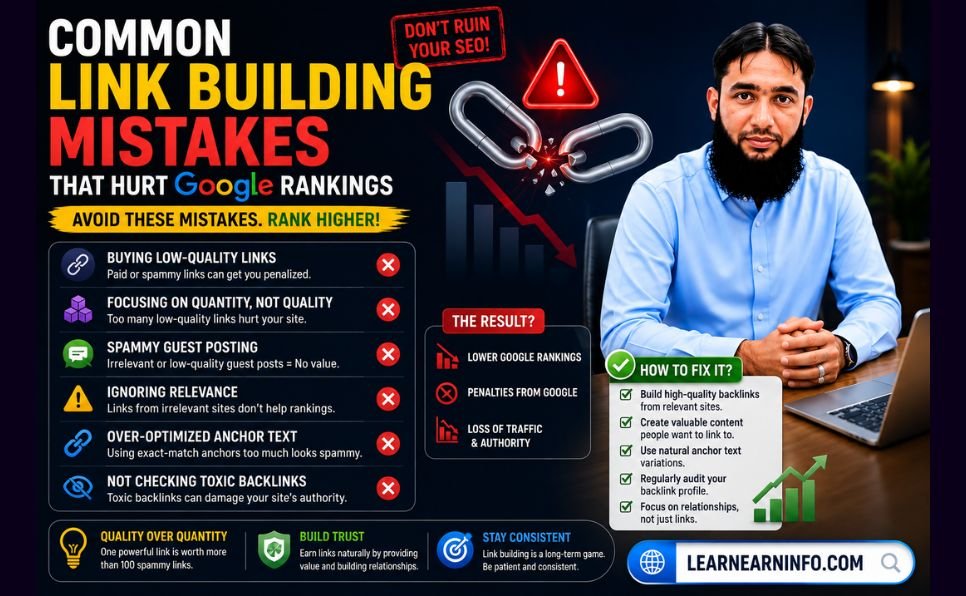
Link Building Mistakes That Trigger Google Penalties
Understanding what not to do is as important as knowing what works. These mistakes range from ineffective to actively dangerous for your rankings.
Buying Links From Link Farms
Hundreds of services sell backlinks in bulk — fifty links for fifty dollars, five hundred links for two hundred dollars. Almost all of these links come from websites that exist purely to sell links, with no real audience, no editorial standards, and often a history of selling links to any buyer.
Google’s algorithm is sophisticated enough to identify unnatural link patterns. A backlink profile filled with links from low-quality, unrelated domains triggers algorithmic filters or manual penalties that can suppress your rankings for months. One high-quality link is worth more than a hundred of these.
Over-Optimized Anchor Text
If you have one hundred backlinks and eighty of them use the exact keyword phrase “best SEO services” as anchor text, that pattern looks manufactured. Google expects a natural backlink profile to contain varied anchor text. When it does not, the unnatural distribution itself becomes a penalty signal.
Mass Guest Posting on Low-Quality Networks
Google’s John Mueller has confirmed that mass guest posting on networks of sites that exist primarily as link vehicles is actively devalued. Posting guest content on real, editorially rigorous websites is valuable. Posting on networks where the same handful of domains publish hundreds of guest posts per month, for anyone who pays, is not.
Ignoring Toxic Backlinks
Sometimes websites acquire harmful backlinks without seeking them — from scrapers, spammy directories, or sites that were reputable when they linked to you but have since been penalized. These toxic links can drag down your rankings even when you did nothing to earn them.
Audit your backlink profile every three to six months using Google Search Console. When you identify links from genuinely toxic sources, request removal from the linking site — and use Google’s Disavow Tool for links you cannot get removed manually.
How Long Does Link Building Take to Show Results?
This is the question most website owners want answered — and the honest answer requires some nuance.
Most sites see initial ranking improvements within three to six months of a sustained link building campaign. However, the timeline depends significantly on:
Your starting domain authority: A new website with no existing backlinks needs more time to accumulate meaningful authority than an established site building on an existing foundation.
The competitiveness of your target keywords: Low-competition keywords in niche markets can respond to link building within weeks. Highly competitive terms may take twelve months or more of consistent effort before first-page rankings are achieved.
The quality of links being built: A few high-DR, niche-relevant placements will move rankings faster than a larger number of weaker links.
Consistency: Link building is not a campaign you run once and stop. Websites that build links consistently over twelve to twenty-four months compound their advantage — each new link builds on a stronger foundation than the one before.
The competitive math is straightforward. If 94% of published pages never earn a single external backlink, any consistent link building effort — even modest in scale — puts your website in a category above most of the internet. The barrier to being competitive is lower than most people assume.
Building a Link Building Strategy That Actually Works
Rather than treating link building as a series of one-off tactics, the most effective approach combines several complementary methods into a consistent system.
A realistic starting framework:
Month 1 to 2 — Foundation Audit your current backlink profile using Google Search Console and Ahrefs. Identify any toxic links to disavow. Research competitors to understand which sites link to them and which link building strategies are working in your niche. Use our free SEO checklist to assess your full SEO health alongside your backlink profile.
Month 2 to 4 — First Placements Begin guest posting outreach targeting DA/DR 30 to 45 websites in your niche. Aim for two to four quality placements per month. Simultaneously identify broken link opportunities and resource pages worth pursuing. Publish at least one comprehensive, linkable asset — a definitive guide, original data, or a free tool.
Month 4 to 6 — Scale and Diversify With initial placements live, use competitor backlink analysis to identify new opportunities. Increase outreach volume while maintaining quality standards. Begin tracking ranking improvements in Google Search Console — most sites see measurable movement during this period.
Month 6 and Beyond — Compound Target higher-authority sites (DR 50+). Pitch your original research to relevant publications for digital PR coverage. Continue building on momentum — each ranking improvement makes your content more likely to attract natural links, which in turn improves rankings further.
The compounding effect of sustained link building is the reason websites that commit to it for twelve to twenty-four months become extremely difficult for competitors to displace. The authority gap that builds over that time is not easily closed.
When to Use Professional Link Building Services
Link building done well is time-intensive. Finding target sites, verifying their quality, crafting personalized pitches, writing original guest content, following up, and tracking results across multiple simultaneous campaigns — for a single website owner managing their own business, this can easily consume fifteen to twenty hours per week.
For businesses where that time is more valuably spent elsewhere, professional link building services offer a clear return on investment — provided you choose a service that builds genuine, editorial links rather than the bulk, low-quality placements that harm rankings.
Our guest posting services place your website on real, high-DA publishers in your niche — DA 40 to DA 70+ — with full content creation and outreach handled for you. Combined with our professional SEO services for complete strategy and execution, and content writing services for the linkable assets that earn links passively, it becomes a complete, integrated system for building the authority your rankings require.
For a complete picture of where your SEO stands right now — including your current backlink profile, technical health, and on-page optimization — run through our free SEO checklist.
Final Thoughts
Link building in 2026 is not complicated. It is not mysterious. And despite what you may read periodically, it is absolutely not dead.
It is simply the process of earning the trust and endorsements — in the form of backlinks — that tell Google your website deserves to rank above everyone else competing for the same searches.
The websites that do this consistently, with quality as the non-negotiable standard, build competitive advantages that compound over years. The websites that ignore it, or chase shortcuts that trigger penalties, fall further behind with every passing month.
The fundamentals have not changed: create content worth linking to, build relationships with relevant publishers, earn genuine editorial placements, and repeat the process with patience and consistency.
Everything else in SEO supports this. SEO content writing gives you something worth linking to. EEAT signals build the credibility that makes those links meaningful. And the boost to your SEO rankings that follows is the natural result of doing all of it consistently.
Start with one link. Build from there. The compounding never stops.
What is your biggest challenge with link building right now? Drop it in the comments — we answer every question.
Related Articles: