Link Building

What Is Link Building and Why It Matters for SEO is ki feature image bna do

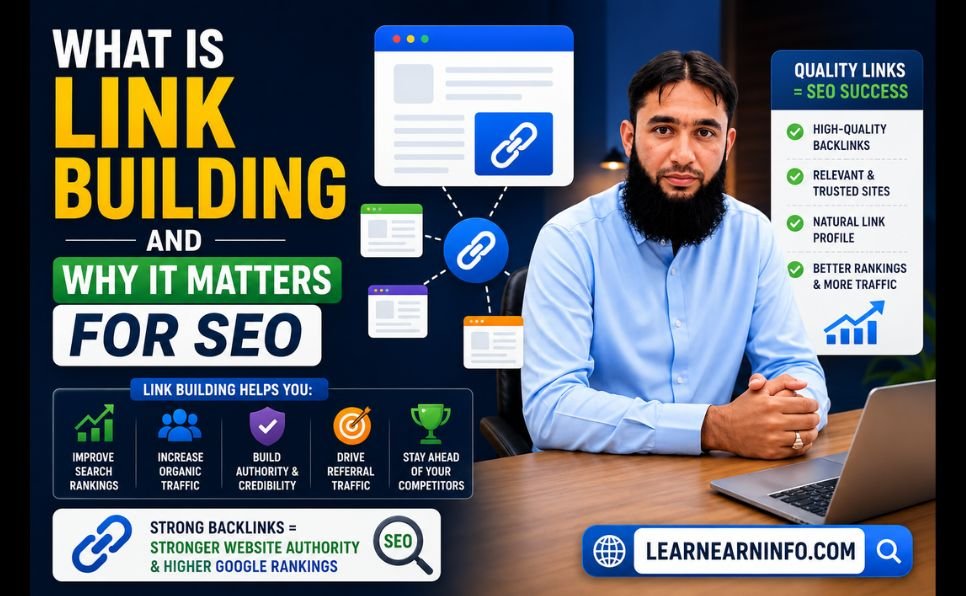
What Is Link Building and Why It Matters for SEO

Every few years, someone declares that link building is dead.

Every time, the data proves them wrong.

In 2026, backlinks remain a confirmed top-3 Google ranking factor — sitting alongside content quality and RankBrain as the signals Google relies on most when deciding which pages deserve the top spots. A leaked Google API document in 2024 confirmed internal ranking signals including “linkCount,” “qualifiedLinks,” and “linkVelocity” — removing any remaining doubt about whether links still matter.

They do. And 94% of all published content receives zero external backlinks — meaning the websites that build links consistently are already competing against most of the internet with one hand tied behind everyone else’s back.

This guide explains exactly what link building is, why it works, which strategies produce real results in 2026, and how to avoid the mistakes that get websites penalized instead of ranked.


What Is Link Building?

Link building is the process of acquiring hyperlinks from other websites to your own. Every time another website links to one of your pages, that link — called a backlink — signals to Google that your content is credible, relevant, and worth recommending to searchers.

Google’s algorithm treats backlinks similarly to how we treat recommendations in real life. If one person recommends a restaurant, you might try it. If ten respected food critics recommend the same restaurant, you are going immediately. The more credible the source of the recommendation, the more weight it carries.

In SEO terms: a link from a high-authority, relevant website tells Google that your page is a trusted resource in your field. Accumulate enough of these signals from enough credible sources, and Google ranks your pages higher — sometimes dramatically higher — than competitors publishing similar content without that backing.

This is why learning how to rank on Google’s first page always comes back to link building. You can write the best article on your topic, optimize every on-page element perfectly, and still rank below weaker content if the competing pages have stronger backlink profiles. Authority matters — and links are how you build it.

how to link building


Why Link Building Still Works in 2026

The SEO landscape has changed significantly over the past decade. AI-generated content, voice search, and Google’s Search Generative Experience have all shifted how information is surfaced. Yet link building has maintained its central role in SEO for one fundamental reason: it is very difficult to fake at scale.

Any website can publish content. Any developer can optimize title tags and meta descriptions. But earning genuine backlinks from real, trusted websites requires either creating something others actually want to reference — or putting in the relationship and outreach work to secure editorial placements. Both take real effort, which is exactly why Google continues to trust the signal.

The 2026 data makes the impact concrete:

  • The #1 result on Google has 3.8x more backlinks than positions 2 to 10
  • Pages with at least one backlink are 77% more likely to appear in Google’s top 10
  • Long-form content of 3,000+ words earns 3.5x more backlinks than shorter posts
  • 73.2% of SEO experts believe backlinks now influence visibility in AI Search Overviews as well
  • Digital PR campaigns that earn editorial links report an average ROI of 312%

The competitive gap created by a strong backlink profile compounds over time. As your domain authority grows, it becomes progressively easier to rank new content — because every page you publish benefits from the authority your entire domain has accumulated.


Types of Backlinks — Which Ones Actually Help

Not all backlinks are equal. Understanding the difference between link types helps you invest your effort where it actually moves rankings.

Dofollow Links

A dofollow link passes “link equity” — the authority signal that influences rankings — from the linking website to yours. These are the links that directly improve your SEO. When someone links to your page without adding any special attribute to the HTML, it is a dofollow link by default.

Dofollow links from high-authority, relevant websites are the primary goal of any serious link building campaign.

Nofollow Links

A nofollow link includes a rel="nofollow" attribute in the HTML, instructing Google not to pass ranking authority through the link. Wikipedia, most social media platforms, and many news sites add nofollow attributes to outbound links by default.

Nofollow links do not directly improve rankings — but they are not worthless. They drive real referral traffic, contribute to a natural-looking link profile, and build brand visibility. A nofollow link from a major publication can bring thousands of visitors to your site even without passing direct SEO value.

Sponsored and UGC Links

Google introduced rel="sponsored" for paid links and rel="ugc" for user-generated content links (like blog comments and forum posts). These tell Google that the link was either paid for or created by a third party — and neither passes the same authority as an organic editorial link.

Editorial Links

The most valuable type. An editorial link is one a website places voluntarily because your content genuinely deserves to be cited — not because you paid for it or because you were given guest posting space. Original research, data studies, and genuinely exceptional guides attract editorial links naturally. These are the links Google values most and rewards most generously.


The 7 Most Effective Link Building Strategies in 2026

The strategies that dominated five years ago — mass directory submissions, low-quality guest posting networks, comment spam — are either ineffective or actively harmful today. Here are the methods that consistently deliver results in 2026.

Strategy 1 — Guest Posting on Relevant, High-Authority Sites

Guest posting remains the most controllable and scalable white-hat link building strategy available. You write an original article for another website in your niche, that website publishes it, and you receive a contextual backlink within the content.

The critical distinction in 2026 is quality over volume. A single placement on a genuine, high-traffic website with real editorial standards is worth more than twenty placements on sites that will publish anything from anyone. Read our complete guide on what guest posting is and how to write a guest post for the full strategy — from finding the right sites to crafting pitches that actually get accepted.

For websites that want the benefits of guest posting without managing the outreach process themselves, our guest posting services handle everything — from identifying niche-relevant, high-DA publishers to writing the content and securing the placement.

Strategy 2 — Digital PR and Original Research

Digital PR has become the single highest-ROI link building tactic for established websites. The concept is straightforward: create something genuinely newsworthy — original industry research, a data study, a survey with surprising findings — and pitch it to journalists and editors who cover your space.

When a major publication covers your research and links to your original data, you earn a high-authority editorial link that no amount of outreach alone could secure. These links carry enormous weight precisely because they cannot be manufactured — they have to be earned.

“What is” and “Why is” style posts earn 25.8% more backlinks than how-to guides or videos, and original research attracts 200% more links on average than standard blog posts. Investing in even one or two original data pieces per year can generate links consistently for months after publication.

Strategy 3 — Broken Link Building

Every website accumulates broken links over time — links pointing to pages that no longer exist, returning a 404 error. When a reader clicks a broken link, they get a dead end instead of useful content. Website owners and editors want to fix these.

Broken link building takes advantage of this:

  1. Use the Ahrefs backlink checker to find pages in your niche with broken outbound links
  2. Identify which of those broken links pointed to content similar to what you have already published
  3. Reach out to the site owner, let them know about the broken link, and suggest your existing content as a replacement

You are genuinely helping them improve their site while earning a relevant backlink. Success rates of 15 to 25% are achievable when the replacement content is a strong match for what the original link was pointing to.

Strategy 4 — Resource Page Link Building

Many websites maintain “resource pages” — curated lists of the best tools, guides, and references in a given topic area. A link from a resource page is typically highly relevant, often on a high-authority domain, and surprisingly straightforward to earn.

Search for resource pages in your niche using Google searches like:

  • “your niche” + “useful resources”
  • “your niche” + “recommended reading”
  • “your niche” + “best tools”

When you find pages that include resources similar to what you offer, reach out to the site owner, introduce your content, and explain why it would be a valuable addition to their list. A polite, well-targeted pitch to a relevant resource page earns links at a higher rate than most cold outreach.

Strategy 5 — Competitor Backlink Replication

If a competitor is ranking above you for a target keyword, their backlink profile is one of the primary reasons. Instead of guessing where to build links, analyze exactly where their links are coming from and pursue the same sources.

Use Ahrefs or Semrush to run a backlink analysis on your top competitors. Identify websites linking to multiple competitors in your niche but not yet to you — these are warm prospects who have already shown interest in your topic area. Outreach to these sites with relevant content typically achieves success rates of 15 to 25% — roughly double cold outreach to completely new targets.

Strategy 6 — Linkable Asset Creation

A linkable asset is any piece of content so useful, unique, or comprehensive that other websites naturally reference and link to it without you having to ask.

The types of content that attract the most natural links in 2026:

  • Original data and research: Industry surveys, market analyses, original studies
  • Free tools and calculators: Interactive tools that solve real problems get linked consistently
  • Comprehensive definitive guides: The most thorough treatment of an important topic in your niche
  • Infographics and data visualizations: Visual content that communicates complex information clearly

The investment in creating one exceptional linkable asset often returns more backlinks over its lifetime than dozens of outreach campaigns. This is also the approach most aligned with EEAT signals — it builds authority through genuine expertise rather than outreach volume.

Strategy 7 — Unlinked Brand Mention Reclamation

As your brand grows, other websites will mention your company, your content, or your products without linking to you. These unlinked mentions are missed opportunities — the hardest part (getting mentioned) has already happened.

Use tools like Ahrefs Content Explorer or Google Alerts to find mentions of your brand name that do not include a link. Reach out to the author or website owner, thank them for the mention, and politely ask whether they would be willing to add a link. Because they already thought your brand worth mentioning, conversion rates on these requests are significantly higher than cold outreach.


What Makes a Backlink High Quality in 2026

Not all backlinks help your rankings equally. Knowing how to evaluate link quality helps you prioritize where to invest your link building effort.

Relevance Comes First

In 2026, topical relevance of the linking domain increasingly outweighs raw domain authority as a quality signal. A link from a mid-authority website directly in your niche is worth more than a link from a high-authority website with no topical connection to your content. Google has become increasingly sophisticated at understanding why a link exists — and context matters.

Domain Authority and Real Traffic

Check potential link sources using the Ahrefs backlink checker for Domain Rating. Aim for sites with DR 30 or above, with DR 50+ being excellent targets. But also verify real traffic — many websites inflate their metrics artificially while having no actual readership. A site with DR 60 and 500 monthly visitors sends far less value than a DR 40 site with 50,000 monthly visitors.

Editorial Standards

A website that publishes content from anyone who asks offers little signal value — because the link requires no merit to earn. Sites with genuine editorial review, consistent content quality, and visible author standards produce links that Google recognizes as meaningful endorsements.

Link Placement — In-Content vs Sidebar vs Footer

Links embedded within the body of an article — surrounded by relevant text — carry significantly more weight than links placed in sidebars, footers, or author bios. Google evaluates the context around a link to determine its relevance and intent. An in-content link in a paragraph discussing your specific topic sends a much stronger signal than a footer link that appears on every page of a website.

Anchor Text Diversity

Anchor text is the visible, clickable text of a hyperlink. Google evaluates anchor text as a relevance signal — but a backlink profile where every link uses the exact same keyword-rich anchor text looks manipulative rather than natural.

Aim for a diverse anchor text profile across all your backlinks. A natural profile includes: your brand name, the URL itself, generic phrases like “click here” or “this article,” descriptive phrases related to the linked content, and occasionally your target keywords. The diversity itself is part of what signals authenticity.


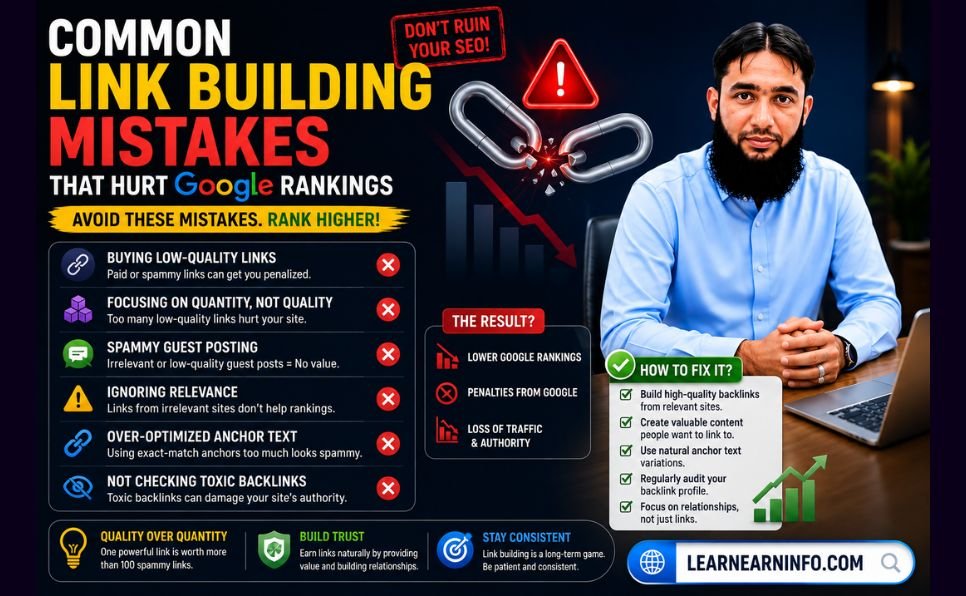
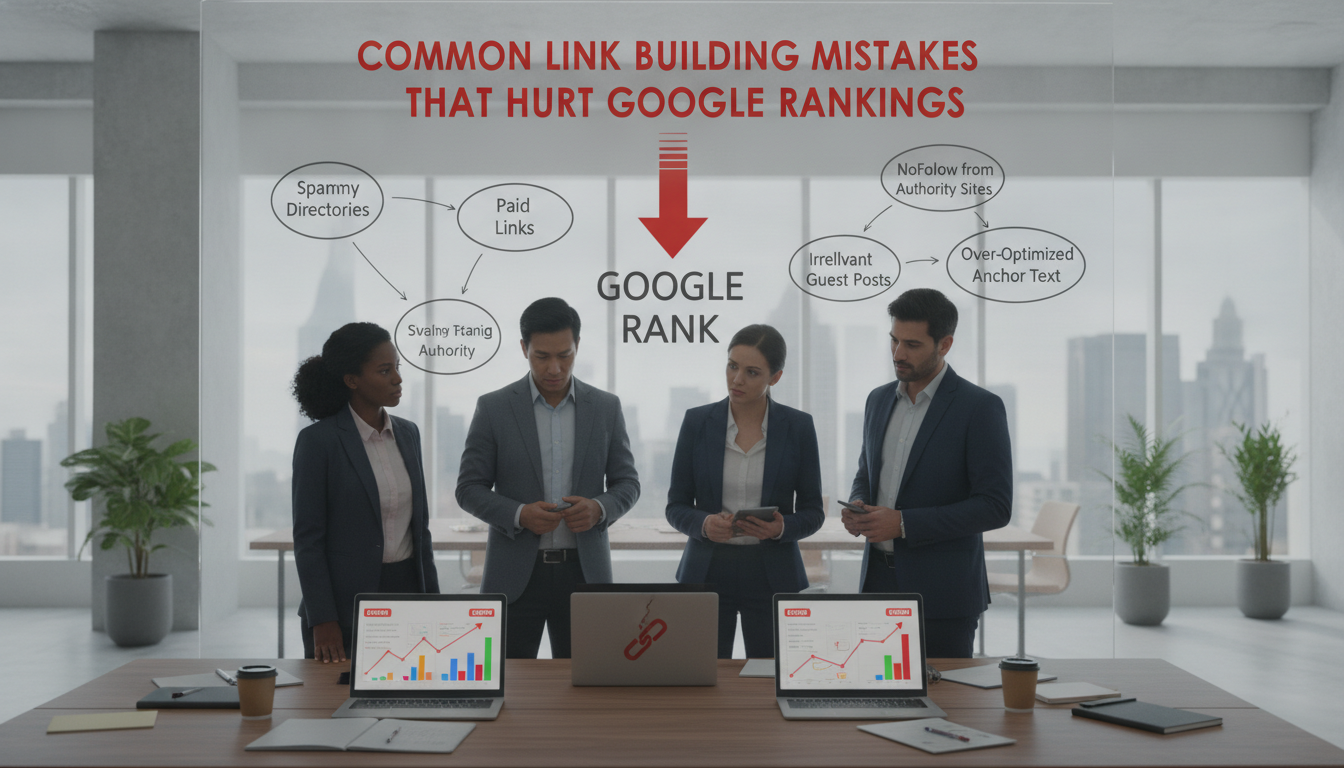
Link Building Mistakes That Trigger Google Penalties

Understanding what not to do is as important as knowing what works. These mistakes range from ineffective to actively dangerous for your rankings.

Buying Links From Link Farms

Hundreds of services sell backlinks in bulk — fifty links for fifty dollars, five hundred links for two hundred dollars. Almost all of these links come from websites that exist purely to sell links, with no real audience, no editorial standards, and often a history of selling links to any buyer.

Google’s algorithm is sophisticated enough to identify unnatural link patterns. A backlink profile filled with links from low-quality, unrelated domains triggers algorithmic filters or manual penalties that can suppress your rankings for months. One high-quality link is worth more than a hundred of these.

Over-Optimized Anchor Text

If you have one hundred backlinks and eighty of them use the exact keyword phrase “best SEO services” as anchor text, that pattern looks manufactured. Google expects a natural backlink profile to contain varied anchor text. When it does not, the unnatural distribution itself becomes a penalty signal.

Mass Guest Posting on Low-Quality Networks

Google’s John Mueller has confirmed that mass guest posting on networks of sites that exist primarily as link vehicles is actively devalued. Posting guest content on real, editorially rigorous websites is valuable. Posting on networks where the same handful of domains publish hundreds of guest posts per month, for anyone who pays, is not.

Ignoring Toxic Backlinks

Sometimes websites acquire harmful backlinks without seeking them — from scrapers, spammy directories, or sites that were reputable when they linked to you but have since been penalized. These toxic links can drag down your rankings even when you did nothing to earn them.

Audit your backlink profile every three to six months using Google Search Console. When you identify links from genuinely toxic sources, request removal from the linking site — and use Google’s Disavow Tool for links you cannot get removed manually.


How Long Does Link Building Take to Show Results?

This is the question most website owners want answered — and the honest answer requires some nuance.

Most sites see initial ranking improvements within three to six months of a sustained link building campaign. However, the timeline depends significantly on:

Your starting domain authority: A new website with no existing backlinks needs more time to accumulate meaningful authority than an established site building on an existing foundation.

The competitiveness of your target keywords: Low-competition keywords in niche markets can respond to link building within weeks. Highly competitive terms may take twelve months or more of consistent effort before first-page rankings are achieved.

The quality of links being built: A few high-DR, niche-relevant placements will move rankings faster than a larger number of weaker links.

Consistency: Link building is not a campaign you run once and stop. Websites that build links consistently over twelve to twenty-four months compound their advantage — each new link builds on a stronger foundation than the one before.

The competitive math is straightforward. If 94% of published pages never earn a single external backlink, any consistent link building effort — even modest in scale — puts your website in a category above most of the internet. The barrier to being competitive is lower than most people assume.


Building a Link Building Strategy That Actually Works

Rather than treating link building as a series of one-off tactics, the most effective approach combines several complementary methods into a consistent system.

A realistic starting framework:

Month 1 to 2 — Foundation Audit your current backlink profile using Google Search Console and Ahrefs. Identify any toxic links to disavow. Research competitors to understand which sites link to them and which link building strategies are working in your niche. Use our free SEO checklist to assess your full SEO health alongside your backlink profile.

Month 2 to 4 — First Placements Begin guest posting outreach targeting DA/DR 30 to 45 websites in your niche. Aim for two to four quality placements per month. Simultaneously identify broken link opportunities and resource pages worth pursuing. Publish at least one comprehensive, linkable asset — a definitive guide, original data, or a free tool.

Month 4 to 6 — Scale and Diversify With initial placements live, use competitor backlink analysis to identify new opportunities. Increase outreach volume while maintaining quality standards. Begin tracking ranking improvements in Google Search Console — most sites see measurable movement during this period.

Month 6 and Beyond — Compound Target higher-authority sites (DR 50+). Pitch your original research to relevant publications for digital PR coverage. Continue building on momentum — each ranking improvement makes your content more likely to attract natural links, which in turn improves rankings further.

The compounding effect of sustained link building is the reason websites that commit to it for twelve to twenty-four months become extremely difficult for competitors to displace. The authority gap that builds over that time is not easily closed.


When to Use Professional Link Building Services

Link building done well is time-intensive. Finding target sites, verifying their quality, crafting personalized pitches, writing original guest content, following up, and tracking results across multiple simultaneous campaigns — for a single website owner managing their own business, this can easily consume fifteen to twenty hours per week.

For businesses where that time is more valuably spent elsewhere, professional link building services offer a clear return on investment — provided you choose a service that builds genuine, editorial links rather than the bulk, low-quality placements that harm rankings.

Our guest posting services place your website on real, high-DA publishers in your niche — DA 40 to DA 70+ — with full content creation and outreach handled for you. Combined with our professional SEO services for complete strategy and execution, and content writing services for the linkable assets that earn links passively, it becomes a complete, integrated system for building the authority your rankings require.

For a complete picture of where your SEO stands right now — including your current backlink profile, technical health, and on-page optimization — run through our free SEO checklist.


Final Thoughts

Link building in 2026 is not complicated. It is not mysterious. And despite what you may read periodically, it is absolutely not dead.

It is simply the process of earning the trust and endorsements — in the form of backlinks — that tell Google your website deserves to rank above everyone else competing for the same searches.

The websites that do this consistently, with quality as the non-negotiable standard, build competitive advantages that compound over years. The websites that ignore it, or chase shortcuts that trigger penalties, fall further behind with every passing month.

The fundamentals have not changed: create content worth linking to, build relationships with relevant publishers, earn genuine editorial placements, and repeat the process with patience and consistency.

Everything else in SEO supports this. SEO content writing gives you something worth linking to. EEAT signals build the credibility that makes those links meaningful. And the boost to your SEO rankings that follows is the natural result of doing all of it consistently.

Start with one link. Build from there. The compounding never stops.


What is your biggest challenge with link building right now? Drop it in the comments — we answer every question.


Related Articles:

What Is Link Building and Why It Matters for SEO Read More »

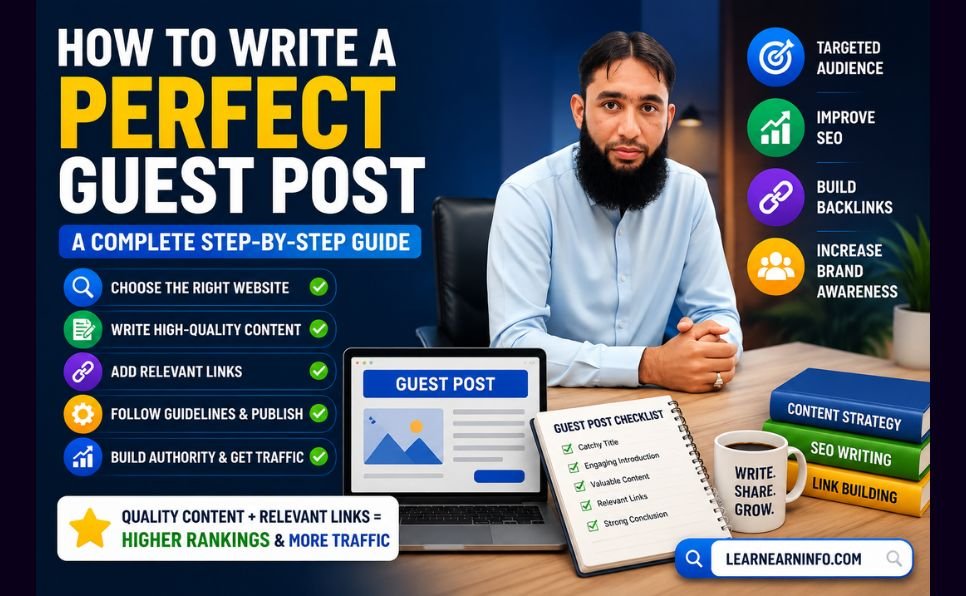
How to Write a Perfect Guest Post Guide

How to Write a Perfect Guest Post Guide

Most guest posts get rejected. Not because the writing is bad — but because the writer skipped the steps that actually matter to editors.

In 2026, only 5 to 10% of pitches to high-authority sites get accepted. That is not a discouraging statistic — it is an opportunity. If you understand what separates the 5% that get accepted from the 95% that get ignored, you are already ahead of most people competing for the same placements.

This guide walks through every step — from finding the right website to writing a pitch that actually gets a response, to structuring a guest post that editors want to publish and readers want to share.

If you are new to the concept, read our full guide on what guest posting is and why it matters before continuing. If you already understand the basics, this guide picks up where that one ends — it is about execution.


Why Writing a Good Guest Post Is Harder Than Writing for Your Own Blog

When you write for your own website, you set the rules. You choose the topic, the tone, the length, and the structure. If something does not quite work, you can fix it quietly and move on.

Guest posting is different. You are writing for someone else’s audience, in someone else’s voice, under someone else’s editorial standards — and you have exactly one submission to make a strong first impression. Editors receive dozens of pitches every week. Most are generic, poorly targeted, and immediately obvious as attempts to get a backlink rather than contribute something genuinely useful.

The ones that get accepted share a few consistent qualities: they are written for the audience first, they fit seamlessly into the site’s existing content, and they treat the backlink as a natural byproduct of good writing rather than the entire reason for the article.

Understanding that distinction is the foundation of everything that follows.

Get Your Website Indexed on Google Fast


Step 1 — Find the Right Website to Target

The most common guest posting mistake is reaching out to sites that are either too difficult to get into, too low quality to be worth the effort, or so unrelated to your niche that any backlink they provide carries no real SEO value.

Before writing a single word of a pitch, you need to find websites that meet three criteria simultaneously.

Relevance to Your Niche

A backlink from a cooking website to an SEO blog carries almost no authority transfer — because Google measures links not just by quality but by topical relevance. A link from a marketing site to your marketing services page is exponentially more valuable than a technically stronger link from an unrelated domain.

Search Google for your main keywords alongside terms like “write for us,” “guest post,” or “contributor guidelines.” Every result that appears is a website actively looking for guest content in your area.

Domain Authority Worth Pursuing

Check every potential target site using the Ahrefs backlink checker to see their Domain Rating. Sites with a DR below 20 are unlikely to move your domain authority meaningfully. Sites with DR above 50 are excellent targets — though they are more selective. A realistic starting target for most new guest posters is DR 25 to 45. As your portfolio of published guest posts grows, you can target higher-authority placements.

Real Audience and Editorial Standards

Domain Rating alone does not tell you whether a site has a genuine readership. Check their social media presence. Look at comment sections and engagement on recent posts. A site with strong authority but no real audience gives you the link equity without the referral traffic — which is half the benefit.

Also check whether the site maintains clear editorial standards. Websites that publish anything from anyone are typically low-quality regardless of their metrics. Sites with visible contributor guidelines, author bios, and consistent content quality are the ones worth investing effort in.


Step 2 — Study the Site Before You Pitch

This step takes 20 to 30 minutes and is the single most important thing separating pitches that get accepted from pitches that get deleted.

Read at least five recent articles on your target site. Note:

  • What topics do they cover most frequently?
  • What is the typical article length and structure?
  • What tone do they use — conversational, formal, highly technical?
  • What subtopics in your niche have they not covered yet — or covered only briefly?
  • Do they include data, examples, and original research, or are their articles more opinion-based?

Every editor can tell within seconds whether a pitch came from someone who actually read their site or someone who found it in a list and sent the same email to forty different websites. Pitches from the first group get read. Pitches from the second group get deleted.

Your topic idea needs to fit the site as naturally as a piece of a puzzle. It should feel like something their regular readers would immediately want to click, written by someone who understands their audience specifically.


Step 3 — Write a Pitch That Stands Out

According to research on real outreach campaigns, a 19% reply rate on personalized outreach emails is achievable when the pitch is genuinely tailored. The industry average for generic cold outreach is closer to 3 to 4%. Personalization is not optional — it is the entire difference between getting ignored and getting a response.

The Structure of a Winning Pitch Email

Subject line: Specific and benefit-driven. Include the topic you are proposing directly in the subject line. “Guest post idea: How to use AI tools for SEO in 2026” beats “Guest post submission” every time.

Opening line: Reference something specific about their site that you genuinely noticed. Not “I love your site” — that says nothing. Something like: “I noticed your recent article on content marketing didn’t cover AI-assisted content production — that’s a topic your audience is clearly searching for, based on the comments.”

Your pitch: Propose two to three specific article ideas, each with a working title and two sentences explaining what the article would cover and why it fits their audience. Keep each idea to a maximum of four lines.

Your credibility: One to two sentences about who you are and why you are the right person to write on this topic. Link to two or three of your best published pieces as writing samples.

Call to action: A clear, low-pressure next step. “Would any of these work for your editorial calendar? Happy to send a full outline for whichever fits best.”

Total length: 150 to 200 words maximum. Editors do not have time for long emails. Respect that and your pitch will get further.

What to Avoid in a Pitch

Never start with “I am a passionate writer with years of experience.” No editor has ever accepted a pitch based on that sentence.

Do not attach a full draft unsolicited unless the site’s guidelines specifically request it. Many editors prefer to agree on a topic first.

Do not mention the backlink you want in the pitch. The assumption is that guest posts come with an author bio and contextual links — drawing attention to this before you have even been accepted signals that the link is your primary motivation, not contributing value.


Step 4 — Structure Your Guest Post for Acceptance

Once your pitch is accepted, the article you submit needs to match or exceed the quality of the best content already on that site. Here is how to structure a guest post that editors want to publish immediately rather than send back for rewrites.

Match the Site’s Article Length and Format

If the top-performing articles on your target site are 1,200 words, do not submit 600 words. If their articles use H2 and H3 headings throughout, follow the same structure. If they include data and external citations, include your own.

Do not try to impose your preferred style onto someone else’s platform. Your job as a guest contributor is to produce something so well-matched to their format that the editor can publish it with minimal changes.

Write a Title That Fits Their Style

Study several of the site’s existing titles. Some publications prefer listicle-style titles (“7 Ways to…”). Others prefer how-to formats (“How to…”). Others prefer question-based titles. Match the convention their audience responds to, not the convention you personally prefer.

The title also needs to include a keyword the site’s audience is actually searching for. Use your knowledge of how to rank on Google’s first page to select a title that is both compelling to readers and optimized for search. A well-chosen title gives the editor an additional incentive to accept your post — it brings them traffic they would not have had otherwise.

Hook the Reader in the First Paragraph

Your opening paragraph is what determines whether the editor reads the rest of the draft and whether the site’s visitors continue past the first scroll. It needs to:

  • Acknowledge the problem or question the reader arrived with
  • Indicate clearly that this article has the answer
  • Do this in three to five sentences without wasting words on empty preamble

Generic openings that start with “In today’s digital world…” or “Content is king…” are instantly forgettable. Open with something specific, surprising, or directly useful.

Build the Body Around a Clear Logical Structure

Every section of your guest post should have a job. The job of each section is to answer one specific question or explain one specific concept — and then transition naturally to the next section.

Strong SEO content writing uses headings not just as visual organization but as a logical roadmap. A reader who scans only the headings should understand the article’s full structure and want to read the sections that interest them most.

Within the body, include:

  • Specific, verifiable data points from credible sources (not vague claims)
  • Concrete examples that illustrate abstract points
  • At least one original perspective or insight that goes beyond what already exists on the topic
  • Short paragraphs — three to four sentences maximum — for readability

This level of substance is what distinguishes content that builds genuine authority from content that fills space. It is also what the EEAT signals Google uses to evaluate trustworthiness are actually looking for — demonstrated expertise in the content itself, not just claimed in an author bio.

Write a Conclusion That Delivers a Clear Takeaway

Your conclusion should do two things: summarize the most important point the reader should leave with, and give them a clear next action. Not “thanks for reading” — an actual direction. “Start with step one this week and measure the results by the end of the month” is a conclusion. “I hope you found this helpful” is not.


Step 5 — Place Your Backlink Correctly

This is where most guest posters either waste the opportunity or damage their credibility with editors.

Place the Link Where It Adds Genuine Value

Your backlink should appear within the body of the article, embedded in a sentence where it naturally adds useful context for the reader. If you are writing about SEO strategies and your website has a detailed guide on domain authority, linking the phrase “domain authority” where it appears in the text is a natural, valuable link that helps the reader.

What editors object to — and what gets guest posts rejected or links removed — is a link that appears obviously placed for SEO benefit rather than reader benefit. If the sentence only exists to carry your link, the editor will notice.

Anchor Text Should Be Natural and Descriptive

Use anchor text that accurately describes what the linked page contains. “Learn more about SEO” is weaker than “how to increase your site’s domain authority.” Specific, descriptive anchors are better for readers, better for SEO, and less likely to trigger any concern from editors or search engines about unnatural link patterns.

Do not use the same anchor text in every guest post you write. Vary your anchors across placements — brand name, descriptive phrases, and occasionally generic terms like “this guide.” This creates a natural backlink profile rather than one that looks engineered.

Use the Author Bio Strategically

Almost every guest post comes with an author bio — a two to three sentence section at the end of the article where you can introduce yourself and include a link to your website. This is the most common place for a backlink and requires no negotiation with the editor.

Write a bio that leads with your most relevant credential or experience, mentions what you do, and ends with a clear link using your website or service name as anchor text. Keep it professional and focused — author bios are not advertisements.


Step 6 — Submit and Follow Up Professionally

When submitting your draft, include a note to the editor confirming that the content is original, has not been published elsewhere, and meets their stated guidelines. If they asked for specific formatting, confirm that you have followed it.

If you do not receive a response within seven to ten business days, one polite follow-up email is appropriate. Keep it short: “Hi [name], just following up on the guest post draft I sent on [date]. Please let me know if you need any changes or have any questions.”

Do not send multiple follow-ups. Editors are busy, and persistence beyond one follow-up reads as pressure rather than interest.

After Publication — Promote the Article

Once your guest post is live, share it on your own social media channels, link to it from relevant articles on your own website, and send a thank-you note to the editor. Congratulate them on the platform and express genuine appreciation for the opportunity.

This matters more than most people realize. Editors remember contributors who promote their published work and maintain a professional relationship afterward. These are the contributors they invite back — turning a single backlink into an ongoing source of high-authority placements.

Monitor the performance of your published guest posts using Google Search Console — track whether your rankings improve for target keywords in the weeks following publication, and whether the guest post is driving referral traffic to your site.


The Most Common Guest Post Mistakes to Avoid

Writing for the backlink, not the audience Editors can always tell. If your article exists primarily to place a link rather than to serve the host site’s readers, the writing reflects it. Write for the audience first. The link is a natural byproduct of a well-placed, valuable contribution.

Submitting generic or recycled content High-authority sites receive multiple pitches per week from writers trying to place content they have already written elsewhere. Original, fresh content written specifically for the target site’s audience is the only kind worth submitting to publications that matter.

Ignoring editorial guidelines Every site that accepts guest posts has guidelines. Ignoring them — wrong word count, wrong format, topics they do not cover — signals to the editor that you did not do your research. Following guidelines precisely is one of the simplest ways to distinguish yourself.

Over-optimizing the backlink Trying to place three or four links to your own site in a single guest post, using keyword-heavy anchor text on all of them, is a pattern search engines and editors both recognize. One or two well-placed, contextually relevant links are both more credible and more effective.

Not following up on performance Publishing a guest post and forgetting about it wastes half the opportunity. Promote it, link to it internally, and track the results. The data you gather from each placement improves your targeting for the next one.


When You Should Use a Guest Posting Service

Writing and placing high-quality guest posts yourself is entirely achievable — but it is time-intensive. Research, pitching, writing, editing, and follow-up for a single placement on a quality site can easily require four to six hours of work, and placements are not guaranteed.

For businesses and website owners whose time is more valuably spent elsewhere, professional guest posting services offer a practical alternative. Our guest posting services handle the full process — from identifying relevant, high-DA websites in your niche to writing the content and securing publication — delivering editorial backlinks without requiring you to manage the outreach process yourself.

If you want to assess your current backlink situation before deciding which approach fits your goals, our free SEO checklist covers your entire link profile alongside on-page and technical factors in one place.

For a complete SEO strategy that goes beyond link building alone, explore our professional SEO services and content writing services — all built to work together as an integrated system for growing organic traffic and rankings.


Your Guest Post Action Plan — Starting This Week

Here is a simple, concrete plan to go from reading this guide to having your first guest post accepted:

Day 1 to 2: Research ten target websites using Google search operators and Ahrefs. Check domain authority, niche relevance, and editorial standards. Shortlist five that meet all three criteria.

Day 3: Read five articles on each of your top two target sites. Note their format, length, tone, and any obvious topic gaps.

Day 4: Write personalized pitches for your top two sites — each with two to three specific topic ideas tailored to that site’s audience.

Day 5: Send the pitches. Set a calendar reminder to follow up in ten days if you have not received a response.

While waiting: Begin outlining the article for the site you are most confident about. A complete outline in hand means you can submit a draft within days of getting accepted, which editors appreciate.

After acceptance: Write the full article. Match the site’s format exactly. Place one to two links naturally within the content. Write a professional author bio. Submit on time.

Then repeat. Guest posting compounds — each published piece makes the next pitch easier, and each backlink makes the next ranking improvement faster.


Final Thoughts

A perfect guest post is not about clever writing tricks or SEO shortcuts. It is about genuinely understanding a publication’s audience, producing something that adds real value to that platform, and making the editor’s job as easy as possible.

Do that consistently — across the right sites, with the right topics, and with professionally placed backlinks — and guest posting becomes one of the most reliable, sustainable tools available for building authority, rankings, and referral traffic simultaneously.

Use the boost your SEO rankings guide to build the broader SEO strategy around your guest posting efforts, and if you are building a blog from the ground up, the guide on how to start a blog walks through the foundation you need before guest posting becomes fully effective.

Start with one pitch this week. One good article on one relevant site with a genuine audience. That is how it begins.


Have you tried guest posting? What was your biggest challenge — finding sites, writing pitches, or getting accepted? Share in the comments.


Related Articles:

How to Write a Perfect Guest Post Guide Read More »

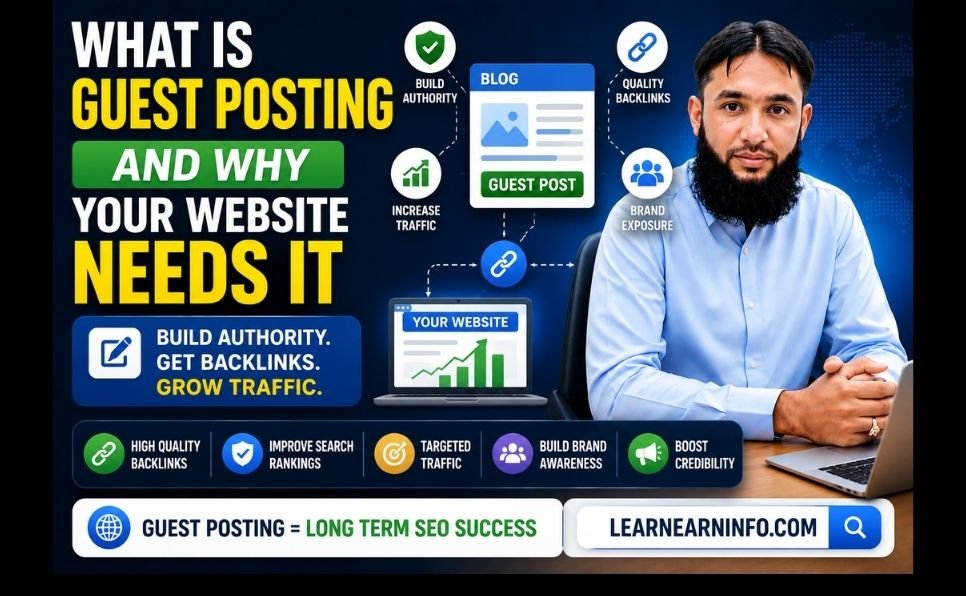
What Is Guest Posting and Why Your Website Needs

What Is Guest Posting and Why Your Website Needs

You have built a great website. You publish content regularly. You have done everything right — and yet your traffic barely moves.

This is one of the most common frustrations in digital marketing. And more often than not, the missing piece is the same: authority. Google does not just rank websites based on content quality. It ranks websites based on how much other websites trust and reference them.

That is exactly what guest posting solves.

Despite years of debate, the data in 2026 is clear — 64.9% of link builders still use guest posting as their primary strategy, making it the most widely used link-building method today. If you are not using it, you are competing with one hand tied behind your back.

This guide explains exactly what guest posting is, why it remains one of the most powerful SEO strategies available, and how to do it correctly in 2026 — including how to avoid the mistakes that get websites penalized.


What Is Guest Posting?

Guest posting — also called guest blogging — is the practice of writing and publishing an article on someone else’s website in exchange for a backlink to your own site.

Here is how the basic exchange works:

  • You write a high-quality article on a topic relevant to the host website’s audience
  • The host website publishes your article and includes a link back to your website within the content
  • You receive a backlink, exposure to a new audience, and a boost in your site’s authority in Google’s eyes

It sounds simple because the concept is simple. The power, however, is in what those backlinks actually do for your rankings.

How to Get High-Quality Backlinks Using Guest Posting (Step-by-Step)


Why Backlinks Matter So Much for SEO

To understand why guest posting works, you need to understand how Google evaluates websites.

When Google decides which websites deserve to rank on the first page for a given search query, it looks at hundreds of signals. Among the most powerful is this: how many credible websites link to yours?

Think of it like a recommendation system. If ten strangers told you a restaurant was good, you might try it. If ten respected food critics with loyal followings told you the same thing, you would go immediately. Google works the same way. A link from a trusted, authoritative website is Google’s version of a respected recommendation — and it carries enormous ranking weight.

In 2026, search engines reward relevance, trust, and expertise more than ever. Guest blogging naturally supports all three. When you contribute valuable content to reputable websites in your niche, you gain contextual backlinks, reach a targeted audience, and position yourself as a credible voice.

This is why learning how to rank on Google’s first page always comes back to building quality backlinks — and guest posting is the most reliable, sustainable way to do it.


The Real Benefits of Guest Posting in 2026

Guest posting does far more than just build backlinks. When done correctly, it delivers multiple compounding benefits simultaneously.

1. Higher Google Rankings

This is the primary goal for most websites. Every high-quality backlink from a relevant, authoritative domain tells Google that your website is credible and worth ranking higher. According to SEO experts, a single backlink from a high-DA guest post site can improve rankings for multiple target keywords and increase organic traffic simultaneously.

The cumulative effect is significant. As you build more backlinks through consistent guest posting, your domain authority grows — and with it, your ability to rank for increasingly competitive keywords.

2. Direct Referral Traffic

A guest post on an active website with real readers does not just help your SEO — it sends actual visitors directly to your site. Sites with guest posts see 40% more traffic in two months.

These visitors are particularly valuable because they arrive pre-qualified — they already read your content on another site and found it interesting enough to click through to learn more.

3. Faster Domain Authority Growth

Domain Authority (DA) is a metric that reflects how authoritative Google considers your website. New websites typically start with a very low DA, which makes it difficult to rank for competitive keywords.

Guest posting on high-DA websites accelerates this growth dramatically. Websites that regularly publish guest content experience up to 97% more inbound links compared to those that rely solely on original content. More quality inbound links mean faster DA growth — which means rankings improve across your entire website, not just for the pages you optimize individually.

4. Brand Visibility and Credibility

Being published on well-known platforms gives you social proof you can display on your own website. “As seen in Forbes, HubSpot, and Search Engine Journal” is a powerful trust signal for new visitors.

When potential clients or customers see that your content has been featured on respected websites, their trust in your brand increases before they have even read a word of your own site. This is particularly valuable for businesses offering services — like SEO, content writing, or consulting.

5. Business Lead Generation

Guest posting is not just an SEO tactic. It is a lead generation channel. B2B companies using guest posting as part of their content strategy generate 67% more leads per month than those that do not.

When your article appears on a website your target audience already reads and trusts, the leads that arrive from it are warm, pre-qualified, and significantly more likely to convert than cold traffic from ads.

6. Long-Term Compounding Results

Unlike paid advertising, which stops delivering the moment you stop paying, guest posts continue working for years. An article published today on a high-traffic website can keep driving referral visits and passing SEO authority to your site for the next three to five years — long after the effort of writing it is forgotten.


How Guest Posting Works — Step by Step

Understanding the concept is one thing. Knowing exactly how the process unfolds is what allows you to actually execute it.

Step 1 — Identify Target Websites

Your first job is finding websites that are worth targeting. Not every website that accepts guest posts will benefit your SEO. The wrong backlinks can actually hurt your rankings.

Look for websites that meet these criteria:

  • Relevance — The website covers topics related to your niche. A backlink from a relevant website carries far more weight than one from an unrelated site.
  • Domain Authority — Use a tool like the Ahrefs backlink checker to check a site’s DA score. Aim for DA 30 and above, with DA 50+ being excellent.
  • Real Traffic — The website should have genuine, active readers — not just inflated metrics. Check their social media engagement and comment sections.
  • Editorial Standards — Websites that accept any submission without editorial review are low-quality. You want sites that only publish genuinely good content.

To find guest posting opportunities, search Google for terms like:

  • “your niche” + “write for us”
  • “your niche” + “guest post”
  • “your niche” + “submit an article”
  • “your niche” + “contribute”

Step 2 — Research the Website Before Pitching

Before reaching out, spend 20 to 30 minutes reading the website. Understand their tone, their audience, the topics they cover, and the style of content they typically publish. This research makes your pitch far more convincing.

Look for gaps — topics their audience would find valuable that they have not yet covered thoroughly. Your best pitches offer to fill those gaps rather than duplicate what already exists.

Step 3 — Write a Personalized Pitch

Most guest post pitches get ignored because they are generic copy-paste emails. A strong pitch is short, personal, and makes it immediately clear why your article would benefit their audience — not just your backlink profile.

A winning pitch includes:

  • A specific reference to their website (show you actually read it)
  • Two to three specific article ideas with working titles
  • A one-paragraph explanation of why each topic would serve their readers
  • Two to three links to your best existing content as writing samples
  • A clear, low-pressure call to action

Keep the entire email under 200 words. Editors are busy. Respect their time.

Step 4 — Write an Exceptional Article

Once a pitch is accepted, the article you deliver must be genuinely excellent — not a slightly edited version of something you have already published elsewhere.

Write for the host website’s audience first. Your backlink is included naturally within the content — never forced or promotional. The article should be thorough, well-researched, and more helpful than what already exists on that topic.

In 2026, Google’s algorithms emphasize Experience, Expertise, Authoritativeness, and Trustworthiness (E-E-A-T). Content lacking depth or insight will not rank. Your goal is to establish yourself as a credible expert first, and let link-building happen naturally.

A high-quality guest post does two things simultaneously: it earns you a backlink and it builds your reputation with the host website’s audience.

Step 5 — Follow Up and Build the Relationship

After your article is published, share it on your social media channels. Send a thank-you note to the editor. Engage with comments on the article if the platform allows it.

The goal is not just one backlink — it is a long-term relationship with a website that can feature your content again in the future. The best guest posting results come from ongoing collaborations, not one-off transactions.


Guest Posting Mistakes That Will Hurt Your SEO

Not all guest posting helps your website. Done incorrectly, it can trigger Google penalties that take months to recover from. Here are the mistakes to avoid completely.

Posting on Irrelevant Websites

A backlink from a cooking blog to an SEO website adds no value — and multiple irrelevant backlinks can confuse Google about what your website is actually about. Always prioritize relevance over quantity.

Using the Same Anchor Text Repeatedly

If every guest post links back to your site with the exact same keyword-rich anchor text — like “best SEO services” — Google recognizes this as unnatural link building. Vary your anchor text naturally. Use your brand name, generic phrases like “this guide,” and occasionally your target keyword.

Submitting to Link Farms

Some websites exist purely to sell backlinks — they publish any content from anyone, have no real readership, and exist only as link repositories. Google has become far better at identifying link schemes and low-quality placements. Today, a handful of strong, relevant backlinks will outperform dozens of weak ones. One link from a genuine, high-authority website beats 100 links from link farms.

Treating It as a One-Time Activity

Treating guest posting as a one-off activity produces far worse results than consistent, long-term efforts. Guest posting works as a compounding strategy — the more consistently you build quality backlinks over time, the faster your authority grows and the stronger your rankings become.

Writing Poor Quality Content

Some people write their best content for their own website and submit mediocre content for guest posts. This is backwards. Your guest posts are your public resume — they are what editors and readers across the internet will use to judge your expertise. Write as well or better than you do on your own site.


How to Evaluate a Guest Posting Opportunity

Before accepting or pursuing any guest posting opportunity, run through this quick checklist:

Factor What to Check
Domain Authority DA 30+ (DA 50+ is ideal)
Niche Relevance Does the site cover your topic area?
Real Traffic Does it have active readers and social engagement?
Editorial Standards Does it review submissions before publishing?
Outbound Link Quality Does it link to other credible, relevant websites?
Index Status Is the site properly indexed in Google?
Content Freshness Has it published new content recently?

Check your own site’s current backlink profile using Google Search Console — it shows which websites are already linking to you and which pages are earning the most authority. Use our free SEO checklist to audit your overall link building strategy alongside your on-page and technical SEO.


Guest Posting vs Other Link Building Methods

Guest posting is one of several ways to build backlinks. How does it compare to the alternatives?

Guest Posting vs Buying Links Buying backlinks from link sellers violates Google’s guidelines and risks manual penalties that can destroy years of SEO progress. Guest posting, when done correctly, produces editorial links — the kind Google rewards rather than penalizes.

Guest Posting vs Directory Submissions Directory submissions (submitting your site to online business directories) were effective a decade ago. Today they produce minimal SEO value. Guest posts on real websites carry far more authority.

Guest Posting vs HARO (Help a Reporter Out) HARO can earn high-authority links from major publications, but opportunities are competitive and unpredictable. Guest posting gives you more control over the process and allows for consistent, scalable link building.

Guest Posting vs Social Media Links Links from social media platforms are “nofollow” — they do not directly pass SEO authority. Social media is valuable for traffic and brand awareness but not for building the kind of backlinks that move rankings.

Guest posting remains the best combination of scalability, quality, and long-term sustainability among all link building methods available in 2026.


Should You Do It Yourself or Use a Guest Posting Service?

This is the practical question most website owners face eventually.

Doing it yourself makes sense if you enjoy writing, have time for outreach, and want to build relationships directly with other publishers. The process takes time to master — expect 3 to 6 months before you have a reliable system that consistently produces placements.

Using a professional service makes sense if your time is better spent running your business, you need results faster than DIY allows, or you want access to an established network of high-DA websites without the months of relationship building.

Our guest posting services are built for exactly this situation. We connect your website with real, high-authority publishers in your niche — from DA 40 all the way to DA 70+ — delivering editorial backlinks that move rankings without risking penalties.

Combined with our professional SEO services and content writing services, guest posting becomes part of a complete, integrated strategy — not just a standalone tactic.


Building a Long-Term Guest Posting Strategy

The websites that dominate Google in competitive niches are almost never those that published the most content. They are the ones that built the most authority — consistently, over time.

A realistic long-term guest posting strategy looks like this:

Month 1 to 3 — Foundation Focus on lower-DA websites (DA 30 to 40) where it is easier to get placements. Build your portfolio of published guest posts. Refine your pitch process.

Month 4 to 6 — Growth With several published pieces, you have social proof that makes it easier to pitch higher-authority sites (DA 40 to 55). Your first rankings improvements become visible.

Month 7 to 12 — Acceleration Target DA 55+ websites. Your domain authority is growing, which improves your ability to rank for competitive keywords across your entire website.

Year 2 and Beyond — Dominance Consistent, high-quality guest posting compounds. Each new backlink builds on the foundation of all previous ones. Websites that maintain this strategy consistently for two or more years become extremely difficult for competitors to displace.

For a complete picture of your SEO strategy alongside guest posting, read our guides on how to boost your SEO rankings and digital marketing tactics that work alongside link building.


Final Thoughts

Guest posting in 2026 is not a shortcut or a trick. It is one of the most legitimate, effective, and sustainable SEO strategies available — and the data consistently supports it.

Guest posting still works for SEO in 2026 because search engines value relevance, trust, and helpful content. The method itself is not outdated — only low-quality practices are. By choosing the right websites, creating useful content, and placing links naturally, guest posting can continue to support rankings and visibility for years.

If your website is not growing as fast as you want — if the traffic is stagnant, the rankings are stuck, and competitors keep outranking you — the answer is almost certainly authority. And the most reliable way to build authority is through consistent, high-quality guest posting on real websites your audience already reads and trusts.

Start with one pitch this week. One article. One backlink from a website better than yours.

Then do it again next week.

That is how first-page rankings are built.


Are you already using guest posting to grow your website? Share your experience in the comments — or drop your biggest question and we will answer it.

What Is Guest Posting and Why Your Website Needs Read More »

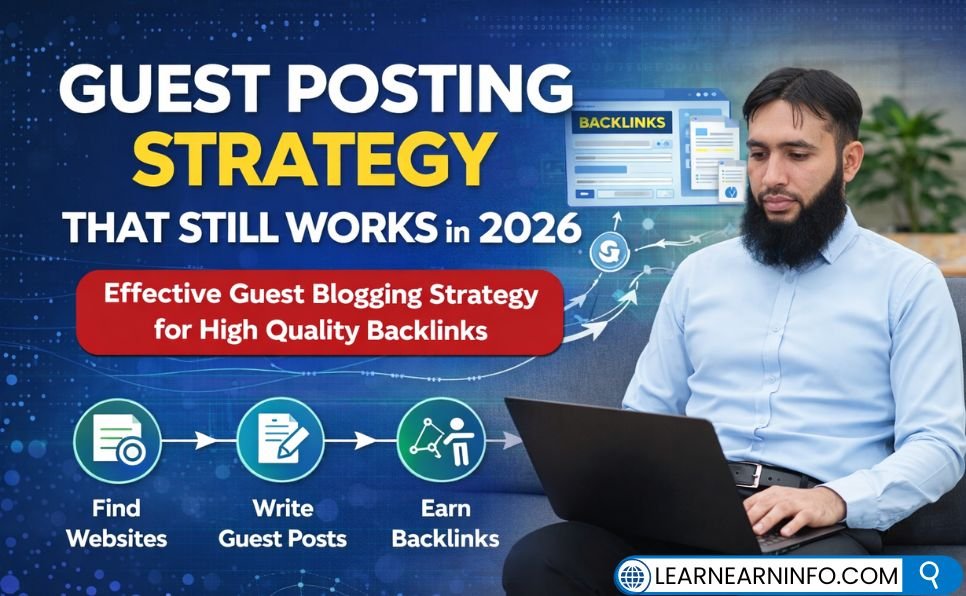
guest posting strategy that still works in 2026 for building high quality backlinks

Guest Posting Strategy That Still Works in 2026

Guest posting remains one of the most powerful SEO strategies for building high-quality backlinks, increasing website authority, and improving search rankings.

Even in 2026, guest blogging continues to deliver strong SEO results when done with the right strategy.

However, outdated guest posting techniques no longer work. Publishing content on low-quality websites or building spam backlinks can damage your rankings.

The modern approach focuses on high-quality content, authority websites, and natural backlinks.

In this guide you will learn:

  • how guest posting works in modern SEO

  • how to find guest blogging opportunities

  • how to get high-quality backlinks through guest posts

  • how to write guest posts that get accepted

If you want to understand link building strategies, read our guide on how to build high-quality backlinks in 2026.

How to build high-quality backlinks in 2026.


Quick Answer: Guest Posting Strategy That Works

The most effective guest posting strategy includes:

  • publishing content on relevant authority websites

  • writing valuable and original content

  • building contextual backlinks

  • targeting niche-relevant audiences

  • using natural anchor text

This approach helps improve Google rankings, organic traffic, and domain authority.


What Is Guest Posting in SEO?

Guest posting is the practice of publishing an article on another website in exchange for a backlink to your site.

This strategy is widely used in link building and SEO marketing.

Benefits of guest blogging include:

  • high-quality backlinks

  • brand authority

  • targeted referral traffic

  • improved search engine rankings

  • stronger online presence

Guest blogging remains one of the best backlink strategies for SEO.


Why Guest Posting Still Works for SEO

Backlinks remain one of Google’s strongest ranking factors.

When authoritative websites link to your content, search engines treat your website as trustworthy and valuable.

Benefits include:

  • improved Google rankings

  • increased organic traffic

  • stronger domain authority

  • industry credibility

Many websites fail to rank because they lack strong backlinks. If your website is struggling in search results, read our guide on why your website is not ranking on Google.

Why your website is not ranking on Google


How to Find Guest Posting Opportunities

Finding high-quality websites is the most important part of guest posting.

Here are the best methods.


1. Use Google Search Operators

You can find guest posting websites using search queries such as:

write for us + seo
guest post + digital marketing
submit guest post + marketing
seo blog + guest post

These searches reveal websites that accept guest posts.


2. Analyze Competitor Backlinks

Competitor backlink analysis helps identify guest posting opportunities.

SEO tools can show where competitors are getting backlinks.

Useful tools are explained in our guide on best SEO tools for small businesses.

Best SEO tools for small businesses.


3. Build Relationships With Bloggers

Networking with bloggers increases guest posting opportunities.

Engage with bloggers by:

  • commenting on blog posts

  • sharing their content

  • connecting through social platforms

Strong relationships can lead to long-term backlink opportunities.


How to Write Guest Posts That Get Accepted

To increase acceptance rates, your guest posts must provide real value.

Follow these tips:

  • write original and informative content

  • solve real problems for readers

  • use structured headings

  • avoid excessive self-promotion

Following modern content writing trends helps create content that attracts backlinks.

Content writing trends

If you need SEO-optimized content, explore our content writing services.

Content writing services


Guest Posting Best Practices

Focus on Authority Websites

Choose websites with:

  • high domain authority

  • real organic traffic

  • niche relevance


Use Natural Anchor Text

Avoid keyword stuffing.

Use natural anchor text such as:

  • learn more about SEO strategies

  • advanced backlink techniques

  • explore SEO tools


Publish Valuable Content

High-quality content increases your chances of getting more backlinks and traffic.


Common Guest Posting Mistakes

Avoid these mistakes:

  • publishing on spam websites

  • sending generic outreach emails

  • building irrelevant backlinks

  • using excessive links

These mistakes can harm your SEO.


Professional Guest Posting Services

If you want high-authority backlinks without spending time on outreach, professional services can help.

Explore our guest posting services.

Guest posting services

example of guest posting backlink strategy for SEO link building

For a complete SEO strategy including backlink building and technical optimization, check our SEO services.

SEO services

Guest posting remains one of the most effective strategies for building backlinks and improving SEO rankings.

When done correctly, guest blogging helps you:

  • increase website authority

  • gain high-quality backlinks

  • drive targeted traffic

  • improve search engine visibility

Focus on quality content, relevant websites, and natural backlinks, and your guest posting strategy will continue to work in 2026 and beyond.


FAQs

Is guest posting still effective for SEO?

Yes. Guest posting remains one of the best white-hat SEO strategies for building backlinks and improving search rankings.

How many backlinks should a guest post contain?

Most guest posts include one or two backlinks to maintain a natural link profile.

How do I find guest posting websites?

You can use Google search operators, competitor analysis, and outreach campaigns.

Guest Posting Strategy That Still Works in 2026 Read More »

How to Build High-Quality Backlinks in 2026

How to Build High Quality Backlinks in 2026 (Pro Guide)

Backlinks remain one of the most powerful ranking factors in Google’s algorithm. Even in 2026, websites with strong backlink profiles consistently rank higher in search results.

However, not all backlinks are equal. Google now focuses on high-quality backlinks from relevant and authoritative websites instead of spammy links.

If your website is struggling to rank on Google, backlinks can make a huge difference. You can also read our detailed guide on why websites fail to rank in search results to understand common SEO problems and solutions.

why websites fail to rank in search results

In this guide, you will learn:

  • How to build high quality backlinks in 2026

  • How to create backlinks step-by-step

  • How to get backlinks for free

  • The best backlink strategies for SEO

By the end of this article, you will understand exactly how to create powerful backlinks that improve rankings and organic traffic.


What Are High-Quality Backlinks?

High-quality backlinks are links from authoritative and relevant websites pointing to your site.

These links signal to Google that your content is valuable and trustworthy.

Characteristics of high-quality backlinks include:

  • Links from high authority websites

  • Relevant niche websites

  • Editorial links inside content

  • Natural anchor text

  • Websites with real traffic

The stronger the backlink source, the greater the impact on your SEO rankings.


Why Backlinks Are Important for SEO

Backlinks act as votes of confidence for your website.

When multiple trusted websites link to your content, search engines assume your site provides valuable information.

Benefits of high-quality backlinks include:

  • Higher Google rankings

  • Increased organic traffic

  • Faster indexing

  • Stronger domain authority

  • Better online credibility

If your site is still not ranking even after publishing content, check our guide explaining why your website is not ranking on Google.

why your website is not ranking on Google.


How to Build High-Quality Backlinks in 2026

There are many link building strategies, but the following techniques remain the most effective.


1. Guest Posting on Authority Websites

Guest posting remains one of the most effective ways to get high-quality backlinks.

You publish valuable content on another website in your niche and include a link back to your website.

Benefits include:

  • contextual backlinks

  • targeted audience exposure

  • stronger domain authority

If you want backlinks from high-authority websites, explore our professional guest posting services.

Guest posting services


2. Create Link-Worthy Content

The easiest way to get backlinks naturally is by creating valuable content that other websites want to reference.

Examples include:

  • ultimate guides

  • industry statistics

  • case studies

  • research reports

  • helpful tools

Following modern content writing trends can help you create content that attracts natural backlinks.

Content writing trends

If you need professionally written SEO content, you can explore our content writing services.

Content writing services


3. Resource Page Link Building

Many websites have dedicated resource pages linking to useful content.

You can contact these website owners and suggest adding your article as a helpful resource.

Example outreach message:

I noticed your SEO resources page. I recently published a guide about building high-quality backlinks that may help your readers.

This strategy can generate relevant backlinks from authoritative websites.


4. Broken Link Building

Broken link building is another powerful SEO strategy.

Steps:

  1. Find broken links on websites in your niche

  2. Create better content that replaces the broken resource

  3. Contact the website owner

  4. Suggest your content as a replacement

This approach helps both the website owner and your SEO strategy.


5. Directory and Profile Backlinks

Although not the strongest links, directory and profile backlinks help diversify your backlink profile.

Examples include:

  • business directories

  • social media profiles

  • niche listing websites

These links help search engines discover your website.


How to Create Backlinks Step-by-Step

If you are new to SEO, follow this simple process.

Step 1

Publish high-quality content on your website.

Step 2

Find websites related to your niche.

Step 3

Reach out for guest posting opportunities.

Step 4

Promote your content on social media platforms.

Step 5

Track your backlinks using SEO tools.

You can discover useful tools in our guide on best SEO tools for small businesses.

Best SEO tools for small businesses


How to Get Backlinks for Free

Many beginners think backlinks always require paid services, but that is not true.

Free backlink methods include:

  • guest blogging

  • forum participation

  • answering questions in communities

  • directory submissions

  • social media sharing

Before starting link building, follow our free SEO checklist to ensure your website is properly optimized.

Free SEO checklist


Best Backlink Strategy Example

A simple backlink strategy could look like this:

Week 1
Publish a detailed guide.

Week 2
Outreach to bloggers for guest posting.

Week 3
Promote content through social media.

Week 4
Build resource page and directory links.

Consistent effort will gradually build a strong backlink profile.

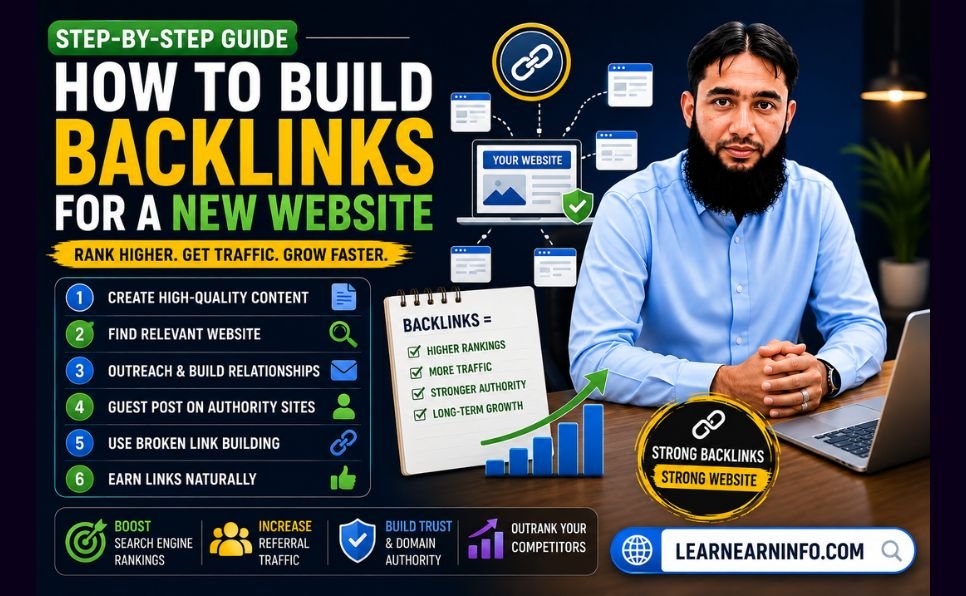
backlink-building-strategy-for-seo


Promote Content to Earn Backlinks

Promotion plays a big role in earning backlinks.

When your content reaches more people, the chances of earning links increase.

You can promote your articles on social media using optimized hashtags generated with our free hashtag generator tool.

Hashtags generated


Common Backlink Mistakes to Avoid

Avoid these common link building mistakes:

  • buying spam backlinks

  • using automated link building tools

  • creating irrelevant backlinks

  • using excessive exact match anchor text

Google may penalize websites that build unnatural backlinks.


Professional SEO Help

If you want a complete SEO strategy including backlink building, technical SEO, and content marketing, explore our professional SEO services.

SEO services


Final Thoughts

Learning how to build high-quality backlinks in 2026 is essential for improving your website’s search rankings.

The most effective backlink strategies include:

  • guest posting

  • creating valuable content

  • broken link building

  • outreach campaigns

  • resource page links

Focus on quality instead of quantity, and your website’s authority and organic traffic will grow over time.


FAQs

What are high-quality backlinks?

High-quality backlinks are links from authoritative and relevant websites that improve your search engine rankings.

How do I get backlinks for free?

You can get backlinks for free through guest blogging, forums, directories, and social media promotion.

Are backlinks still important in SEO?

Yes. Backlinks remain one of the strongest ranking factors used by Google.

How to Build High Quality Backlinks in 2026 (Pro Guide) Read More »

Scroll to Top