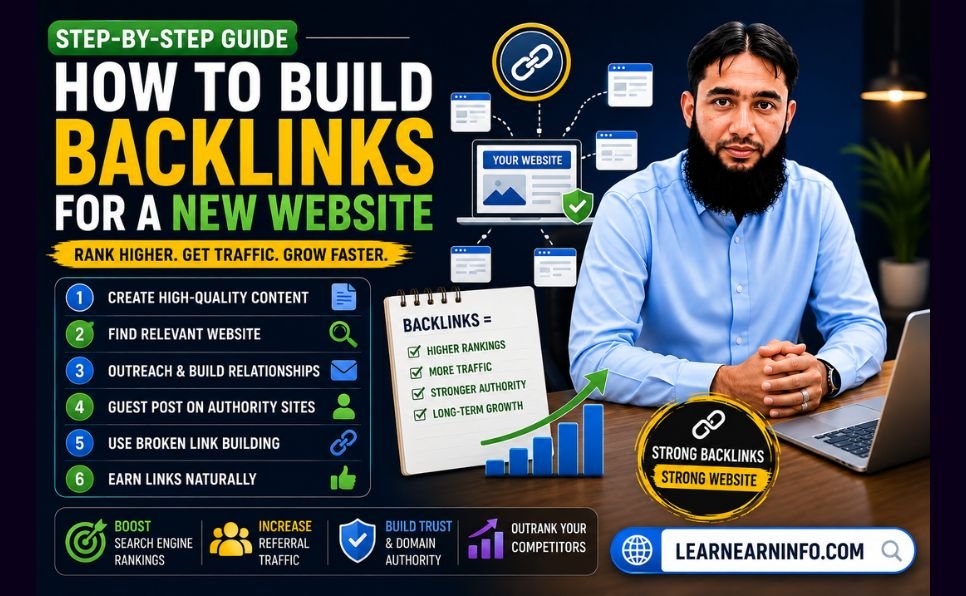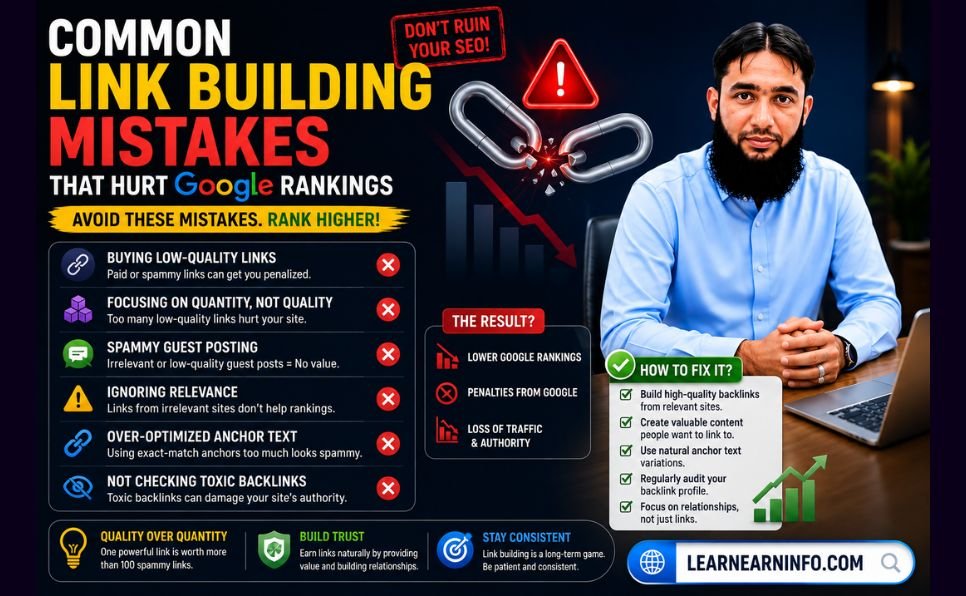
Ever wondered why your website traffic stops growing? Many site owners work hard on off-page SEO but make small mistakes that quietly undo their progress. This guide breaks down the most common link building mistakes and how to fix them.
Backlinks are vital for search engine visibility — they signal trust and relevance. But small, avoidable errors can hurt your site’s performance more than you’d expect.
Fixing these errors is essential for staying competitive online. With the right strategy, your efforts will grow your site steadily. Let’s walk through what’s going wrong and how to correct it.
Understanding Link Building and Its Importance
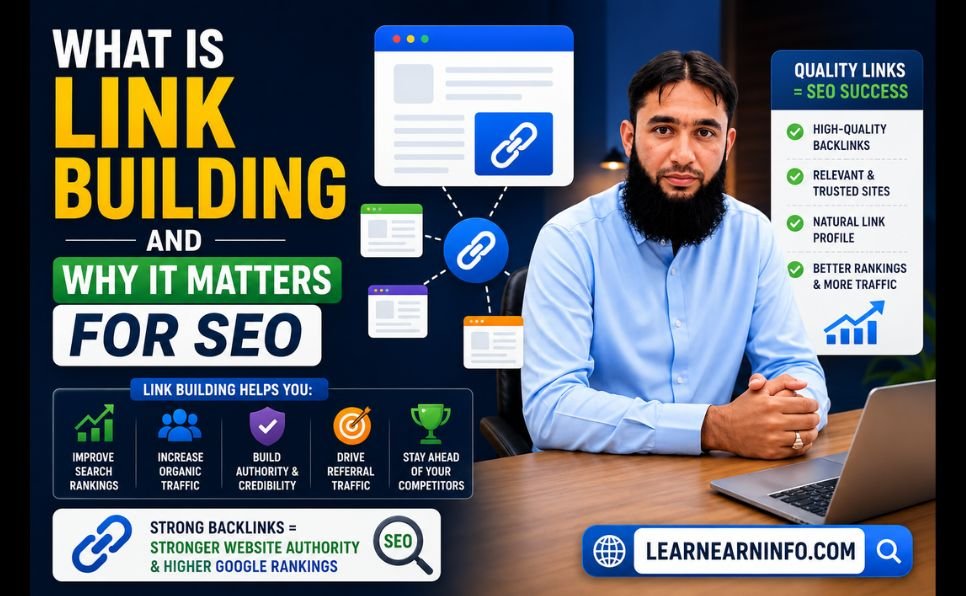
Link building is key to a strong online presence. It’s about earning links from other sites that point back to yours. These links tell search engines your content is trustworthy and worth surfacing. If you’re new to the topic, Google’s SEO Starter Guide is a solid primer before you dive into link building specifically.
What is Link Building?
Link building means earning links from other websites — through shareable content, outreach, or being active in relevant online communities. When a reputable site links to you, it helps your site rank better.
But it’s not just about volume. Poor link building can actively hurt your site’s reputation. It’s far better to focus on quality over quantity. Ahrefs’ guide to link building covers this distinction in more depth.
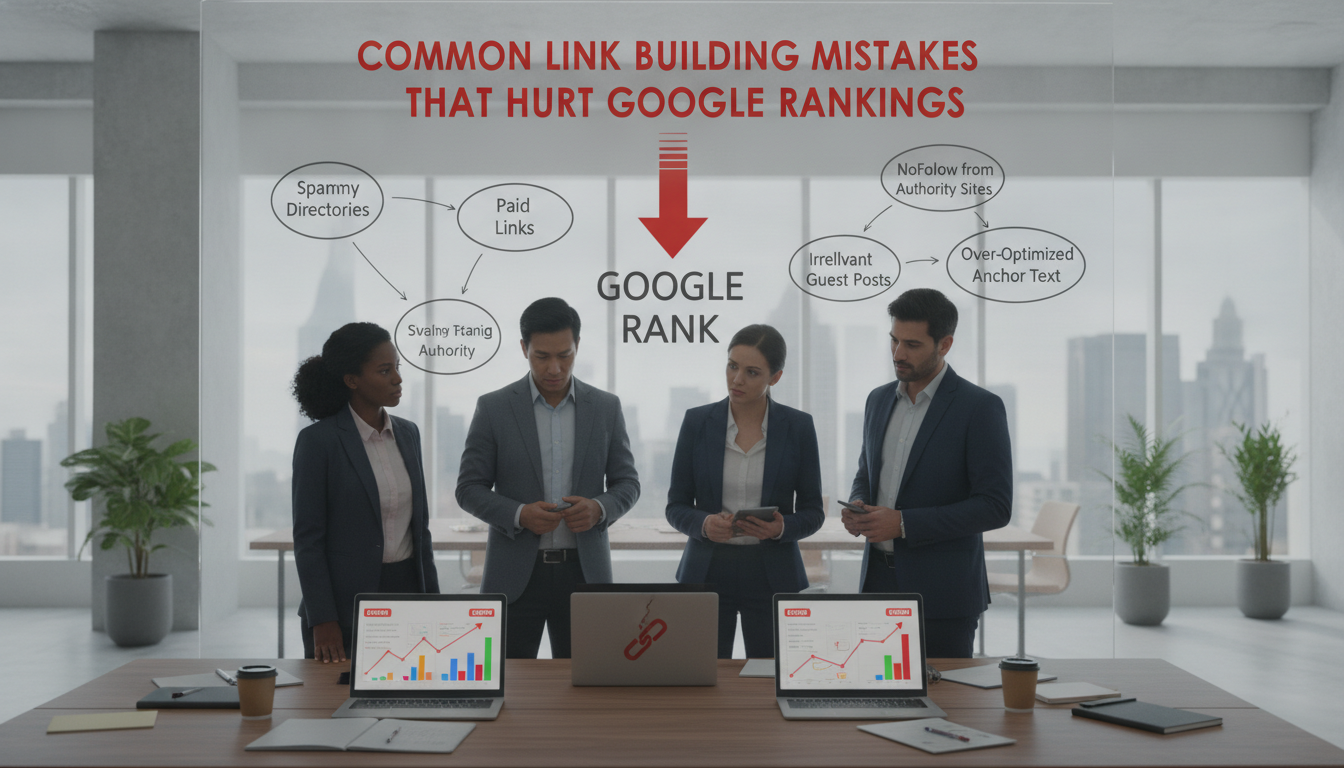
Why Are Links Crucial for SEO?
Search engines use links as a trust signal. Sites with many high-quality links are treated as authorities in their space, which helps establish your brand as a trusted source in your field.
Getting links the right way is central to sustainable digital marketing. Avoiding the mistakes below keeps your site safe from penalties and keeps your content competitive. Google outlines exactly what it penalizes in its spam policies documentation, which is worth bookmarking. For a broader look at ranking factors beyond links, see our guide on how to boost your SEO rankings.
Common Link Building Mistakes
To succeed in search rankings, you need a deliberate plan for your backlinks. Here are the mistakes that trip up most webmasters — and how to avoid them.
Ignoring Relevance of Links
Getting links from sites that don’t match your content is a costly mistake. Search engines value links from sites in your niche far more than a large volume of unrelated links. This is how your site earns authority from the right audience.
Links from unrelated sites can also look manipulative to search engines, suggesting you’re trying to game rankings rather than earn them. Choosing links from sites in your niche builds trust with search engines instead.
Focusing Only on Quantity Over Quality
Many beginners assume more links automatically mean better rankings. That’s not true. A handful of links from respected, relevant sites is worth more than dozens of low-quality ones.
Modern SEO rewards quality links. Every link should add real value. Periodically audit your backlink profile and disavow the bad ones — more on that below. Focus your energy on earning links from sites that matter in your space, the same way you’d focus on content writing trends that actually resonate with readers rather than chasing volume.
Overlooking Anchor Text Optimization
The clickable text in your hyperlinks matters for SEO. The words you choose help search engines understand what the linked page is about. If that text looks manufactured or over-optimized, it can hurt your rankings over time.
Importance of Natural Anchor Text
A natural link profile mixes different types of anchor text — branded terms, generic phrases, and keywords. This variety signals to search engines that your links were earned naturally, not generated by automated schemes.
Using your brand name as anchor text is safe and builds authority. Generic phrases like “click here” or “read more” also make your link profile look organic. Maintaining this balance is key for long-term SEO health.
Avoiding Exact Match Anchor Text
Many site owners overuse exact-match keywords in every backlink. It might seem like a shortcut to ranking, but it commonly triggers spam filters. Overusing this tactic will likely hurt your rankings and can lead to manual penalties.
Instead of stuffing keywords into every link, focus on providing value to readers. A strategic, varied anchor text profile lasts far longer than aggressive keyword-matching.
Failing to Diversify Link Sources
Relying on a single source for backlinks is a red flag to search engines — it looks manufactured rather than earned, which undermines your site’s trustworthiness.
Why Variety Matters in Link Profiles
A healthy backlink profile draws from many different domains — blogs, news sites, and industry directories. This diversity shows your content is genuinely valuable to a wide range of people, and organic growth naturally produces links from many different sources.
Risks of Relying on a Single Source
Leaning on just one type of website can look like spam and suggests your links weren’t earned organically.
A narrow link profile is also a business risk: if your primary link source ever loses authority or gets penalized, your rankings could collapse with it. Diversifying protects your SEO long term.
Not Tracking Your Link Building Efforts
Tracking is essential. Many marketers run outreach campaigns but never check the results, wasting time and resources. Without data, you can’t tell what’s actually working.
Tools for Tracking Backlinks
Professional tools give you real-time visibility into your site’s authority. Ahrefs, Semrush, and Moz are the industry standards, offering dashboards that track new and lost links so you can catch problems early. If you’re working with a smaller budget, check our list of best SEO tools for small businesses.
Analyzing Link Performance
Once you have the data, analyze its actual impact on rankings — counting backlinks isn’t enough; you need to check their quality and relevance too.
If a strategy is only bringing in low-authority links, change direction. Use Google Search Console’s Disavow Tool to disavow toxic domains and keep your profile clean.
Ignoring Local SEO in Link Building
Many business owners focus only on national rankings and miss local customers entirely. Local links help you connect with people who are ready to buy nearby.
Importance of Local Links
Local links tell search engines your business is trusted within a specific community, which is key for showing up in local search results. These links come from sources your local audience already trusts — and people nearby are more likely to convert.
Strategies for Building Local Authority
Reach out to local groups, partner with your Chamber of Commerce, or sponsor community events to earn genuine local backlinks. Building relationships with local news outlets and influencers — through sharing your story or supporting a cause — can also earn you press mentions that carry real local authority.
Neglecting Content Quality for Links
Stop treating content as secondary to outreach — it’s your most powerful link-building asset. Many site owners focus heavily on outreach while ignoring the substance of their own pages, which leads to stagnant growth. High-quality content is the foundation of every successful link-building effort.
The Foundation of Authority
Search engines prioritize sites that provide genuine value. Informative, well-researched content establishes your site as a niche authority, making other webmasters more likely to cite you as a source.
Quality content also acts as a natural link magnet, reducing your dependence on aggressive outreach. Solving real problems for your audience creates something people want to share organically — a far more sustainable approach than manual link acquisition.
Driving Natural Engagement
Focusing on user intent is the most effective way to attract editorial links. Content that directly answers your audience’s questions becomes highly shareable, which signals to search engines that your site is a trusted destination.
Ultimately, your rankings depend on the genuine utility of your pages. Prioritizing depth and clarity makes it easier for others to link to you naturally.
Engaging in Black Hat SEO Tactics
The competitive pressure to rank fast pushes some site owners toward tactics that backfire badly.
Risks Involved with Black Hat SEO
Black hat tactics — buying backlinks, joining link farms — attempt to fake popularity. Search engines are increasingly good at detecting these patterns.
These tricks might produce a short-term traffic bump, but they’re not sustainable, and they leave your site vulnerable long term.
Consequences of Getting Caught
Manual and algorithmic penalties can make your site effectively invisible in search results, and recovering from one is slow and labor-intensive. The reliable path to better rankings is consistent, legitimate strategy — see Google’s own spam policies for exactly what to avoid.
Not Building Relationships with Other Websites
Link building isn’t just a numbers game — it’s a relationship game. Real growth comes from genuine connections with people in your field. Cold emails and automated tools alone tend to produce weak links that don’t last.
Networking for Better Link Opportunities
Attend industry events, join relevant forums, or be active on LinkedIn to build your brand’s credibility and trust — our social media marketing trends roundup covers where these conversations are happening right now. Knowing the people behind the websites you’re targeting makes outreach feel natural — and genuine connections get responses, not silence.
Ways to Establish Valuable Partnerships
Make sure any partnership benefits both sides. Guest blogging works only if you bring genuinely new ideas to the table. Co-writing reports or hosting webinars together benefits both audiences and creates a natural reason to link to each other.
Not Monitoring Google Algorithm Updates
SEO is constantly evolving. Staying current with Google’s updates is essential to protecting your traffic.
Impact on Search Rankings
Google regularly refines how it evaluates links. What works today may not work tomorrow — the Google Search Central Blog is the most reliable place to track official updates.
Refining Your Approach
Review your site’s performance regularly and adjust your strategy as algorithms shift. A well-built, quality-first site tends to weather these changes far better than one built on shortcuts — and that resilience is what keeps your traffic visible for years.
Frequently Asked Questions
What is the biggest link building mistake that hurts Google rankings? Chasing link quantity over quality is the most common and most damaging mistake. A handful of relevant, high-authority backlinks will do more for your rankings than hundreds of low-quality or irrelevant ones — and a bloated, low-quality link profile can actively trigger spam filters.
Can too many backlinks hurt my SEO? Not the number itself, but where they come from. A large volume of links from unrelated, low-authority, or spammy sites signals manipulation to Google. It’s the quality and relevance of the sources — not the raw count — that determines whether backlinks help or hurt you.
How do I know if a backlink is toxic? Toxic links typically come from unrelated niches, low-authority or spammy domains, link farms, or sites with a history of manual penalties. Tools like Ahrefs, Semrush, or Moz can flag these for you, and Google Search Console’s Disavow Tool lets you disavow them directly.
Does anchor text still matter for SEO? Yes. Search engines use anchor text to understand what a linked page is about, but over-optimized, exact-match anchor text across most of your backlinks is a red flag for spam. A natural mix of branded, generic, and keyword anchors is safer and more effective long term.
How often should I audit my backlink profile? A quarterly audit is a reasonable baseline for most sites, with more frequent checks if you’re running active outreach campaigns or have been targeted by negative SEO. Regular audits let you catch toxic links and lost links before they affect rankings.
Is buying backlinks ever safe? No. Buying links violates Google’s spam policies and can result in manual penalties that are difficult and slow to recover from. Earned links through quality content, relationships, and outreach are the only sustainable path.