Most guest posts get rejected. Not because the writing is bad — but because the writer skipped the steps that actually matter to editors.
In 2026, only 5 to 10% of pitches to high-authority sites get accepted. That is not a discouraging statistic — it is an opportunity. If you understand what separates the 5% that get accepted from the 95% that get ignored, you are already ahead of most people competing for the same placements.
This guide walks through every step — from finding the right website to writing a pitch that actually gets a response, to structuring a guest post that editors want to publish and readers want to share.
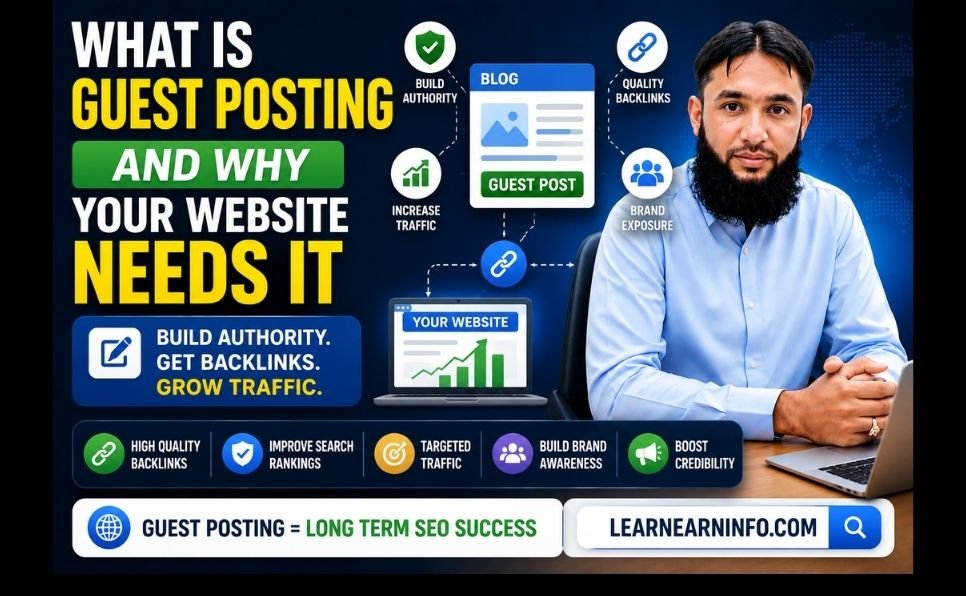
If you are new to the concept, read our full guide on what guest posting is and why it matters before continuing. If you already understand the basics, this guide picks up where that one ends — it is about execution.
Why Writing a Good Guest Post Is Harder Than Writing for Your Own Blog
When you write for your own website, you set the rules. You choose the topic, the tone, the length, and the structure. If something does not quite work, you can fix it quietly and move on.
Guest posting is different. You are writing for someone else’s audience, in someone else’s voice, under someone else’s editorial standards — and you have exactly one submission to make a strong first impression. Editors receive dozens of pitches every week. Most are generic, poorly targeted, and immediately obvious as attempts to get a backlink rather than contribute something genuinely useful.
The ones that get accepted share a few consistent qualities: they are written for the audience first, they fit seamlessly into the site’s existing content, and they treat the backlink as a natural byproduct of good writing rather than the entire reason for the article.
Understanding that distinction is the foundation of everything that follows.

Step 1 — Find the Right Website to Target
The most common guest posting mistake is reaching out to sites that are either too difficult to get into, too low quality to be worth the effort, or so unrelated to your niche that any backlink they provide carries no real SEO value.
Before writing a single word of a pitch, you need to find websites that meet three criteria simultaneously.
Relevance to Your Niche
A backlink from a cooking website to an SEO blog carries almost no authority transfer — because Google measures links not just by quality but by topical relevance. A link from a marketing site to your marketing services page is exponentially more valuable than a technically stronger link from an unrelated domain.
Search Google for your main keywords alongside terms like “write for us,” “guest post,” or “contributor guidelines.” Every result that appears is a website actively looking for guest content in your area.
Domain Authority Worth Pursuing
Check every potential target site using the Ahrefs backlink checker to see their Domain Rating. Sites with a DR below 20 are unlikely to move your domain authority meaningfully. Sites with DR above 50 are excellent targets — though they are more selective. A realistic starting target for most new guest posters is DR 25 to 45. As your portfolio of published guest posts grows, you can target higher-authority placements.
Real Audience and Editorial Standards
Domain Rating alone does not tell you whether a site has a genuine readership. Check their social media presence. Look at comment sections and engagement on recent posts. A site with strong authority but no real audience gives you the link equity without the referral traffic — which is half the benefit.
Also check whether the site maintains clear editorial standards. Websites that publish anything from anyone are typically low-quality regardless of their metrics. Sites with visible contributor guidelines, author bios, and consistent content quality are the ones worth investing effort in.
Step 2 — Study the Site Before You Pitch
This step takes 20 to 30 minutes and is the single most important thing separating pitches that get accepted from pitches that get deleted.
Read at least five recent articles on your target site. Note:
- What topics do they cover most frequently?
- What is the typical article length and structure?
- What tone do they use — conversational, formal, highly technical?
- What subtopics in your niche have they not covered yet — or covered only briefly?
- Do they include data, examples, and original research, or are their articles more opinion-based?
Every editor can tell within seconds whether a pitch came from someone who actually read their site or someone who found it in a list and sent the same email to forty different websites. Pitches from the first group get read. Pitches from the second group get deleted.
Your topic idea needs to fit the site as naturally as a piece of a puzzle. It should feel like something their regular readers would immediately want to click, written by someone who understands their audience specifically.
Step 3 — Write a Pitch That Stands Out
According to research on real outreach campaigns, a 19% reply rate on personalized outreach emails is achievable when the pitch is genuinely tailored. The industry average for generic cold outreach is closer to 3 to 4%. Personalization is not optional — it is the entire difference between getting ignored and getting a response.
The Structure of a Winning Pitch Email
Subject line: Specific and benefit-driven. Include the topic you are proposing directly in the subject line. “Guest post idea: How to use AI tools for SEO in 2026” beats “Guest post submission” every time.
Opening line: Reference something specific about their site that you genuinely noticed. Not “I love your site” — that says nothing. Something like: “I noticed your recent article on content marketing didn’t cover AI-assisted content production — that’s a topic your audience is clearly searching for, based on the comments.”
Your pitch: Propose two to three specific article ideas, each with a working title and two sentences explaining what the article would cover and why it fits their audience. Keep each idea to a maximum of four lines.
Your credibility: One to two sentences about who you are and why you are the right person to write on this topic. Link to two or three of your best published pieces as writing samples.
Call to action: A clear, low-pressure next step. “Would any of these work for your editorial calendar? Happy to send a full outline for whichever fits best.”
Total length: 150 to 200 words maximum. Editors do not have time for long emails. Respect that and your pitch will get further.
What to Avoid in a Pitch
Never start with “I am a passionate writer with years of experience.” No editor has ever accepted a pitch based on that sentence.
Do not attach a full draft unsolicited unless the site’s guidelines specifically request it. Many editors prefer to agree on a topic first.
Do not mention the backlink you want in the pitch. The assumption is that guest posts come with an author bio and contextual links — drawing attention to this before you have even been accepted signals that the link is your primary motivation, not contributing value.
Step 4 — Structure Your Guest Post for Acceptance
Once your pitch is accepted, the article you submit needs to match or exceed the quality of the best content already on that site. Here is how to structure a guest post that editors want to publish immediately rather than send back for rewrites.
Match the Site’s Article Length and Format
If the top-performing articles on your target site are 1,200 words, do not submit 600 words. If their articles use H2 and H3 headings throughout, follow the same structure. If they include data and external citations, include your own.
Do not try to impose your preferred style onto someone else’s platform. Your job as a guest contributor is to produce something so well-matched to their format that the editor can publish it with minimal changes.
Write a Title That Fits Their Style
Study several of the site’s existing titles. Some publications prefer listicle-style titles (“7 Ways to…”). Others prefer how-to formats (“How to…”). Others prefer question-based titles. Match the convention their audience responds to, not the convention you personally prefer.
The title also needs to include a keyword the site’s audience is actually searching for. Use your knowledge of how to rank on Google’s first page to select a title that is both compelling to readers and optimized for search. A well-chosen title gives the editor an additional incentive to accept your post — it brings them traffic they would not have had otherwise.
Hook the Reader in the First Paragraph
Your opening paragraph is what determines whether the editor reads the rest of the draft and whether the site’s visitors continue past the first scroll. It needs to:
- Acknowledge the problem or question the reader arrived with
- Indicate clearly that this article has the answer
- Do this in three to five sentences without wasting words on empty preamble
Generic openings that start with “In today’s digital world…” or “Content is king…” are instantly forgettable. Open with something specific, surprising, or directly useful.
Build the Body Around a Clear Logical Structure
Every section of your guest post should have a job. The job of each section is to answer one specific question or explain one specific concept — and then transition naturally to the next section.
Strong SEO content writing uses headings not just as visual organization but as a logical roadmap. A reader who scans only the headings should understand the article’s full structure and want to read the sections that interest them most.
Within the body, include:
- Specific, verifiable data points from credible sources (not vague claims)
- Concrete examples that illustrate abstract points
- At least one original perspective or insight that goes beyond what already exists on the topic
- Short paragraphs — three to four sentences maximum — for readability
This level of substance is what distinguishes content that builds genuine authority from content that fills space. It is also what the EEAT signals Google uses to evaluate trustworthiness are actually looking for — demonstrated expertise in the content itself, not just claimed in an author bio.
Write a Conclusion That Delivers a Clear Takeaway
Your conclusion should do two things: summarize the most important point the reader should leave with, and give them a clear next action. Not “thanks for reading” — an actual direction. “Start with step one this week and measure the results by the end of the month” is a conclusion. “I hope you found this helpful” is not.
Step 5 — Place Your Backlink Correctly
This is where most guest posters either waste the opportunity or damage their credibility with editors.
Place the Link Where It Adds Genuine Value
Your backlink should appear within the body of the article, embedded in a sentence where it naturally adds useful context for the reader. If you are writing about SEO strategies and your website has a detailed guide on domain authority, linking the phrase “domain authority” where it appears in the text is a natural, valuable link that helps the reader.
What editors object to — and what gets guest posts rejected or links removed — is a link that appears obviously placed for SEO benefit rather than reader benefit. If the sentence only exists to carry your link, the editor will notice.
Anchor Text Should Be Natural and Descriptive
Use anchor text that accurately describes what the linked page contains. “Learn more about SEO” is weaker than “how to increase your site’s domain authority.” Specific, descriptive anchors are better for readers, better for SEO, and less likely to trigger any concern from editors or search engines about unnatural link patterns.
Do not use the same anchor text in every guest post you write. Vary your anchors across placements — brand name, descriptive phrases, and occasionally generic terms like “this guide.” This creates a natural backlink profile rather than one that looks engineered.
Use the Author Bio Strategically
Almost every guest post comes with an author bio — a two to three sentence section at the end of the article where you can introduce yourself and include a link to your website. This is the most common place for a backlink and requires no negotiation with the editor.
Write a bio that leads with your most relevant credential or experience, mentions what you do, and ends with a clear link using your website or service name as anchor text. Keep it professional and focused — author bios are not advertisements.
Step 6 — Submit and Follow Up Professionally
When submitting your draft, include a note to the editor confirming that the content is original, has not been published elsewhere, and meets their stated guidelines. If they asked for specific formatting, confirm that you have followed it.
If you do not receive a response within seven to ten business days, one polite follow-up email is appropriate. Keep it short: “Hi [name], just following up on the guest post draft I sent on [date]. Please let me know if you need any changes or have any questions.”
Do not send multiple follow-ups. Editors are busy, and persistence beyond one follow-up reads as pressure rather than interest.
After Publication — Promote the Article
Once your guest post is live, share it on your own social media channels, link to it from relevant articles on your own website, and send a thank-you note to the editor. Congratulate them on the platform and express genuine appreciation for the opportunity.
This matters more than most people realize. Editors remember contributors who promote their published work and maintain a professional relationship afterward. These are the contributors they invite back — turning a single backlink into an ongoing source of high-authority placements.
Monitor the performance of your published guest posts using Google Search Console — track whether your rankings improve for target keywords in the weeks following publication, and whether the guest post is driving referral traffic to your site.
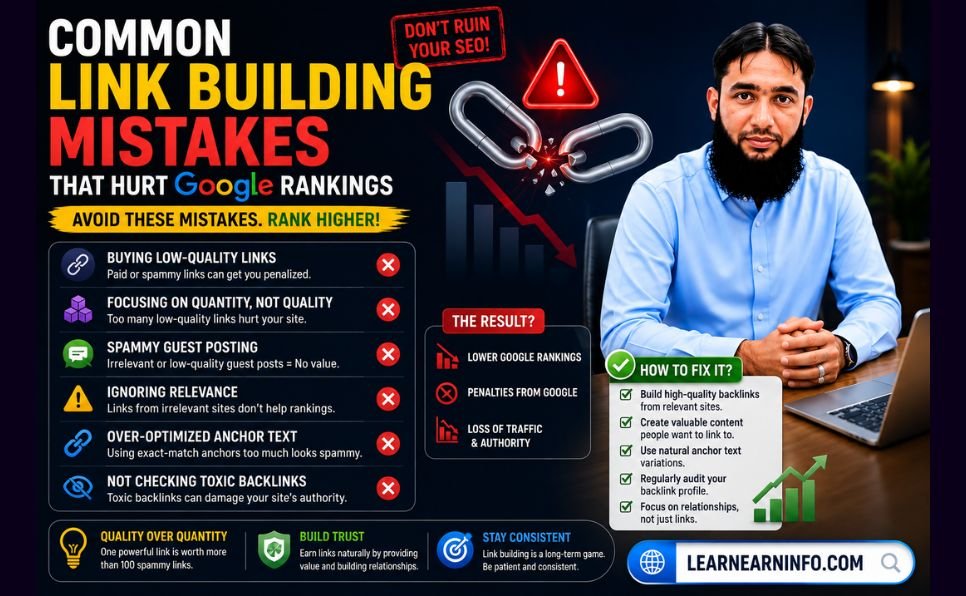
The Most Common Guest Post Mistakes to Avoid
Writing for the backlink, not the audience Editors can always tell. If your article exists primarily to place a link rather than to serve the host site’s readers, the writing reflects it. Write for the audience first. The link is a natural byproduct of a well-placed, valuable contribution.
Submitting generic or recycled content High-authority sites receive multiple pitches per week from writers trying to place content they have already written elsewhere. Original, fresh content written specifically for the target site’s audience is the only kind worth submitting to publications that matter.
Ignoring editorial guidelines Every site that accepts guest posts has guidelines. Ignoring them — wrong word count, wrong format, topics they do not cover — signals to the editor that you did not do your research. Following guidelines precisely is one of the simplest ways to distinguish yourself.
Over-optimizing the backlink Trying to place three or four links to your own site in a single guest post, using keyword-heavy anchor text on all of them, is a pattern search engines and editors both recognize. One or two well-placed, contextually relevant links are both more credible and more effective.
Not following up on performance Publishing a guest post and forgetting about it wastes half the opportunity. Promote it, link to it internally, and track the results. The data you gather from each placement improves your targeting for the next one.
When You Should Use a Guest Posting Service
Writing and placing high-quality guest posts yourself is entirely achievable — but it is time-intensive. Research, pitching, writing, editing, and follow-up for a single placement on a quality site can easily require four to six hours of work, and placements are not guaranteed.
For businesses and website owners whose time is more valuably spent elsewhere, professional guest posting services offer a practical alternative. Our guest posting services handle the full process — from identifying relevant, high-DA websites in your niche to writing the content and securing publication — delivering editorial backlinks without requiring you to manage the outreach process yourself.
If you want to assess your current backlink situation before deciding which approach fits your goals, our free SEO checklist covers your entire link profile alongside on-page and technical factors in one place.
For a complete SEO strategy that goes beyond link building alone, explore our professional SEO services and content writing services — all built to work together as an integrated system for growing organic traffic and rankings.
Your Guest Post Action Plan — Starting This Week
Here is a simple, concrete plan to go from reading this guide to having your first guest post accepted:
Day 1 to 2: Research ten target websites using Google search operators and Ahrefs. Check domain authority, niche relevance, and editorial standards. Shortlist five that meet all three criteria.
Day 3: Read five articles on each of your top two target sites. Note their format, length, tone, and any obvious topic gaps.
Day 4: Write personalized pitches for your top two sites — each with two to three specific topic ideas tailored to that site’s audience.
Day 5: Send the pitches. Set a calendar reminder to follow up in ten days if you have not received a response.
While waiting: Begin outlining the article for the site you are most confident about. A complete outline in hand means you can submit a draft within days of getting accepted, which editors appreciate.
After acceptance: Write the full article. Match the site’s format exactly. Place one to two links naturally within the content. Write a professional author bio. Submit on time.
Then repeat. Guest posting compounds — each published piece makes the next pitch easier, and each backlink makes the next ranking improvement faster.
Final Thoughts
A perfect guest post is not about clever writing tricks or SEO shortcuts. It is about genuinely understanding a publication’s audience, producing something that adds real value to that platform, and making the editor’s job as easy as possible.
Do that consistently — across the right sites, with the right topics, and with professionally placed backlinks — and guest posting becomes one of the most reliable, sustainable tools available for building authority, rankings, and referral traffic simultaneously.
Use the boost your SEO rankings guide to build the broader SEO strategy around your guest posting efforts, and if you are building a blog from the ground up, the guide on how to start a blog walks through the foundation you need before guest posting becomes fully effective.
Start with one pitch this week. One good article on one relevant site with a genuine audience. That is how it begins.
Have you tried guest posting? What was your biggest challenge — finding sites, writing pitches, or getting accepted? Share in the comments.
Related Articles: