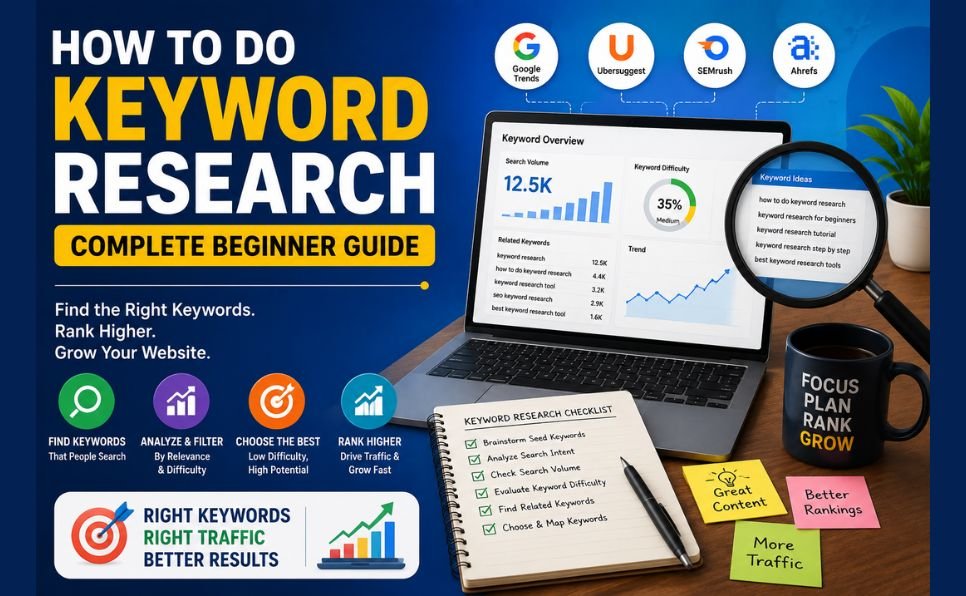
Keyword research is the process of finding, analyzing, and using the exact phrases people type into search engines—so you can create content that ranks, attracts the right visitors, and converts. In 2026, it’s not just about “high volume” keywords; it’s about intent, relevance, and business impact.
This guide walks you through a simple, step-by-step framework you can follow—even if you’re starting from zero.
1. Understand Why Keyword Research Matters (Especially in 2026)
Before jumping into tools, know why you’re doing this:
-
It’s the foundation of SEO: Every on-page element, content piece, and link-building effort starts with the right keywords.
-
It reveals user intent: Are people looking to buy, learn, compare, or solve a problem? Your content must match that intent.
-
It drives qualified traffic: Targeting the right keywords means attracting visitors who are more likely to convert (not just bounce).
💡 Pro Tip: In 2026, Google prioritizes content that demonstrates EEAT (Experience, Expertise, Authoritativeness, Trustworthiness). Your keyword strategy should reflect topics where you can genuinely show expertise.
2. Step-by-Step Keyword Research Process (Beginner-Friendly)
Follow this 5-step workflow to build a powerful keyword list:
Step 1: Define Your Niche, Audience, and Seed Keywords
Start by answering:
-
Who is your ideal customer?
-
What problems do they have?
-
What topics does your business cover?
Then, brainstorm 5–10 seed keywords—broad terms that describe your core offerings.
Example for a freelancing blog:
-
“freelance writing tips”
-
“how to start freelancing”
-
“freelance jobs for beginners”
Step 2: Expand Your List Using Keyword Research Tools
Use free and paid tools to generate hundreds of keyword ideas from your seeds.
Best Free Tools (2026):
-
Google Keyword Planner – Great for search volume and paid keyword ideas.
-
Google Autocomplete – Type your seed keyword in Google and note the suggestions.
-
Also Asked / Answer Socrates – Find question-based keywords (perfect for blog posts).
-
Keywords Everywhere (Chrome Extension) – Shows search volume directly in Google SERPs.
Best Paid Tools (if you have budget):
-
Semrush Keyword Magic Tool – Massive database + intent filters.
-
Ahrefs Keywords Explorer – Excellent for competitor analysis and difficulty scores.
-
Mangools / KWFinder – Beginner-friendly with clean UI.
📌 Action: Aim for a list of 200–1,000 keywords before filtering.

Step 3: Analyze Keywords by Volume, Difficulty, and Intent
Not all keywords are worth targeting. Filter your list using these 3 criteria:
🔍 Intent Types Explained:
Informational: “What is SEO content writing” → Blog post or guide.
Commercial: “Best SEO tools 2026” → Comparison or review.
Transactional: “Hire SEO writer” → Service page or contact form.
Navigational: “Perplexity AI login” → Brand-specific page.
Step 4: Prioritize Keywords by Business Impact
Use this simple scoring system to pick your top 20–50 target keywords:
-
Relevance: Does this keyword align with your services or content goals?
-
Traffic Potential: Can this keyword bring consistent visitors over time?
-
Conversion Potential: Will ranking for this keyword lead to leads, sales, or sign-ups?
-
Competition: Can you realistically rank for this in 3–6 months?
🎯 Example:
-
“How to do keyword research” → High volume, high intent, perfect for a beginner guide (like this one).
-
-
“Keyword research services” → Lower volume, but high conversion (people ready to hire).
Step 5: Map Keywords to Content
Don’t just collect keywords—assign them to specific pages or posts:
-
1 Primary Keyword per page (e.g., “How to Do Keyword Research”).
-
3–5 Secondary Keywords to support the main topic (e.g., “keyword research tools,” “free keyword planner,” “beginner SEO guide”).
-
Internal Linking: Link related articles (e.g., link this guide to your “On-Page SEO Checklist” or “SEO Content Writing” post).
3. Advanced Tips for 2026 (Beyond the Basics)
Once you’ve mastered the fundamentals, level up with these strategies:
✅ Use Google Search Console Data
-
Check which keywords you already rank for (even on page 2–3).
-
Optimize those pages to push them to page 1.
✅ Spy on Competitors
-
Use Ahrefs or Semrush to see what keywords your competitors rank for.
-
Target gaps where they’re weak and you can win.
✅ Leverage SERP Features
-
Look for “People Also Ask,” “Featured Snippets,” and “Related Searches” in Google results.
-
Create content that directly answers those questions.
✅ Focus on Long-Tail Keywords
-
Long-tail = 3+ words (e.g., “how to do keyword research for freelancers”).
-
Lower competition, higher intent, easier to rank.
✅ Update Quarterly
-
Keyword trends change. Revisit your list every 3 months and add new opportunities.
4. Free Keyword Research Checklist (Downloadable)
Use this quick checklist every time you start a new keyword project:
-
Defined my niche and audience
-
Brainstormed 5–10 seed keywords
-
Used 2–3 tools to expand my list (free or paid)
-
Filtered by volume, difficulty, and intent
-
Prioritized top 20–50 keywords by business impact
-
Mapped keywords to specific pages/posts
-
Planned internal links to related content
-
Scheduled a quarterly review
5. How This Connects to Your Existing Cluster
This article completes your SEO content cluster by filling the keyword research gap. Here’s how it ties everything together:
Final Thoughts
Keyword research isn’t a one-time task—it’s an ongoing process that fuels your entire SEO strategy. In 2026, the winners aren’t those who chase the highest volume keywords, but those who understand intent, relevance, and business goals.
Start small: pick 5 seed keywords, use free tools, and build your first list. Then, map those keywords to content, optimize, and track your rankings. Over time, you’ll see compounding traffic—and that’s when SEO truly pays off.
Next Steps:
-
On-Page SEO Checklist → Learn how to optimize your pages for your target keywords.
-
SEO Content Writing → Discover how to write content that ranks and converts.
-
How to Rank on Google First Page → See how keyword research fits into a broader ranking strategy.
🚀 Ready to start? Open Google, type your first seed keyword, and begin your list today.