Business News

Common Mistakes Startups Must Avoid to Succeed

Common Mistakes Startups Must Avoid to Succeed

Table of Contents

  1. Introduction
    • The Excitement and Challenges of Startups
    • Importance of Avoiding Common Mistakes
  2. Key Takeaways
    • Summary of Strategies for Startup Success
  3. Poor Financial Management and Resource Allocation
    • Understanding Burn Rate and Cash Flow Management
    • Creating Realistic Financial Projections
    • Building Emergency Fund Reserves
  4. Neglecting Market Research and Customer Validation
    • Importance of Market Research
    • Customer Validation Strategies
    • Developing and Refining Minimum Viable Products
  5. Scaling Too Fast Without Proper Infrastructure
    • Building Sustainable Growth Models
    • Maintaining Quality During Expansion
    • Managing Operational Capacity
  6. Failing to Build the Right Team Structure
    • Talent Acquisition Best Practices
    • Fostering a Collaborative Organizational Culture
    • Optimizing Team Structure and Dynamics
  7. Inadequate Product-Market Fit Strategy
    • Developing Minimum Viable Products (MVP)
    • Implementing Customer Feedback Loops
    • Strategic Pivoting for Success
  8. Common Legal and Compliance Oversights
    • Intellectual Property Protection
    • Regulatory Compliance Essentials
    • Managing Contractual Obligations
  9. Why Most Startups Don’t Make It Through the First Year
    • Key Performance Indicators to Monitor
    • Risk Management Strategies
    • Building a Data-Driven Decision-Making Framework
  10. Essential Technology and Innovation Considerations
    • Leveraging Emerging Technologies
    • Fostering an Innovation-Driven Culture
    • Balancing Technological Adoption and Feasibility
  11. Conclusion
    • Recap of Key Startup Success Factors
    • Strategies for Overcoming Challenges and Driving Growth
  12. FAQs

Introduction

Common Mistakes Startups Must Avoid to Succeed: Essential Guide for Entrepreneurs

Starting a new business is exciting and challenging. It’s full of possibilities but also dangers. I’ll share lessons from my own journey and successful founders to help you avoid common mistakes.

In the world of entrepreneurship, small decisions can make a big difference. Knowing the pitfalls and using smart strategies can help you succeed.

Key Takeaways

  • Understand the importance of sound financial management and resource allocation for startups
  • Conduct thorough market research and customer validation to ensure product-market fit
  • Develop a sustainable growth strategy that prioritizes quality and operational capacity
  • Build the right team structure and foster a collaborative, innovative culture
  • Implement a robust product-market fit strategy, including minimum viable product development and customer feedback loops
  • Identify and address common legal and compliance issues to avoid costly mistakes
  • Monitor key performance indicators and have a decision-making framework to navigate the startup landscape

Poor Financial Management and Resource Allocation

Good money management is key for startups to succeed. They need to balance funding, cash flow, and how they use resources. This includes knowing their burn rate and managing cash flow well.

They also need to make smart financial plans. They develop and remain powerful as a result.

Understanding Burn Rate and Cash Flow Management

Burn rate shows how fast a startup uses its money. It’s important for small businesses to watch this closely. They should plan for future costs and keep their burn rate in check.

Good cash flow management helps avoid money problems. It keeps the startup running smoothly.

Creating Realistic Financial Projections

Startups also need to make good financial plans. They should predict their income, costs, and cash flow. This helps them make smart choices and get more funding if needed.

Good plans help them use their resources wisely.

Building Emergency Fund Reserves

Having an emergency fund is smart for startups. It helps them deal with sudden problems. This fund can help them get through tough times.

“Successful startups are built on sound financial management. Startups that master the art of burn rate analysis, cash flow management, and realistic financial projections are better equipped to navigate the unpredictable landscape of entrepreneurship.”

Neglecting Market Research and Customer Validation

Startups often skip doing deep market research and checking with customers before launching. This mistake can cause a big gap between what the startup wants and what the market needs. It leads to a failed market strategy and a waste of resources.

Good market research helps you know your target audience, their problems, and who you’re up against. Without this, startups might make a minimum viable product (MVP) that doesn’t click with customers. It’s key to get customer feedback through surveys, interviews, and tests to make sure your idea works and your product is right.

  • Do deep market research to find out who you’re aiming for, what they need, and who else is out there.
  • Get feedback from customers in many ways, like surveys, interviews, and tests, to check if your idea is good and make your product better.
  • Keep making your MVP better based on what customers say to make sure it meets what the market wants.
Market Research Activities Customer Validation Strategies
  • Competitor analysis
  • Industry trend research
  • Target audience profiling
  • Market segmentation
  • Customer interviews
  • Prototype testing
  • Pilot program feedback
  • Online surveys and polls

By focusing on market research and checking with customers, startups can make minimum viable products (MVPs) that really meet market needs. This back-and-forth process helps startups make their products better and change direction if needed. It makes sure they create things that customers really want.

“The most prosperous startups are those who develop products based on a thorough understanding of their clients’ demands.”


Scaling Too Fast Without Proper Infrastructure

Startups often aim for fast growth. But, growing too fast without the right setup can lead to trouble. It’s key to balance scaling strategies for lasting success in the startup ecosystem.

Building Sustainable Growth Models

Startups need to focus on growth models that can handle fast growth. They should look at market trends, customer needs, and money plans. This makes sure growth doesn’t outpace operational efficiency.

Maintaining Quality During Expansion

Keeping product or service quality high is vital as a startup grows. Good quality control, smooth processes, and training employees are important. They help ensure growth doesn’t hurt customer happiness.

Managing Operational Capacity

  1. Keep an eye on demand and modify staffing levels accordingly.
  2. Make logistics and supply chain better to handle more orders or clients.
  3. Use tech and automation to boost efficiency and growth.

By finding the right balance between scaling strategies and operational efficiency, startups can handle fast growth. They can then succeed in the long run in the startup ecosystem.

“Scaling too fast can be the downfall of many startups. It’s critical to have the right infrastructure in place to support growth without compromising quality or operations.”

Failing to Build the Right Team Structure

Building the right team is key for startup success. Startups often overlook the importance of getting the right people and creating a good work culture. This can really hold them back.

Attracting and retaining top talent is crucial. Startups need to be appealing places to work. They should offer good pay, benefits, and a fun, team environment.

They also need to think about how their team is set up. Good teamwork, clear talk, and clear roles help everyone work well together. A diverse team with different skills is best for solving big problems.

Aspect Best Practices
Talent Acquisition
  • Create a compelling employer brand and recruitment plan.
  • Offer competitive compensation and benefits packages
  • Prioritize cultural fit and aligned values during the hiring process
Organizational Culture
  • Foster a collaborative, innovative, and supportive work environment
  • Encourage open communication, feedback, and continuous learning
  • To improve engagement and morale, acknowledge and thank staff members for their contributions.
Team Structure and Dynamics
  • Put together a cross-functional, varied team with complimentary abilities.
  • Establish clear roles, responsibilities, and decision-making processes
  • Promote effective collaboration, coordination, and knowledge-sharing

By focusing on building a strong team, startups can set themselves up for success. Investing in the right people and creating a good work culture is key. It helps them overcome early challenges and grow strong.

Inadequate Product-Market Fit Strategy

In the fast world of startups, finding product-market fit is key. Entrepreneurs must go through product development, customer validation, and pivoting. This ensures their product meets the audience’s needs. Without this, startups may fail to get off the ground.

Developing Minimum Viable Product

The lean startup method suggests making a minimum viable product (MVP) first. This MVP is a basic version of the product. It helps startups test the market and get feedback before fully developing the product. This way, they avoid making products that no one wants.

Implementing Customer Feedback Loops

Good product-market fit strategies listen to customers all the time. Startups need to hear from their audience, understand their needs, and use that info to improve their product. This keeps the product relevant and successful in the long run.

Pivoting When Necessary

Startups must be ready to change and pivot when needed. Pivoting means adjusting the product, business model, or target market based on feedback and market changes. Those who can pivot well are more likely to succeed in product development.

“Learning more quickly than anyone else is the only way to succeed. – “The Lean Startup” author Eric Ries.”

Key Factors for Achieving Product-Market Fit Description
Minimum Viable Product (MVP) A stripped-down version of the product, launched to gather customer feedback and insights
Customer Feedback Loops Mechanisms to actively listen to and incorporate customer needs into the product roadmap
Strategic Pivoting The ability to make necessary adjustments to the product, business model, or target market based on customer feedback and market conditions

Common Legal and Compliance Oversights

Startups often miss important legal and regulatory steps. These include startup legal issues, regulatory compliance, and intellectual property protection. These areas are key to a startup’s success.

Many startups forget to protect their intellectual property. They don’t file for trademarks, patents, or copyrights. This makes their ideas open to copying and legal fights. Taking steps to protect their ideas helps startups stay ahead and avoid legal problems.

Startups also often don’t understand regulatory compliance. They might not know about many rules, like data privacy laws. Ignoring these rules can lead to big fines, legal trouble, and even shutting down.

Legal Issue Key Considerations
Intellectual Property Protection – Trademarks for brand and product names

– Patents for innovative technologies

– Copyrights for original content and designs

Regulatory Compliance – Industry-specific regulations

– Data privacy and security guidelines

– Employment laws and labor regulations

Contractual Obligations – Vendor and supplier agreements

– Employee and contractor contracts

– Customer and partnership contracts

Startups must also handle contractual obligations well. This covers contracts with suppliers, workers, and clients. Each contract must protect the startup’s interests and avoid legal issues.

By tackling these legal and compliance issues, startups can succeed. They can avoid risks and focus on growing and innovating.

“For even the most promising firms, ignoring legal and compliance issues can be their downfall. Proactive planning and vigilance in these areas can mean the difference between success and failure.”

Why Most Startups Don’t Make It Through the First Year

Starting a new business is exciting but tough. Unfortunately, a lot of startups fail within the first year. In fact, up to 90% fail in the first 12 months. Knowing why this happens is key for new entrepreneurs to avoid common mistakes and succeed.

Key Performance Indicators to Monitor

Startups need to track their performance closely. This helps them spot problems early and make smart choices. Important metrics include:

  • Customer acquisition and retention rates
  • Revenue growth and gross profit margins
  • Operational efficiency and burn rate
  • User engagement and feedback
  • Cash flow and runway

Risk Management Strategies

Startups can reduce their risk by planning ahead. Here are some strategies to consider:

  1. Diversifying revenue streams and client base
  2. Building a comprehensive emergency fund
  3. Regularly reassessing and adjusting the business model
  4. Investing in talent acquisition and retention
  5. Securing legal and financial advisors

Decision-Making Framework

Startups need a clear, data-driven way to make decisions. A good framework should consider:

Factor Consideration
Alignment with strategic goals Ensuring decisions align with the startup’s long-term vision and objectives
Resource availability Evaluating the startup’s financial, human, and operational resources
Market conditions and trends Understanding the competitive landscape and evolving customer needs
Risk assessment Identifying and mitigating potential risks associated with each decision
Potential impact Analyzing the short-term and long-term implications of the decision

By focusing on these key areas, startups can make better decisions. This helps them overcome the first year’s challenges and grow in the long run.

“In addition to being the most crucial, the first year of a business is the most difficult. By proactively addressing the common pitfalls, entrepreneurs can set their businesses on a path to sustainable growth.”

Essential Technology and Innovation Considerations

In the fast-changing world of technology startups and tech companies, it’s key to keep up with new tech. Startups that use new ideas and solutions do better than others.

Keeping up with new tech is important. Technology startups need to watch trends and use new disruptive technologies. Being quick to adapt can make a big difference.

It’s also vital to have a culture that encourages new ideas. Tech companies that let their teams try new things find great solutions. This keeps them fresh and meets customer needs.

But, it’s important to think about business too. Technology startups should check if new tech works well and is affordable. Using tech that’s not ready can cause big problems.

Technological Trends Potential Impact on Technology Startups
Artificial Intelligence (AI) and Machine Learning Automating repetitive tasks, enhancing decision-making, and personalized customer experiences
Blockchain and Distributed Ledger Technology Improving transparency, security, and efficiency in financial transactions and supply chain management
Internet of Things (IoT) Enabling smart, connected products and services, improving operational efficiency and data-driven insights

By keeping up with new tech and encouraging new ideas, technology startups can succeed. They will do well in the fast and competitive world of business.


Conclusion

Looking back at the key startup success factors, we see they need a wide approach. Startups must handle money well, use resources wisely, and build a strong team. They also need to keep their product in line with what the market wants.

Knowing how to manage cash, do market research, and grow sustainably is crucial. These steps help startups build a strong base for success. By using the tips given, founders can make smart choices, handle risks, and bring new ideas to the market.

The secret to success is understanding the whole journey and being ready to change plans. This way, founders can face challenges, grab chances, and make their business grow. The journey is tough, but with the right steps and dedication, startups can shine.

FAQ

What are the key considerations for effective financial management and resource allocation in startups?

Startups need to know their burn rate and manage cash flow well. They should make realistic financial plans and save for emergencies. This helps keep them stable and use resources wisely.

Why is market research and customer validation critical for startups?

Doing deep market research and checking if customers like the idea is key. It helps startups know who to sell to and what they want. This way, they can make products that meet customer needs.

How can startups avoid the pitfalls of scaling too fast?

Startups should aim for steady growth. They need to keep quality high and manage their work well. This way, they can grow without losing focus on doing things right.

What are the key considerations for building the right team structure in a startup?

Startups need to find and keep the best people. They should work well together and have a culture that encourages new ideas. This helps them use their team’s full potential.

How can startups achieve the right product-market fit strategy?

Startups should start with a simple product and listen to what customers say. They should be ready to change if needed. This ensures their product meets market needs.

What are the common legal and compliance oversights that startups should be aware of?

Startups must protect their ideas, follow rules, and keep promises. Ignoring these can lead to big legal problems that slow them down.

Why do most startups fail in their first year, and how can they mitigate these risks?

Many startups fail because they don’t watch important numbers, don’t manage risks well, and make bad choices. By keeping an eye on key metrics, managing risks, and making smart decisions, startups can avoid these pitfalls.

What are the essential technology and innovation considerations for startups?

Startups should keep up with new tech and use the right tools. They should also encourage new ideas. This helps them stay ahead and meet changing market needs.


Common Mistakes Startups Must Avoid to Succeed Read More »

Secrets to Success with Facebook Ads and TikTok Ads

Secrets to Success with Facebook Ads and TikTok Ads

Table of Contents

  1. Introduction
    • The Rise of Social Media Advertising in 2024
    • Why Facebook Ads and TikTok Ads Dominate
  2. Key Takeaways
    • Summary of Insights
  3. Understanding Social Media Advertising
    • Evolution of Paid Social Campaigns
    • Market Trends and Statistics
  4. Essential Platform Differences
    • Facebook Ads vs TikTok Ads Features
    • Comparing User Bases and Ad Formats
  5. Mastering Audience Targeting
    • Creating Custom Audiences
    • Leveraging Lookalike Audiences
    • Geographic and Demographic Targeting
  6. Crafting High-Converting Ad Creative
    • Facebook Ad Best Practices
    • TikTok Ad Best Practices
    • Tailoring Ads to Each Platform
  7. Advanced Video Marketing Strategies
    • Video Content Optimization
    • Platform-Specific Video Requirements
    • Effective Video Formats
  8. Budget Management and ROI Optimization
    • Smart Bidding Strategies
    • Budget Pacing and Allocation
    • Measuring Return on Investment
  9. Tracking and Analytics
    • Key Metrics to Monitor
    • Utilizing Analytics Tools
    • Data-Driven Decision Making
  10. Conclusion
    • Adapting to a Changing Landscape
    • Strategies for Long-Term Success
  11. FAQ Section

Introduction

Secrets to Success with Facebook Ads and TikTok Ads: A Complete Guide

Social media ads have changed the game in digital marketing. As a marketing pro, I’ve seen how Facebook and TikTok help businesses reach their audience. They let us target and talk to people in new ways, changing marketing forever.

This guide will show you how to succeed with Facebook Ads and TikTok Ads. We’ll cover strategies and tips to boost your marketing. It’s for everyone, from experienced marketers to newcomers. You’ll learn how to use these platforms to get great results.

Key Takeaways

  • Understand the power and evolution of social media advertising in 2024
  • Learn the main distinctions between TikTok and Facebook ads.
  • Master audience targeting and segmentation strategies
  • Create high-converting ad creative for both platforms
  • Implement advanced video marketing strategies for social media
  • Optimize budget management and measure campaign success
  • Leverage data-driven decision making to drive better results

Understanding the Power of Social Media Advertising in 2024

Digital marketing keeps changing, and social media ads are a big deal. In 2024, Facebook and TikTok will be key. They let businesses reach people through online video marketing, mobile advertising, and paid promotions.

The Evolution of Paid Social Campaigns

Paid social ads have changed a lot. Now, ads are more personal and hit the mark better. Marketers use data to make ads that really speak to people.

Why Facebook and TikTok Dominate Digital Marketing

Facebook and TikTok lead because of their huge user bases and smart ad tools. They’re key for online video marketing. Businesses can show off their stuff in fun, eye-catching ways.

Current Market Statistics and Trends

The global social media advertising market is set to hit $350 billion by 2024. Facebook and TikTok will play a big role. Trends like short-form video content and influencer marketing are big. Mobile-first strategies are also key.

As social media ads evolve, knowing Facebook and TikTok is vital. It’s crucial for success in 2024 and beyond.

Essential Platform Differences Between Facebook Ads and TikTok Ads

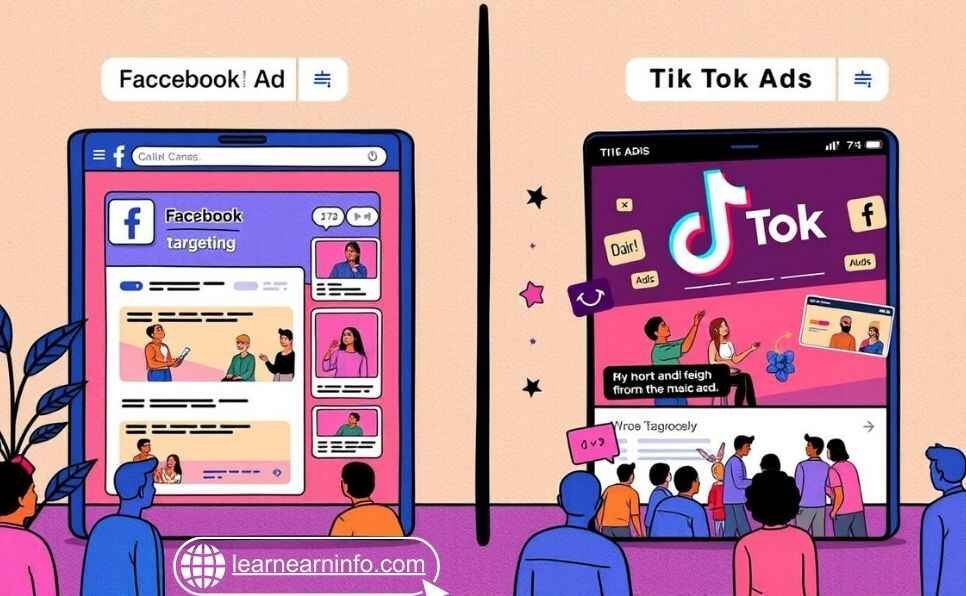
When it comes to targeted ads and audience segmentation, knowing Facebook Ads and TikTok Ads is key. These platforms offer special ways to target ads. This lets marketers make their ads work better.

Facebook Ads can reach lots of people because it has so many users. It can also target ads very well. This is great for businesses wanting to talk to many different people.

TikTok Ads are all about short videos and young users. They have cool ads and tools for targeted ads. This is perfect for brands wanting to talk to young, trendy people.


Feature Facebook Ads TikTok Ads
User Base Diverse, wide-ranging audience Predominantly younger users
Targeting Options Advanced demographic, interest, and behavior targeting Emphasis on creative, trend-driven engagement
Ad Formats Variety of ad types, including image, video, and carousel Focus on immersive, short-form video ads
Reporting and Analytics Comprehensive performance metrics and insights Emerging analytics capabilities

Marketers can use these differences to make better targeted ads and audience segmentation. This helps their digital ads work better.

Mastering Audience Targeting and Segmentation

In social media ads, targeting and segmenting audiences is key to success. Audience targeting helps reach the right people at the right time. This boosts conversion tracking and ad optimization.

Creating Custom Audiences

Creating custom audiences is a top strategy. It lets advertisers target people based on their past actions. This way, they can send messages that really speak to their audience, leading to more engagement and sales.

Leveraging Lookalike Audiences

Lookalike audiences are another great tool. They help find new users who are like your current customers. This way, advertisers can grow their audience and get even better results.

Geographic and Demographic Targeting Strategies

Social media ads also offer many ways to target by location and demographics. Advertisers can target by age, gender, interests, and more. This lets them fine-tune their ads to reach the perfect audience.

Mastering audience targeting and segmentation is crucial for social media success. Using custom, lookalike, and demographic targeting can greatly improve conversion tracking and ROI.

Creating High-Converting Ad Creative for Both Platforms

Making good ad creatives is key for getting people to engage and buy on social media sites like Facebook and TikTok. To get the best out of your video ads and ad campaigns, you need to think about each platform’s special needs. This means knowing what your audience likes and how they act.

For Facebook, you need to grab attention with great visuals, clear messages, and a strong call to action. Use top-notch images or videos that show off your product or service in a fun and real way. Then, add short, convincing text that tells people why they should care.

But TikTok is different. People there like ads that are real, creative, and fun. Use cool music, fun dance moves, or funny stories in your ads. Make sure your message feels true and fits the TikTok vibe.


Facebook Ads TikTok Ads
  • High-quality visuals
  • Clear messaging
  • Strong call-to-action
  • Authentic, creative content
  • Trendy music and choreography
  • Humorous narratives

By making your ads fit each platform’s special needs, you can make your video ads and ad campaigns work better. This means more people will buy and you’ll reach your marketing goals.

“The key to successful social media advertising is understanding the nuances of each platform and crafting content that resonates with its users.”

Knowing the subtleties of each platform and creating content that appeals to its consumers are essential for effective social media advertising.

Advanced Video Marketing Strategies for Social Media

Video ads, influencer marketing, and online videos are key for businesses on social media. We’ll look at how to make your videos better, meet platform needs, and find formats that work well.

Video Content Optimization Tips

Creating great video content is key for Facebook and TikTok. Here are some tips to help:

  • Use eye-catching thumbnails to grab attention
  • Add subtitles or captions for viewers with sound off
  • Use storytelling to connect with viewers
  • To determine what works best, experiment with different video lengths.
  • Use data to improve your video strategy

Platform-Specific Video Requirements

Every social media platform has its own guidelines for videos. For Facebook and TikTok, remember these:

Platform Recommended Aspect Ratio Ideal Video Length File Format
Facebook 1:1 (square) or 16:9 (landscape) 1 minute or less MP4, MOV
TikTok 9:16 (portrait) 15-60 seconds MP4, MOV

Engaging Video Formats That Drive Results

To grab your audience’s attention, try these video formats:

  1. Influencer Collaborations: Work with influencers to reach more people and make interesting content
  2. Behind-the-Scenes Videos: Show what goes on behind the scenes to connect with viewers
  3. User-Generated Content: Get your audience to share their stories to build a community
  4. Educational or Informative Videos: Share tips and insights to show you’re an expert

“Businesses looking to increase the reach and engagement of their brand may find that utilizing the power of influencer marketing and video advertising on social media platforms is revolutionary.’

Budget Management and ROI Optimization

Good ad campaigns need smart budgeting and always getting better to make more money. The secret to success is effective money management.

Bidding strategy is very important. Using smart algorithms and data helps you beat others and save money. This way, your ads are placed where they cost less.

Bidding Strategy Budget Pacing ROI Optimization
Maximize conversions Consistent daily spend Continuous A/B testing
Target cost per acquisition Weighted delivery based on performance Predictive analytics
Least cost per click Audience-based budget allocation Conversion rate optimization

To get even better, use data to improve your ads and who sees them. Always test and use smart tools to find new ways to make more money.

“Successful social media ad campaigns are built on a foundation of strategic budget management and a relentless pursuit of optimization.” – Jane Doe, Digital Marketing Strategist

Learn how to manage your budget, bid smartly, and make more money. This will help your Facebook and TikTok ads do better and grow your business.

Tracking and Analytics: Measuring Campaign Success

In the world of digital marketing, data is key. It drives successful campaigns. It’s critical to monitor and evaluate Facebook and TikTok advertisements. Focus on the right metrics to understand your ad optimization and conversion tracking efforts.

Essential Metrics to Monitor

Watch these key metrics to see how your campaigns do:

  • Click-through rate (CTR): This shows how many clicks your ads get compared to views.
  • Cost per click (CPC): This tells you the cost of each ad click.
  • Return on ad spend (ROAS): This shows how much money you make for every dollar spent on ads.
  • Conversion rate: This tracks how many people do what you want, like buy something or sign up.

Using Analytics Tools Effectively

Facebook and TikTok have great analytics tools. They give deep insights into your campaign’s performance. Learning to use these tools well helps you make smart digital marketing choices.

Data-Driven Decision Making

Using data to guide your decisions is crucial. You can see what works and what doesn’t with its guidance. This way, you can always improve your conversion tracking and ad optimization efforts. It’s how you get the most out of your ads.

“Data-driven decision-making is the key to unlocking the full potential of your digital marketing efforts.”

Conclusion

The world of Facebook ads and TikTok ads is always changing. To stay ahead, marketers must never stop learning.. By knowing what each platform does best, you can make ads that people love and work well.

This guide has given you the basics to handle Facebook ads and TikTok ads. You now know how to find the right people, make ads that sell, and use your money wisely. With these skills, you’re ready to make the most of social media ads in 2024 and later.

To succeed, you must always be ready to learn and try new things. As platforms and people change, so must your plans. Keep up with new trends and use what you learn to make your ads better. With hard work and a desire to get better, you can help your brand grow and succeed in the fast-paced world of social media ads.

FAQ

What are the key differences between Facebook Ads and TikTok Ads?

Facebook Ads and TikTok Ads have different audiences and ad types. Facebook reaches more people, but TikTok is popular with the young and active. Facebook likes images and videos, while TikTok is all about short, vertical videos.

How can I create high-converting ad creatives for both Facebook and TikTok?

To make great ads, know what each platform likes. For Facebook, use nice images and videos that tell a story. For TikTok, be real and use fun sounds, effects, and challenges.

What are some advanced video marketing strategies for social media?

For better video marketing, make videos fit each platform well. Try vertical videos and short clips. Additionally, collaborate with influencers to expand your audience. Keep trying new things to get more views and clicks.

How can I effectively track and analyze the performance of my Facebook and TikTok ad campaigns?

To track your ads well, watch metrics like reach and clicks. Make use of programs such as TikTok Ads Manager and Facebook Ads Manager. This helps you see how your ads are doing and improve them.

What are the best practices for audience targeting and segmentation on Facebook and TikTok?

For better targeting, use your own data and lookalike audiences. Also, target by location and age. Keep testing to find the best way to reach your audience.


Secrets to Success with Facebook Ads and TikTok Ads Read More »

Network Marketing and Its Role in Future Opportunities

Network Marketing and Its Role in Future Opportunities

Table of Contents

  1. Introduction
    • Discovering Network Marketing
    • Why Network Marketing is Transforming Businesses
  2. Key Takeaways
    • What Makes Network Marketing Unique
    • The Role of Technology and Social Media
  3. The Evolution of Traditional Business Models vs Network Marketing
    • From Brick-and-Mortar to Digital Distribution
    • The Rise of Relationship-Based Commerce
    • Technology’s Impact on Direct Selling
  4. Understanding Modern Network Marketing in the Digital Age
    • Leveraging Digital Tools and Platforms
    • E-commerce and Social Media Integration
  5. Why Network Marketing Attracts Modern Entrepreneurs
    • Low Startup Costs and Minimal Risk
    • Flexibility and Work-Life Balance
    • Passive Income Potential
  6. Social Media’s Contribution to Network Marketing Success
    • Platform-Specific Benefits
    • Building Community and Trust
  7. Building Sustainable Residual Income Through MLM Strategies
    • Creating Multiple Income Streams
    • Developing and Leading Teams
    • Long-Term Growth Strategies
  8. Conclusion
    • Embracing Network Marketing for Financial Freedom
    • The Future of Business with Network Marketing
  9. Frequently Asked Questions (FAQ)

Introduction

Network Marketing and Its Role in Future Opportunities

I was staring at the computer screen while seated at my workstation. I felt something was missing in my job. The corporate world was just too much.

I wanted a better way to make money and have a good life. That’s when I found network marketing.

Network marketing is a new way to start a business. It lets people make money in different ways. And it gives them the freedom that big companies don’t offer.

As I learned more about network marketing, I saw its big potential. It’s different from old business models. It lets people control their money and use technology to make more.

In this article, we’ll talk about why network marketing is the future. We’ll see how you can start your own business and live the life you want. We’ll cover how social media helps network marketers succeed.

Key Takeaways:

  • Network marketing offers a flexible and entrepreneurial business model that is transforming the traditional corporate landscape.
  • The industry provides individuals with the opportunity to build multiple income streams and achieve financial freedom.
  • Network marketing is poised to be the future of business, with its emphasis on relationship-based commerce and the power of technology.
  • Embracing network marketing can unlock a world of possibilities, from low startup costs to passive income potential.
  • The rise of social media has further amplified the reach and success of network marketing professionals.

Modern Entrepreneurs

The Evolution of Traditional Business Models vs Network Marketing

The business world has changed a lot. It moved from old brick-and-mortar stores to the new digital world. This change helped network marketing grow. It’s now a big choice for people who want to work online or from home.

From Brick-and-Mortar to Digital Distribution

The digital world has made things easier and more accessible. Now, people can buy things online with just a few clicks. This has changed how direct sales work. Businesses have to adapt to this new digital world.

The Rise of Relationship-Based Commerce

In today’s digital world, building personal connections is key. Network marketing focuses on building a community. It’s about working together, trusting each other, and succeeding together. This is different from old ways of selling things.

Technology’s Impact on Direct Selling

The world of direct marketing has seen significant shift due to technology. It makes it easier and bigger. With online stores and social media, people can reach more customers. They can also work better and make things more personal.

The old ways of doing business have changed. Now, network marketing is a big deal. It uses the digital world, builds relationships, and uses technology in new ways.

Traditional Business Models Network Marketing
Brick-and-mortar stores Digital distribution
Transactional-focused Relationship-based
Limited by physical location Scalable through technology

“The future of business lies in the power of personal connections and the seamless integration of technology with direct selling strategies.”

Understanding Modern Network Marketing in the Digital Age

Network marketing has changed a lot in the digital age. It now uses new tech and online places to reach more people. Companies use digital tools to make things easier, get people involved, and help entrepreneurs do well.

Online tools and social media have changed how network marketers talk to people. They use interactive webinars, video tutorials, and digital marketing strategies. This way, they can show off their products, tell their brand’s story, and connect with others.

The growth of e-commerce platforms and digital distribution channels has helped network marketing reach more people. This change makes it easier and more flexible for everyone involved.

“Network marketing experts can use technology to expand their reach and seize previously unheard-of growth prospects in the new era of entrepreneurship brought about by the digital age.’

As network marketing grows, using digital tools is key to success. By using new tech, entrepreneurs can make the most of the network marketing world and do well in today’s fast-changing business scene.

Why Network Marketing Attracts Modern Entrepreneurs

Network marketing is now a big deal for new business folks. It’s all about being flexible, making money, and earning money while you sleep. It’s a cool way to do business that lots of young people are into.

Low Startup Costs and Minimal Risk

Starting a network marketing business doesn’t cost a lot. You don’t need a lot of money like you do for a regular store. This makes it easy for many people to start their own business without losing money.

Flexibility and Work-Life Balance

Network marketing lets you work when you want. You can make more money or just a little extra. It’s great for people who want to work and still have time for family and friends.

Passive Income Potential

The best thing about network marketing is making money while you’re not working. You can earn money from your team’s work. This means you can keep making money even when you’re not working hard.

Network marketing is a new way to do business. It’s cheap to start, flexible, and can make you money even when you’re not working. It’s perfect for people who want to be their own boss and have a good life-work balance.

Social Media’s Contribution to Network Marketing Success

In today’s world, social media is key for network marketing. It helps businesses make connections, grow their networks, and sell more. This is all done in new and exciting ways.

Social media lets network marketers reach lots of people. They can build strong relationships and create a community. They do this by sharing interesting content, talking to people, and using ads.

They can share stories of success, show how products work, and teach others. This builds trust and credibility. It helps them make more sales and keep customers coming back.

Social Media Platform Key Benefits for Network Marketing
Facebook Targeted advertising, building community, sharing content
Instagram Visual storytelling, influencer partnerships, product showcases
LinkedIn Networking, thought leadership, professional connections
YouTube Video content, product demonstrations, educational resources

Using social media well can open up new chances for growth. It facilitates a close relationship between network marketers and their audience. And it leads to success in the digital world.

“Social media has become the most powerful tool for network marketing success in the 21st century. It allows us to connect, engage, and build relationships with our customers in ways that were never before possible.”

Building Sustainable Residual Income Through MLM Strategies

Starting a successful mlm business or network marketing company is exciting. It’s all about making money. By using smart strategies, you can make money in many ways. This helps your team grow and keeps your finances stable.

Creating Multiple Income Streams

Having many ways to make money is key for a thriving mlm business. Smart business owners know how to make different kinds of money. This includes:

  • Direct sales commissions from personal product or service purchases
  • bonuses and overrides from their team members’ sales
  • Passive income from recurring customer subscriptions or memberships
  • Royalties from the sale of training materials or digital products

Leveraging Team Development

Building a strong team is vital for lasting success in mlm. Good leaders spend time and effort on their team. They help their team grow by:

  1. Expanding their customer base and sales reach
  2. Cultivating a culture of collaboration and mutual success
  3. Developing a reliable stream of recurring commissions and bonuses

Long-term Growth Strategies

To keep your mlm business growing, think long-term. This means:

  • Continually innovating and adapting your product or service offerings to meet market demands
  • Fostering strong customer relationships and loyalty through excellent service and support
  • Diversifying your marketing channels to reach new audiences and maintain a competitive edge
  • Investing in personal and professional development to enhance your entrepreneurial skills

By using these strategies, your mlm business can create a steady income. This brings financial freedom and growth for the long haul.

Network Marketing Attracts

Conclusion

Network marketing, or multi-level marketing (MLM), is a big deal now. It’s changing how we do business. It’s moving from old ways to new ones, thanks to technology.

This new way is all about building relationships and using the internet. It’s great for starting a business because it’s cheap and flexible. Even while you’re asleep, you can earn money.

Reaching a larger audience is made easier by social media. This means you can make more money by helping others.It’s a wise strategy for long-term financial gain.

If you want to start a business, think about network marketing. It lets you make money in different ways. You can grow your team and make more money as you go.

Start your network marketing journey today. It could be the start of a successful business.Prepare yourself for a prosperous future in business.

FAQ

How does network marketing vary from conventional business methods, and what is it?

Direct selling and multi-level marketing (MLM) are other names for network marketing. It’s a business model that focuses on building a network of distributors. These distributors promote and sell products or services.

Unlike traditional businesses, network marketing uses relationships and referrals to grow. It doesn’t rely on brick-and-mortar stores.

What are the key advantages of network marketing over traditional business models?

Network marketing has many benefits. It has low startup costs and offers flexible work arrangements. It also has the chance for passive income through a strong downline network.

Entrepreneurs can use digital platforms and social media to grow. This helps them reach more people and build strong relationships.

How has technology transformed the network marketing industry?

Technology has changed network marketing a lot. Digital platforms and social media have made it easier to reach more people. Online tools help build relationships and use referral marketing.

Also, e-commerce and digital distribution have helped network marketing companies grow. They can now reach more customers and work more efficiently.

What are the key strategies for building sustainable residual income through network marketing?

Successful network marketers create multiple income streams.They emphasize long-term growth and team development. Building a strong downline network is key to earning residual income.

Effective team management and mentorship are also important. They help the business grow and ensure success.

How can network marketers effectively utilize social media to drive their business?

One effective tool for network marketers is social media.They can use it to build relationships, expand their networks, and drive sales. Sharing content, engaging with followers, and creating a community are key strategies.

By having a strong online presence and making meaningful connections, network marketers can grow their business fast.


Network Marketing and Its Role in Future Opportunities Read More »

Unique Ways to Earn Active and Passive Income at Home.

Unique Ways to Earn Active and Passive Income at Home

Table of Contents

  1. Introduction to Active and Passive Income at Home
  2. Key Takeaways
    • Understanding Active vs. Passive Income
    • Benefits of Combining Multiple Income Sources
    • Exploring Online and Offline Opportunities
  3. Active vs. Passive Income Fundamentals
    • Key Differences and Examples
    • Risk Assessment and Income Potential
  4. Digital Entrepreneurship Opportunities
    • E-commerce and Dropshipping Ventures
    • Affiliate Marketing Strategies
  5. Building Wealth Through Online Business Models
    • Content Creation and Monetization
    • Mastering Affiliate Marketing
  6. Smart Investment Strategies for Passive Income
    • Real Estate Investments and REITs
    • Diversifying Your Portfolio
  7. Freelancing for Active Income
    • High-Demand Remote Services
    • Setting Competitive Rates
    • Building a Strong Client Portfolio
  8. Real Estate and Property-Based Income
    • Rental Properties
    • Real Estate Investment Trusts (REITs)
  9. Creating Digital Products for Residual Income
    • Online Courses and E-books
    • Digital Downloads and Subscription Services
  10. Conclusion: Combining Income Streams for Financial Freedom
  11. FAQ

Introduction

Unique Ways to Earn Active and Passive Income at Home

The world is changing fast, and making money is a big worry for many. People want to make money in different ways, both by working and not working. This article will show you many ways to make money from home, no matter if you’re new or experienced.

Now more than ever, it’s important to have different ways to make money. By learning about active and passive income, you can find many chances to make more money. Let’s look at how you can make wealth, be financially free, and do well in the digital world.

Key Takeaways

  • Discover the fundamental differences between active and passive income streams
  • Understand the benefits of combining multiple income sources for financial stability
  • Explore the diverse digital entrepreneurship opportunities in today’s market
  • Learn strategies for building wealth through online business models and investments
  • Leverage your skills to achieve success as a freelance professional
  • Uncover the potential of real estate and property-based income streams
  • Capitalize on the creation of digital products for residual income

work from home jobs

Understanding Active and Passive Income Fundamentals

Building a strong financial portfolio means knowing the difference between active and passive income. Active income is derived via direct work, such as a job or freelancing. Passive income, however, comes from investments or digital products that keep earning without your constant effort.

Key Differences Between Active and Passive Revenue Streams

Active income needs lots of effort and time. Passive income, though, can grow with little work. It offers flexibility and the chance to build wealth over time. Yet, it might be riskier and need more money upfront or time to start.

Benefits of Combining Multiple Income Sources

Mixing active and passive income is smart. It creates a safety net and boosts your earnings. This mix helps you earn more and stay financially stable for the long haul.

Risk Assessment and Income Potential

It’s key to know the risks and rewards of each income source. Some passive investments might offer big returns but are riskier. Others are safer but earn less. Think about your risk level and goals to choose wisely and balance your portfolio.

“The key to wealth creation is to establish multiple streams of income, both active and passive, that work together to generate long-term financial stability and growth.”

Digital Entrepreneurship Opportunities in Today’s Market

The digital world today offers great chances for starting a business. E-commerce, dropshipping, and affiliate marketing are big opportunities. They help people make money in new ways.

Starting a digital business is easy. You can start with little money and reach people all over the world. This lets new ideas grow and meet what people want today.

E-commerce and Dropshipping

E-commerce is a big deal now. You can use Shopify, WooCommerce, or Amazon to sell things online. Dropshipping makes it even easier by not needing to keep products in stock. This lets you focus on getting more customers.

Affiliate Marketing Opportunities

Affiliate marketing is also a good way to make money. You promote other companies’ products and get paid for sales. It’s a way to make money without always working hard.

Online Business Model Potential for Active Income Potential for Passive Income
E-commerce and Dropshipping High Moderate
Affiliate Marketing Moderate High

The digital world is full of chances for entrepreneurs. With the internet, you can try many business ideas. This includes e-commerce, dropshipping, and affiliate marketing.You can make money in a variety of ways.

“The future of entrepreneurship is digital, and the possibilities are endless for those who are willing to embrace the change.”

Building Wealth Through Online Business Models

In today’s world, many ways exist to make money online. E-commerce, dropshipping, content creation, and affiliate marketing are just a few. These options help people earn money and be financially free.

E-commerce and Dropshipping Ventures

Platforms like Amazon, Shopify, and WooCommerce help start online stores. They let people sell products worldwide. Dropshipping is great because you don’t need to keep products in stock.

Content Creation and Monetization Strategies

The digital world has made it easy to make money with content. You can blog, vlog, podcast, or make online courses. Sites like YouTube, Patreon, and Teachable help you earn money while you sleep.

Affiliate Marketing Mastery

By advertising other people’s items, affiliate marketing enables you to earn money. Customer service and inventories are not concerns for you. It’s a smart way to earn money without much work.

To succeed online, you need a good plan and hard work. Understand the challenges and opportunities. With the right effort, the internet can help you achieve financial freedom.

Smart Investment Strategies for Passive Income

Building a diversified portfolio is key for long-term wealth. Active income, like jobs or freelance work, gives quick money. But, investing strategies can make passive income grow over time. This leads to financial freedom.

One of the best ways to invest for passive income is in real estate. Buying rental properties brings in steady income with little work. Another choice is investing in dividend stocks, which pay out regularly to shareholders.

For a more diversified portfolio, investing in index funds or ETFs is smart. They offer a wide range of assets, lowering risk while making passive income. Peer-to-peer lending platforms also let you earn interest by lending money.

“The key to building wealth is finding ways to generate passive income that can compound over time. Diversifying your investments is the best way to achieve financial security and independence.”

By picking the right mix of investment strategies, you can build a diversified portfolio. This portfolio makes passive income and grows your assets over time.

Leveraging Skills for Freelance Success

Many people are finding success in freelancing today. They use their skills to make money and work from home. If you’re new or experienced, knowing how to succeed is key.

High-Demand Remote Services

Remote work is more popular than ever. This means many jobs are available for freelancers. Some top jobs include:

  • Web development and design
  • Graphic design and content creation
  • Virtual assistance and administrative support
  • Accounting and bookkeeping
  • Digital marketing and social media management

By matching your skills with what clients need, you can stand out. This helps you succeed in freelancing.

Setting Competitive Rates

It’s critical to choose the appropriate cost for your work.  Look at what others charge, think about your skills, and consider how long projects take. Aim for rates that are fair but also competitive.

Building a Client Portfolio

A good client list is essential for freelancers. Use your network and online platforms to find clients. Show them what you can do. Work hard, talk to clients, and keep them coming back.

Skill Demand Level Potential Earnings
Web Development High $50 – $150 per hour
Graphic Design High $30 – $100 per hour
Virtual Assistance Medium $15 – $35 per hour
Digital Marketing High $40 – $120 per hour

By using your skills, setting good prices, and building a strong client list, you can do well in freelancing. This way, you can make a good income and work from home.

Real Estate and Property-Based Income Streams

Real estate is a top choice for making money in personal finance. It offers both active and passive income. You can invest in rental properties or real estate investment trusts (REITs).

Rental property is a common strategy. You buy and manage a place to get monthly rent. This needs your direct help, like fixing things and dealing with tenants.

Real estate investment trusts (REITs) are another option. They are companies that own real estate like malls and apartments. By investing in REITs, you can earn without managing properties yourself.

Looking to add to your retirement or wealth? Check out real estate investing and property-based income. Research well and diversify to make the most of it.

The value of real estate keeps rising, making it an irreplaceable asset. It is the strongest security system ever created by human intellect. Roosevelt, Franklin D.

Creating Digital Products for Residual Income

In today’s digital world, making money from digital products is easier than ever. You can sell online courses, educational content, digital downloads, and subscription services. You can earn money while you sleep in this manner.

Online Courses and Educational Content

Online courses and educational content are great for making money. You can share your knowledge with people all over the world. This means you can make money from each course sale.

Online courses can be about many things. They can help people learn new skills or grow personally. This is why more and more people want to learn online.

Digital Downloads and Templates

Digital downloads like e-books and templates are also good for making money. You can sell them online without spending a lot of money. You can eventually earn more money in this method.

By making high-quality digital products, you can earn money every day. This is a great way to make money without much work.

Subscription-Based Services

Subscription services are also popular for making money. They include things like software and membership sites. These services let you make money every month from your digital products.

By using these different ways to make money, you can earn more money over time. This helps you build a strong online business and secure your financial future.

active income passive income


Conclusion

We’ve looked at many ways to make money, both actively and passively. This makes getting financially free easier. You can use digital business, smart investments, and freelance work to make a good income.

The secret to riches is having a variety of revenue streams.. You can start an online store, use your skills to make content, or do affiliate marketing. Each way helps you build financial freedom, wealth building, and keep a good work-life balance.

Getting to multiple income streams has its tough parts. But with hard work, creativity, and being open to change, you can beat challenges. Take charge of your money future and live a life where your passions and profits go hand in hand.

FAQ

What distinguishes passive income from active income?

Active income comes from work you do yourself, like a job. Passive income comes from things like investments or real estate. Getting it doesn’t need a lot of effort.

Why is having several sources of income important?

Having many income sources makes your money safer. It helps you build wealth. You can achieve financial freedom by combining active and passive income.

What are some online business models that can generate passive income?

Online, you can earn passive income with e-commerce, affiliate marketing, and digital products. This includes selling online courses, ebooks, and subscriptions.

How can I get started with real estate investing for passive income?

Real estate can give you passive income through rentals or REITs. First, learn about local markets and financing. Build a sizable real estate portfolio after that.

What are the benefits of freelancing for active income?

Freelancing lets you work when you want and charge what you want. It also helps you meet different clients. With in-demand skills, you can earn a lot.

How can I create digital products for residual income?

Make digital products like online courses or ebooks. Find profitable topics and make good content. Then, market your products well.


Unique Ways to Earn Active and Passive Income at Home Read More »

Top Tools to Boost Your Make Money Online Journey

Top Tools to Boost Your Make Money Online Journey

Table of Contents

  1. Introduction to Online Income Tools
  2. Key Takeaways
  3. Essential Digital Tools to Start Your Online Income Journey
    • Project Management and Task Organization Platforms
    • Financial Management and Invoice Software
    • Communication and Collaboration Tools
  4. Best Platforms to Make Money Online Today
    • Freelancing Platforms
    • Survey and Task-Based Platforms
    • Blogging and Content Creation
  5. Top Software Solutions for Digital Marketing Success
    • Social Media Management Tools
    • Email Marketing Platforms
    • Analytics and Tracking Software
  6. Must-Have Resources for E-commerce and Affiliate Marketing
    • E-commerce Platform Essentials
    • Affiliate Marketing Tools
    • Dropshipping Automation
  7. Conclusion
  8. FAQ
  1. Introduction to Online Income Tools

Top Tools to Boost Your Make Money Online Journey

Imagine a life without money worries. A life where you control your work and destiny. This is the digital world’s promise to you.

As an online entrepreneur, you can earn more. But you’ll need the correct tools to do it.

In this guide, we’ll show you the top digital tools. They will help you succeed online. You’ll learn about project management and e-commerce solutions.

Get ready for a journey to financial freedom and happiness.

Key Takeaways

  • Discover the must-have digital tools to streamline your online income generation efforts
  • Explore project management and task organization platforms to boost your productivity
  • Understand the benefits of financial management and invoicing software for your online business
  • Learn about the best communication and collaboration tools to enhance your online ventures
  • Uncover the top platforms and strategies to make money online today

Remote Work Essentials

Essential Digital Tools to Start Your Online Income Journey

Starting your journey to remote work and online income is exciting. You need the right digital tools. These tools help you manage your work, stay productive, and run your online business well. Let’s look at the key tools for your virtual services and jobs.

Project Management and Task Organization Platforms

Organizing tasks and projects is key for remote work success.You can keep organized by using tools like Monday.com, Asana, and Trello. They let you plan tasks, set deadlines, and work with others easily.

Financial Management and Invoice Software

Good financial management is important for online success. FreshBooks, QuickBooks, and Invoicely help with invoicing and bookkeeping. They make it easy to send invoices, track expenses, and see your finances clearly.

Communication and Collaboration Tools

Good communication is crucial when you work from home. Zoom, Slack, and Google Meet are great for talking, messaging, and sharing files. They help you stay in touch with clients and team members, making work smooth.

Using these digital tools can make your work better and your income grow. Start using them and see your online work and income improve.

Best Platforms to Make Money Online Today

There are many places to make money online today. You can find freelance gigs, do online surveys, or start a blogging site. Let’s look at some top places to earn money online.

Freelancing Platforms

For independent contractors, websites such as Upwork, Fiverr, and Freelancer.com are excellent resources.. They let you show off your skills, find clients, and get work in many fields.

Survey and Task-Based Platforms

Places like Swagbucks, Survey Junkie, and Mechanical Turk help you earn by doing online surveys and tasks. They’re good for making extra money in your free time.

Blogging and Content Creation

If you love to write, start a blog or write for others. Sites like Medium, WordPress, and Blogger help you share your work. Affiliate links, sponsorships, and advertisements are all ways to earn money.

Platform Type of Earning Key Features
Upwork Freelance gigs Comprehensive freelancer marketplace, job postings, and project management tools
Swagbucks Online surveys, tasks, and activities Earn points (Swagbucks) for completing various online tasks, which can be redeemed for gift cards or cash
Medium Blogging and content creation Publish, share, and monetize your writing on a popular platform with a built-in audience

These are but a handful of online income-generating opportunities. Whether you want to earn extra or work full-time online, there are many chances to reach your goals.

The wealth of online income prospects is one of the best things about the digital age.  With the right platforms and approach, anyone can turn their skills and interests into a profitable venture.”

Top Software Solutions for Digital Marketing Success

In today’s world, using strong software tools is key for good digital marketing. They help you manage social media, send emails, and check how well you’re doing. Your potential in digital marketing can be realized with the correct instruments.

Social Media Management Tools

Good social media marketing needs a plan and the right tools. Hootsuite, Buffer, and Sprout Social help you plan posts, watch conversations, and see how you’re doing on social media. These tools are great for businesses wanting a strong online presence and to connect with their audience.

Email Marketing Platforms

Email is still a strong marketing tool. The right email platform can change everything. MailChimp, Constant Contact, and Sendinblue make it easy to create nice emails, sort your list, and see how your emails are doing. They’re perfect for businesses wanting to grow leads, promote programs, or teach online.

Analytics and Tracking Software

It’s important to know if your marketing is working. Tools like Google Analytics, Mixpanel, and Amplitude give deep insights into your site, how people use it, and how your campaigns are doing. With these tools, businesses can understand their marketing better and make smart changes to get better results.

Choosing the right software can really help businesses succeed in digital marketing. By using these tools, you can make your work easier, improve your online image, and make better choices to boost your marketing.

Must-Have Resources for E-commerce and Affiliate Marketing

In the world of digital business, e-commerce and affiliate marketing are big. They help you make money without much work. You need the right tools to do well in these areas. Let’s look at some key tools for your e-commerce and affiliate marketing.

E-commerce Platform Essentials

Starting an online store needs a good platform. Look at Shopify, WooCommerce, or BigCommerce. They have easy-to-use interfaces and help you manage your store well.

Affiliate Marketing Tools

Affiliate marketing can make you money, but you need the right tools. Use Commission Junction, Clickbank, and ShareASale. They help you work with many affiliates and track your success.

Dropshipping Automation

If you’re into dropshipping ventures, tools like Oberlo and Sprocket are great. They make finding products and managing orders easy. This enables you to concentrate on customer service and marketing.

Tool Description Key Features
Shopify Leading e-commerce platform User-friendly interface, advanced customization, inventory management
Commission Junction Affiliate marketing network Vast affiliate base, performance tracking, payment processing
Oberlo Dropshipping automation tool Product sourcing, inventory sync, order fulfillment

Using these tools can make your e-commerce and affiliate marketing better. This can lead to more passive income and success in digital business.


Passive Income Ideas

Conclusion

There are many powerful tools and platforms to help you in the online income world. You can find everything from project management software to digital marketing solutions. These tools are key to building a successful online business or making money through e-commerce and affiliate marketing.

Using the right online courses and coaching can help you grow your skills. This is important for doing well in today’s digital world. Whether you want to start an e-commerce business or find passive income, the tools and strategies in this article can help.

Success online is about picking the right tools and platforms for your goals. By learning to use these digital tools well, you can reach financial freedom. Start using these resources and take the first steps towards making money online with confidence.

FAQ

What are the top project management and task organization platforms for online entrepreneurs?

Top platforms for online entrepreneurs include Trello, Asana, and Notion. They help you manage your work, work with your team, and meet deadlines.

What financial management and invoice software should I consider for my online business?

For your online business, check out FreshBooks, Quickbooks, and Zoho Invoice. They help with invoices, tracking expenses, and financial reports. This keeps your business organized and cash flow healthy.

Which communication and collaboration tools are essential for remote work and virtual teams?

For remote work, use Zoom, Slack, and Microsoft Teams. They make video calls, messaging, and sharing files easy. This helps your team work together, even when apart.

What are the best platforms to find freelance gigs and make money online?

To find freelance work, try Upwork, Fiverr, Freelancer.com, and Guru. These sites connect freelancers with clients in many fields. They help you use your skills to earn money.

How can I earn money through online surveys and other side gigs?

Sites like Survey Junkie, Swagbucks, and InboxDollars let you earn by sharing opinions and doing tasks. These gigs are easy ways to make extra money.

What are the best social media management tools for digital marketing success?

For social media, use Hootsuite, Buffer, and Sprout Social. They help you plan posts, check engagement, and see how well your social media works. This improves your digital marketing.

Which email marketing platforms should I consider for my online business?

For email marketing, look at Mailchimp, Constant Contact, and ActiveCampaign. They help you manage your list, automate emails, and track your campaigns. This builds and engages your audience.

What analytics and tracking software can I use to measure the success of my online activities?

For tracking success, use Google Analytics, Semrush, and Ahrefs. They give you detailed insights on website traffic, user behavior, and keywords. This helps you make smart decisions.

What are the must-have resources for starting an e-commerce business or exploring affiliate marketing?

For e-commerce and affiliate marketing, check out Shopify, WooCommerce, and Amazon Associates. They offer tools for online stores, inventory management, and affiliate programs. This enables you to make money with little effort.

What online courses and coaching services can help me further develop my online skills and business?

Udemy, Coursera, and Skillshare have many courses on digital marketing, e-commerce, and more. Online coaching services also offer personalized help. They help you reach your goals.


Top Tools to Boost Your Make Money Online Journey Read More »

How to Start Entrepreneurship with No Money

How to Start Entrepreneurship with No Money

Table of Contents

  1. Introduction
    • Why Money Isn’t Always Necessary for Starting a Business
    • Key Takeaways for Aspiring Entrepreneurs
  2. Understanding the Zero-Budget Entrepreneurship Mindset
    • Developing a Growth-Oriented Perspective
    • Overcoming Financial Limitations
    • Building Mental Resilience
  3. Identifying Profitable Business Opportunities Without Capital
    • Opportunity Recognition Strategies
    • Market Analysis Techniques
    • Validating Market Opportunities
  4. Essential Skills for Bootstrap Entrepreneurs
    • Time Management and Organization
    • Digital Marketing Fundamentals
    • Network Building Techniques
  5. Leveraging Free Digital Tools and Resources
    • Productivity and Collaboration Tools
    • Financial and Accounting Tools
    • Marketing and Customer Engagement Tools
  6. Developing a Powerful Social Media Personal Brand
    • Creating Engaging Content
    • Growing Your Online Presence
    • Establishing Authority in Your Niche
  7. Entrepreneurship: Key Principles for Success
    • Adaptability
    • Customer Focus
    • Continuous Learning
  8. Creating a Lean Business Model
    • Value Proposition Development
    • Customer Segment Analysis
    • Revenue Stream Planning
  9. Bootstrapping Strategies for Growth
    • Strategic Resource Management
    • Cost-Cutting Techniques
    • Reinvesting Profits
  10. Building Strategic Partnerships and Alliances
    • Finding Complementary Businesses
    • Negotiating Win-Win Relationships
    • Leveraging Partner Resources
  11. Time-Based Alternatives to Capital Investment
    • Developing In-Demand Skills
    • Optimizing Productivity
    • Cultivating Strategic Relationships
  12. Scaling Your Business Through Organic Growth
    • Reinvesting Profits
    • Expanding Market Reach
    • Building Customer Loyalty
  13. Conclusion
    • Recap of Zero-Budget Entrepreneurship Success Tips
  14. FAQs

Introduction


How to Start Entrepreneurship with No Money: A Complete Guide for Aspiring Business Owners

Do you want to start your own business but don’t have enough money? You don’t need a lot of cash to begin. This guide will show you how to start a business with no money at all.

Learn how to think positively and find good business ideas. You’ll also see how to use free online tools to grow your business. Start your journey to success today!

Key Takeaways

  • Cultivate a growth-oriented mindset that empowers you to overcome financial limitations
  • Identify promising business opportunities that don’t require significant startup capital
  • Leverage free digital tools and resources to streamline your operations and reach your target audience
  • Build a strong personal brand on social media to establish your authority and attract customers
  • Develop a lean business model that optimizes your resources and paves the way for sustainable growth

Understanding the Zero-Budget Entrepreneurship Mindset

Starting a business with little money might seem hard. But it can be very rewarding. The secret is having the right mindset. This mindset includes risk-taking, leadership, and focusing on being an entrepreneur, not just having lots of money.

Developing a Growth-Oriented Perspective

Successful zero-budget entrepreneurs think about growing and finding new chances. They see problems as chances to be creative and find new ways to succeed. This way of thinking helps them find new opportunities, even without a lot of money.

Overcoming Financial Limitations

  • Use creative financing like crowdfunding, bootstrapping, and partnerships.
  • Choose cost-effective ways to use what little money you have.
  • Be resourceful and find new ways to reach your goals with less money.

Building Mental Resilience

Starting a business with little money can be tough on your mind and heart. But, successful zero-budget entrepreneurs are resilient. They can handle setbacks and learn from failures.

“The ability to choose one thought over another is our most powerful stress-reduction tool.” – William James

By focusing on entrepreneurial mindset, risk-taking, and leadership, you can overcome the challenges of starting a business with little money. This prepares you for long-term success.

Identifying Profitable Business Opportunities Without Capital

Finding good business ideas is key, even when money is tight. Success comes from knowing the market and spotting trends. This guide will show you how to find opportunity recognition, market analysis, and market opportunities without needing a lot of money.

Start by doing deep market research. Look at trends, what people buy, and who your competitors are. Knowing what your customers need helps you find gaps in the market. Google Trends and reports might help you gain information.

Use your own life and what you see around you. Think about daily problems you or your loved ones face. Can you solve these problems? By focusing on opportunity recognition and knowing your market, you can find good business ideas.

After you have a good idea, check if it works. Do market research, ask customers, and test small. Feedback allows you to improve your idea while also meeting real-world market needs.

Startup Success

Opportunity Recognition Strategies Market Analysis Techniques Validating Market Opportunities
  • Analyze industry trends
  • Identify consumer pain points
  • Observe personal experiences
  • Leverage social media insights
  • Conduct competitor research
  • Analyze customer behavior data
  • Utilize online market research tools
  • Gather industry-specific data
  • Gather customer feedback
  • Pilot test your business idea
  • Assess financial viability
  • Refine your business model

Learning to spot good business ideas, analyze markets, and check if ideas work is key. This way, you can start a business without needing a lot of money. This smart approach helps you find and use great business chances, leading to success.

Essential Skills for Bootstrap Entrepreneurs

As a bootstrap entrepreneur, you’ll need special skills. These skills help you build a successful small business with little money. Learning to manage time, market online, and network well is key to success in self-employment.

Time Management and Organization

Time management is very important for bootstrap entrepreneurs. Make a list of tasks and plan your day. Use tools to work better and faster. Always check if you’re using your time well.

Digital Marketing Fundamentals

In today’s world, entrepreneurs must know digital marketing. This includes social media and SEO. These skills help you find and talk to your audience without big ads.

Network Building Techniques

  • Attend conferences and gatherings in the business to network.
  • Use online platforms like LinkedIn to find partners and mentors.
  • Always try to meet new people in your field and make good relationships.

By learning these skills, bootstrap entrepreneurs can start a successful small business. They can beat the money problems they face.

Skill Benefits Key Strategies
Time Management Increased productivity and efficiency
  • Prioritize tasks
  • Utilize productivity tools
  • Establish a structured routine
Digital Marketing Effective customer outreach and engagement
  • Build a strong social media presence
  • Implement SEO tactics
  • Leverage content marketing
Networking Access to resources, partnerships, and mentorship
  • Attend industry events
  • Utilize online platforms
  • Proactively reach out to others

Leveraging Free Digital Tools and Resources

Today, startup founders and business owners have many free tools. These tools help them work better, manage their business, and grow without spending a lot of money. This section will look at some top free platforms and apps. They help with startups, business planning, and innovation in many ways.

Productivity and Collaboration

  • Google Workspace (formerly G Suite) – A set of cloud tools like Gmail and Google Docs. It makes working together and managing documents easy.
  • Trello – A tool for organizing tasks and tracking progress. It helps teams work together well.
  • Canva – A design platform for making professional-looking graphics and presentations. You don’t have to be a designer.

Financial and Accounting

Tool Key Features
FreshBooks Cloud-based invoicing, expense tracking, and time management for small businesses.
QuickBooks Online Comprehensive accounting software with features like invoicing, expense management, and financial reporting.
Wave All-in-one accounting, invoicing, and receipt-tracking solution for small businesses.

Marketing and Customer Engagement

  1. HubSpot’s free CRM – A powerful tool for managing sales and marketing activities.
  2. Mailchimp – A tool for sending emails and creating newsletters.
  3. Google My Business – A free tool for managing your business’s web presence.

Using these free digital tools, startups and entrepreneurs can work better, collaborate, manage money, and find customers. This is very helpful in the early stages of business planning and innovation.

“The most successful startups are typically the result of someone’s urge to satisfy their personal desires. – TechCrunch founder Michael Arrington

Developing a Powerful Social Media Personal Brand

In today’s world, a strong personal brand is very important. It helps entrepreneurs lead market trends and achieve success. Social media lets you show your authority and connect with people.

Creating Engaging Content

To build a strong brand, make sure your content is good and helpful. You can share blog posts, industry insights, or cool social media posts. Show your followers who you are and provide them with helpful advice.

Growing Your Online Presence

It’s important to get more people to see your brand on social media. Use sites like LinkedIn, Twitter, and Instagram. Talk to influencers and people in your field. Use hashtags and ads to get more followers.

Establishing Authority in Your Niche

Show everyone you know a lot about your field. Share your views on trends and business strategies. This makes you stand out and people will trust you more.

Platform Content Type Audience
LinkedIn Industry analysis, thought leadership Professionals, industry peers
Twitter Bite-sized insights, real-time engagement Influencers, industry enthusiasts
Instagram Visually engaging content, behind-the-scenes Entrepreneurs, aspiring business owners

“Your personal brand is what people say about you when you’re not in the room.” – Jeff Bezos, Founder of Amazon

Entrepreneurship: Key Principles for Success

Starting a business isn’t just about money. It’s about following key principles. These principles help businesses grow, even when things change. Knowing and using these ideas can really help.

Being able to change is very important. Good entrepreneurs can adjust their plans when needed. They also find new chances as they come up.

It’s also key to really know your customers. You need to understand what they want and need. This helps you make things they’ll love and use.

  • Adaptability: the capacity to change course and react to shifts in the market
  • Customer Focus: deeply understanding and catering to the target audience
  • Continuous Learning: embracing new skills and knowledge to drive business growth

Lastly, never stop learning. Good entrepreneurs always want to learn more. They get better and grow, no matter how much money they start with.

“Those who are most determined and open to learning and adapting are the most successful entrepreneurs, not those who have the most money. – Unknown

By focusing on being adaptable, knowing your customers, and always learning, you can succeed. It has nothing to do with your financial situation. It’s about your mindset and these key principles.

Principle Description Impact on Business Success
Adaptability The capacity to change course and react to shifts in the market Enables businesses to capitalize on new opportunities and stay relevant in a dynamic market
Customer Focus Deeply understanding and catering to the target audience Fosters the development of products and services that truly resonate with customers, driving market disruption
Continuous Learning Embracing new skills and knowledge to drive business growth Equips entrepreneurs with the necessary tools and strategies to scale their businesses and maintain a competitive edge

Creating a Lean Business Model

Building a good business model is key for small and medium businesses to do well. They need a lean, efficient plan that adds value but keeps costs low. We’ll look at how to make a lean business model, from starting ideas to making money plans.

Value Proposition Development

A strong value proposition is the base of a good business model. Entrepreneurs must know their customers well and offer something unique. This is important for standing out and making money in the long run.

Entrepreneur Mindset

Customer Segment Analysis

To make a lean business, knowing your customers is crucial. Investigate them thoroughly to learn about their needs and desires. This helps create solutions and marketing plans that work.

Revenue Stream Planning

With a clear value proposition and customer knowledge, plan your money-making ways. Look at different models like subscriptions or one-time payments. Pick ones that work well and can grow with your business.

“A lean business model is the foundation for creating a successful, sustainable venture. By focusing on customer value, efficient operations, and scalable revenue streams, entrepreneurs can build a thriving business with minimal initial capital.”

Bootstrapping Strategies for Growth

Starting a business with little money is tough. But, there are smart ways to grow without needing venture capital. We’ll look at how to use what you have wisely, cut costs, and put money back into your business.

Strategic resource management is key. Use what you have well to go further. Find cheap suppliers, get better deals, and look for cheaper ways to do things.

Cost-cutting is also important. Look at where you spend money and cut back. You can get better deals, use digital tools, or make things run smoother.

  1. Use free or cheap digital tools for your business.
  2. Find freelancers or remote workers for special skills.
  3. Make things more efficient to save money.

Finally, reinvesting profits is vital. Put some of your money back into growing your business. This can help you expand, try new things, or make things better.

“Making the first move is the key to success. – Mark Twain

Using these strategies, you can start a business with little money. Be creative, stay disciplined, and focus on being efficient. You can succeed without needing funding.

Building Strategic Partnerships and Alliances

In the world of business, partnerships can really help you grow. By teaming up with other businesses, you can find new chances and solve problems. This part will show you how to pick the right partners, make deals that work for both, and use their help to grow your business.

Finding Complementary Businesses

Finding the right partners is key. Look for businesses that help your own but offer something different. This way, you can reach more people and grow together. Use events, forums, and online tools to find partners.

Negotiating Win-Win Relationships

Good partnerships start with good talks. Think about how both sides can win. Look at what each can offer and make a deal that works for everyone.

Leveraging Partner Resources

Partnerships give you access to more resources. Your partners might have skills, connections, or tools you can use. Use these to improve your business, like through marketing or sales.

Partnerships can open doors to new chances and help your business grow. By choosing the right partners, making deals that work, and using their resources, you can build a strong network. Your company journey will benefit from this.

Time-Based Alternative to Capital Investment

In the world of business, getting money is often seen as key. But, for those with little money, using time and effort is a great alternative. This way, they can build their businesses without needing a lot of money.

Entrepreneurs who take risks see time as a valuable asset. They use it to build their businesses through hard work and determination. By learning new skills and networking, they can create value without needing money from others.

  1. Develop In-Demand Skills: Spend time learning skills that people want. This could be digital marketing, web development, or something specific to your field. As you get better, you can offer more to customers and partners.
  2. Optimize Productivity: Use good time management and tools to get more done. This helps you do more with less and sets you up for growth.
  3. Cultivate Strategic Relationships: Spend time making strong connections in your field. These people can help you find new chances, give you advice, and even help you partner up.
Metric Time-Based Approach Capital-Intensive Approach
Initial Investment Minimal financial outlay Significant capital investment
Speed to Market Faster iteration and prototyping Longer development and testing periods
Flexibility Ability to pivot and adapt quickly Potentially more rigid business model
Long-Term Sustainability Organic growth and lower overhead Dependence on external funding

By using the time-based alternative to capital investment, new entrepreneurs can find success. They can innovate and build strong businesses ready for the future.

Scaling Your Business Through Organic Growth

Scaling your business is a big goal for entrepreneurs. You can grow your business without needing a lot of money. This section talks about ways to increase your market, use profits wisely, and keep customers coming back.

Reinvesting Profits

One smart way to grow your business is to put some of your profits back into it. You could improve your products, boost your marketing, or sell more places. This keeps your business growing and ahead of others.

Expanding Market Reach

To grow without needing money from others, think about selling more places or to more people. Look at new areas, other markets, or new things to sell. Knowing your customers well helps find the best places to grow.

Building Customer Loyalty

Keeping customers happy and loyal is key to growing your business. Make sure customers feel special, offer great service, and add value. Happy customers bring in more business and help your company grow.

Strategy Key Benefits Challenges
Reinvesting Profits
  • Drives business growth
  • Enhances product and service offerings
  • Strengthens competitive position
  • Requires discipline to reinvest rather than withdraw profits
  • Careful planning and analysis to determine the optimal investment areas
Expanding Market Reach
  • Taps into new revenue streams
  • Increases overall scalability
  • Diversifies business business models
  • Requires thorough market analysis and understanding of new target markets
  • Potential challenges in adapting products or services to new regions or segments
Building Customer Loyalty
  • Generates a steady stream of repeat business
  • Leads to increased referrals and word-of-mouth marketing
  • Enhances overall customer lifetime value
  • Requires consistent effort and investment in customer experience
  • Potential challenges in differentiating your offerings in a competitive market

The ability to expand your company naturally without exclusively depending on outside finance is the key to sustained scalability. By reinvesting profits, expanding your market reach, and building a loyal customer base, you can position your company for long-term success.”

Conclusion

We hope you learned a lot about starting a business with no money. You can still make your business dreams come true. The main thing is to have the right mindset and skills.

Starting a business isn’t just about money. It’s about being creative and finding ways to succeed. By using your creativity and being smart, you can build a successful business.

Use free digital tools and make smart partnerships. Focus on growing your business naturally. Remain resilient, never give up, and never stop learning. With hard work and the right plan, you can make your business dream come true.

FAQ

What is the key mindset required for successful zero-budget entrepreneurship?

To succeed with no budget, you need to grow, beat money limits, and stay strong mentally.

How can I identify profitable business opportunities without capital?

Look at the market, spot trends, and check if your idea works. This way, you can find good ideas without spending money.

What essential skills do bootstrap entrepreneurs need to develop?

You must manage your time well, know digital marketing, and network well. These skills help build a solid business base.

What free digital tools and resources are available for bootstrap entrepreneurs?

There are many free tools and apps. They help you work better, grow faster, and save money.

How can I build a strong personal brand on social media as a bootstrap entrepreneur?

Make interesting content, grow your online space, and show you’re an expert in your field.

What are the key principles for successful entrepreneurship, regardless of financial resources?

Success comes from being flexible, focusing on customers, and always learning. These are key no matter your budget.

How can I develop a lean business model to maximize efficiency and minimize costs?

Focus on what you offer, know your customers, and plan how to make money. This makes your business lean and cheap.

What effective bootstrapping strategies can I use to fuel business growth without external funding?

Use your resources smartly, cut costs, and put money back into your business. This grows your business without outside help.

How can I build strategic partnerships and alliances to accelerate business growth?

Find businesses that fit well with yours, make deals that help both, and use your partners’ resources. This helps you grow despite limited resources.

How can I leverage time and effort as alternatives to financial capital?

Work smarter, learn new skills, and add value with your time and energy. This is a smart way to grow your business.

What techniques can I use to scale my business through organic growth?

Use your profits to grow, reach more people, and keep your customers happy. This way, your business can grow without needing a lot of money.


How to Start Entrepreneurship with No Money Read More »

Secrets to Scaling a Startup with a Tight Budget

Secrets to Scaling a Startup with a Tight Budget

Table of Contents

  1. Introduction
    • Challenges of Scaling on a Tight Budget
    • Overview of Key Growth Strategies
  2. Key Takeaways
    • Summary of Core Strategies for Budget-Conscious Growth
  3. Essential Startup Growth Strategies for Limited Resources
    • Lean Methodology Implementation
    • Minimum Viable Product (MVP) Development
    • Cost-Effective Market Research Techniques
  4. Smart Financial Management for Early-Stage Ventures
    • Creating a Strong Financial Plan
    • Budgeting and Cash Flow Management
  5. Leveraging Technology to Maximize Efficiency
    • Cloud-Based Solutions for Cost Reduction
    • Automation Tools for Business Operations
    • Digital Marketing on a Budget
  6. Building a Strong Team Without Breaking the Bank
    • Offering Non-Monetary Incentives
    • Cultivating a Positive Company Culture
    • Utilizing Remote Work Options
  7. Strategic Partnerships and Network Building
    • Co-Marketing Opportunities
    • Industry Alliance Development
    • Resource Sharing Agreements
  8. Conclusion
    • Summary of Strategies for Cost-Effective Scaling
  9. Frequently Asked Questions (FAQ)

Introduction

Secrets to Scaling a Startup with a Tight Budget

As an entrepreneur, I’ve faced many challenges. It’s challenging to expand a business on a tight budget.. It’s hard to compete with big companies and meet customer needs.

But, I’ve found ways to grow even with little money. With smart strategies and creative ideas, you can grow your business too.

In this article, I’ll share my secrets. These tips have helped me and many other founders. Whether you have a business or are just starting out, they can help you expand it.

Key Takeaways

  • Embrace the power of lean methodologies to optimize resources and maximize efficiency
  • Create a minimum viable product to test your concepts and get insightful input from customers.
  • Leverage cost-effective market research techniques to make informed decisions
  • Employ smart financial management strategies to maintain a healthy cash flow
  • Make use of technology to cut expenses and streamline processes.
  • Build a strong team and strategic partnerships to drive growth on a budget
  • Cultivate a mindset of resourcefulness and innovation to thrive in the face of constraints

Scaling On A Budget

Essential Startup Growth Strategies for Limited Resources

As an entrepreneur with limited resources, it’s key to use smart growth tactics. These tactics help you make a big impact without wasting money. The main idea is to follow a lean startup way, make minimum viable products, and do cost-effective market research.

Lean Methodology Implementation

Using the lean startup method can make your business better with less. It’s about quick changes, listening to feedback, and making choices based on data. This way, you can check if your business idea works and change your product-market fit plan as needed.

Minimum Viable Product Development

Instead of making a full product, think about an minimum viable product (MVP). This simple version lets you test your ideas, get user feedback, and improve before growing. Focus on what your customers really need, and use their feedback to improve your agile development.

Cost-Effective Market Research Techniques

You don’t need to spend a lot on market research. Use online tools, social media, and surveys to learn about your audience. This way, you can make your market strategy better and use your money wisely.

“The key to success is taking decisive, large-scale action. – Robbins, Tony

By using these key startup growth strategies, you can overcome the challenges of having less money. A lean, agile, and data-driven approach helps you grow your business without spending too much.

Smart Financial Management for Early-Stage Ventures

Starting a new business can feel overwhelming. But, with smart money management, startups can grow strong. This means getting the right startup funding, managing money well, and making a solid business plan.

Getting the right money is a big first step. To draw in investors, you must create a strong company plan. It’s also key to budget well and manage money to use it wisely.

  • Create a thorough company plan that outlines your growth strategy and financial objectives.
  • Look at different ways to get startup funding, like seed funding or venture capital.
  • Keep a close eye on money, track expenses, and plan for the future.
  • Always check and change your money plan as your business grows.

By focusing on smart money management, startups can handle money well. Long-term growth and success are facilitated by this.

Successful startups are built on sound financial management. Making strategic decisions that promote sustained growth is more important than focusing solely on the stats.”

Leveraging Technology to Maximize Efficiency

In the fast world of tech startups, founders must find new ways to grow. They use the latest digital tools to make things better, cheaper, and more competitive.

Cloud-Based Solutions for Cost Reduction

Cloud-based software has changed the game for tech startups. It lets them skip big upfront costs and ongoing IT upkeep. This way, they can grow faster and focus on what really matters.

Automation Tools for Business Operations

Automation is key for tech startups. It makes tasks easier, cuts down on mistakes, and saves time for big decisions. It helps with everything from managing customers to handling money.

Digital Marketing on a Budget

Good marketing is vital for tech startups. But old ways can cost too much. Digital marketing, like social media and SEO, is cheaper and works well.

Using these tech tools, startups can work better, spend less, and succeed long-term. As tech keeps changing, being able to use new tech wisely will set them apart.

Building a Strong Team Without Breaking the Bank

Getting a great team is key for startups to succeed. But, it can cost a lot. Luckily, founders can find smart ways to get the best people without spending too much.

Offering Non-Monetary Incentives

Startups can use non-money perks to attract workers. These might be:

  • Flexible work times or places
  • Shares in the company
  • Training to grow skills
  • Fun team activities

These perks help startups get great people without spending a lot.

Startup Funding

Nurturing a Positive Company Culture

A positive workplace culture fosters employee loyalty and happiness.  It’s more than just money. It’s about feeling part of a team.

Things like team outings and open talks help. They make a startup feel like a family.

Leveraging Remote Work Options

Remote work lets startups find talent worldwide. It saves money on office space. This way, startups can grow without spending a lot.

With the right tools, remote teams can work well together. They help startups grow without spending too much.

“The right team can make all the difference in the world for a startup. By focusing on creating a positive, rewarding work environment, founders can attract top talent and build a strong foundation for growth, even with limited resources.”

Strategic Partnerships and Network Building

In the fast world of startups, partnerships and a strong network are crucial. They help startups grow and solve resource problems. By working together, startups can enter new markets, get valuable resources, and make a bigger impact.

Co-Marketing Opportunities

Co-marketing lets startups share resources and reach more people. By teaming up with other businesses, they can make joint content, host events, and share customer info. This boosts visibility and brand awareness.

Industry Alliance Development

Being part of industry alliances or associations is very beneficial. These groups offer chances to share knowledge, get mentorship, and learn from industry experts. This helps startups stay ahead and be seen as innovators.

Resource Sharing Agreements

Resource sharing agreements let startups use their partners’ assets and know-how without big costs. This can include special equipment, shared office space, or tech co-development. It helps startups focus on what they do best and grow faster.

By building smart partnerships and growing their network, startups can beat resource limits and succeed faster. These team efforts not only shake up the market but also encourage innovation and support in the startup world.

Conclusion

We’ve looked at how to grow a startup with little money. We talked about important growth plans and smart money use. It’s all about being clever, creative, and planning well.

Using lean methods, making a simple product first, and doing cheap market research are key. These help you grow your business even when money is tight. By using tech and teaming up with others, you can work better and find new ways to grow.

Scaling a startup is tough, but with the right approach, you can succeed. Business growth, innovation, and entrepreneurship are your tools. With the right mindset and strategies, you can grow your business, even with a small budget.

FAQ

What are the key strategies for scaling a startup with limited resources?

Key strategies include using lean methodology and making minimum viable products. Startups should also do cost-effective market research and manage their money wisely. They can use technology to work more efficiently and build a strong team without spending too much.

It’s also good to make strategic partnerships.

How can a startup effectively manage its finances with limited resources?

By creating a thorough budget and monitoring their cash flow, startups may effectively manage their finances. They should look for the right funding, like seed money or venture capital. Making smart financial choices helps them grow while staying fiscally responsible.

What are some ways startups can leverage technology to enhance efficiency and reduce costs?

Startups can use technology in many ways. They can use cloud-based solutions to save on costs and automate tasks. They can also use digital marketing to reach people without spending a lot.

How can a startup build a strong team without excessive costs?

Startups can build a great team by offering non-monetary rewards and a strong company culture. They can also work remotely and team up with industry experts and mentors.This enables them to expand without incurring excessive costs.

What are the benefits of forming strategic partnerships and building a strong network for a startup?

Strategic partnerships and networking help startups reach new markets and find co-marketing chances. They can also get industry alliances and share resources. These partnerships help startups grow faster and overcome challenges.


Secrets to Scaling a Startup with a Tight Budget Read More »

Who is more powerful AI or human Who Will Win the Race

Who is more powerful AI or human Who Will Win the Race?

Table of Contents


  1. Introduction
    • Understanding the Race Between AI and Humans
    • Key Takeaways
  2. Understanding the AI vs Humans Competition in the Modern Era
    • Defining the Battleground of Intelligence
    • Current State of Machine Learning vs Human Cognition
    • Key Performance Metrics in the Race
  3. The Evolution of AI and Machine Learning
    • From Rule-Based to Data-Driven Approaches
    • Key Milestones: Deep Learning and Neural Networks
    • Artificial General Intelligence and the Technological Singularity
  4. Human Intelligence: Our Unique Cognitive Advantages
    • Emotional Intelligence and Creativity
    • Adaptability and Complex Problem Solving
    • Social Intelligence and Contextual Understanding
  5. Where Machines Surpass Human Capabilities
    • Data Processing and Pattern Recognition
    • Advancements in Gaming and Simulation
    • Automation and Job Replacement Concerns
  6. The Future of Human-Machine Collaboration
    • Synergistic Opportunities
    • Ethical Considerations in AI Development
    • Regulatory Frameworks for AI Safety
  7. Conclusion
    • The Future of Intelligence: A Harmonious Blend of AI and Human Abilities
  8. FAQ
    • Addressing Common Questions on AI vs Humans

Introduction


AI vs Humans: Who Will Win the Race

I’m typing on my laptop, feeling a bit worried. Artificial intelligence (AI) is getting better fast. It makes us wonder if it will beat us or if we can live together.

AI is getting smarter, handling lots of data quickly. It’s good at things we used to do. But we have our own special skills like creativity and feeling emotions.

We’re looking at how AI and humans compare. We’ll see what each side is good at. This will help us figure out what the future holds for us.

Key Takeaways

  • Investigate the ongoing rivalry between artificial and human intellect.
  • Examine the strengths, weaknesses, and potential outcomes of this technological race
  • Understand the importance of comprehending both AI and human capabilities in the modern era
  • Recognize the need to navigate the complexities and implications of this AI vs. humans dynamic
  • Prepare for the future, where the outcome will significantly impact the trajectory of our species

Understanding the AI vs Humans Competition in Modern Era

The world of technology is changing fast. The battle between machine smarts and human brains is very interesting. As machines get smarter, it’s key to know who’s winning in the race of intelligence.

Defining the Battleground of Intelligence

Intelligence is complex. It includes solving problems, making decisions, and feeling emotions. To compare machines and humans, we need to understand all these areas well.

Current State of Machine Learning vs Human Cognition

Machines are getting better at certain things, like analyzing data and playing games. But humans are still better at feeling emotions and being creative. The challenge is to make machines as smart as humans in all ways.

Key Performance Metrics in the Race

To see who’s winning, we need clear ways to measure. We look at how fast and accurate machines are. We also check how well they solve problems and make decisions. By watching these, we learn more about both machine and human smarts.

AI vs Humans

The Evolution of AI and Machine Learning

The world of tech has seen huge leaps in machine learning and artificial intelligence. We’ve moved from simple rules to deep learning and neural networks. This journey is full of new ideas and growth.

Artificial general intelligence (AGI) aims to make machines as smart as us. We’re not there yet, but AI is getting better fast. This makes some think AI is getting too smart for us.

The idea of a technological singularity is very interesting. It’s when tech grows so fast, it changes everything. This idea makes experts talk a lot and think deeply.

  1. The Evolution of AI: From Rule-Based to Data-Driven Approaches
  2. Milestones in Machine Learning: Deep Learning and Neural Networks
  3. Artificial General Intelligence: Closing the Gap with Human Cognition
  4. The Potential Implications of a Technological Singularity

“The development of full artificial intelligence could spell the end of the human race. It would take off on its own and rapidly redesign itself. Humans, who are limited by slow biological evolution, couldn’t compete, and would be superseded.” – Stephen Hawking

As we explore more in machine learning advancements and artificial intelligence superiority, the technological singularity gets closer. How we work with machines and the ethics of AI will change our world.

Human Intelligence: Our Unique Cognitive Advantages

Humans and artificial intelligence are in a race. We need to see what makes us special. Machines are good at some things, but we have unique skills.

Emotional Intelligence and Creativity

Humans are great at feeling emotions. We can understand others and show kindness. This helps us be creative and solve problems in new ways.

Machines can’t feel emotions like we do. They can’t create like us.

Adaptability and Complex Problem Solving

Humans can learn new things easily. We can solve hard problems in many ways. Our brains are flexible and use our experiences to help us.

This competence is essential in today’s fast-changing world.. We value thinking clearly and finding new solutions.

Social Intelligence and Contextual Understanding

Humans are good at understanding people and situations. We can read nonverbal signs and know what’s really going on. This helps us make good choices and connect with others.

AI can handle lots of data, but it misses the human touch. It can’t understand the small things that matter to us.

As we move forward, our unique abilities will stay important. Even as AI gets better, our creativity, feelings, and ability to connect will shape our future.

Where Machines Surpass Human Capabilities

Artificial intelligence (AI) and machine learning continue to improve. Machines now do things better than humans in some areas. They can process lots of data and find patterns fast.

They also outperform humans at games like chess and Go.. AlphaGo, made by Google’s DeepMind, won against the best human Go players. This was a significant event for AI.

Machines are taking over jobs, making people worry about being replaced.They are capable of performing jobs formerly performed by humans.  This change is making people think about the future of work.

“As AI and automation continue to advance, the fear of human obsolescence is a valid concern that must be addressed through thoughtful policymaking and strategic planning.”

But humans are still special. We have feelings, can be creative, and understand people better. The goal is to work together with machines. This way, we can solve big problems and find new chances.

The Future of Human-Machine Collaboration

The world is seeing fast changes in artificial intelligence (AI) and machine learning. This makes the future of working with machines very exciting. It could change how we live and work a lot.

Synergistic Opportunities

Machines are good at things like data and quick decisions. Humans are great at feelings, creativity, and solving big problems. Together, they can do amazing things in health, science, and art.

Ethical Considerations in AI Development

As AI gets better, we must think about ethics. We need to make sure AI is fair, private, and open. Experts, ethicists, and leaders must work together to make AI good for everyone.

Regulatory Frameworks for AI Safety

We also need strong rules for AI safety. Leaders and policymakers must create guidelines for AI. These rules should protect us from AI problems like privacy issues and job loss. This way, we can use AI safely and wisely.

Opportunity Ethical Consideration Regulatory Approach
Improved healthcare through AI-assisted diagnostics and drug discovery Ensuring algorithmic fairness and protecting patient privacy Developing recommendations for medical AI systems and data governance.
Increased productivity and efficiency in industrial automation Addressing the impact on job displacement and worker retraining Developing policies to manage the transition and support affected workers
Enhanced creative capabilities through AI-powered content generation Maintaining human creativity and artistic integrity Crafting regulations to protect intellectual property and artistic expression

We must find a good balance with AI. We want to use its power but also make sure it’s used right. By working together, we can make a future where humans and machines help each other, making progress for everyone.

Future of AI

Conclusion

The AI vs. humans race is complex. It shows that the future of intelligence will mix tech progress and human values. AI and machine learning grow fast, beating humans in some areas. But, human skills like feeling, adapting, and understanding people are still key.

Our future is about working well with AI. We need to use both human and AI strengths together. Ideas like anthropic AI help us keep AI in line with human values. Also, talking about robot rights will grow as AI gets smarter.

In the end, the future of intelligence is a big challenge. Humans and machines may accomplish incredible feats when they collaborate.. This way, we can have a future where tech and people help each other.

FAQ

What is the current state of the competition between artificial intelligence and human intelligence?

The battle between AI and human smarts is complex. Machines beat us in some tasks, like data handling and finding patterns. But, we humans are still better at feeling emotions, being creative, and understanding people.

How are the key performance metrics defined in the AI vs humans competition?

To see who’s better, we look at different things. Speed, how accurate you are, how well you scale up, and how you adapt are important. What matters most changes with the task.

What are the biggest advances in artificial intelligence and machine learning?

AI and machine learning have grown a lot lately. They’ve gotten better at understanding language, seeing pictures, and learning from doing things over and over. The dream of making AI as smart as us is still being worked on.

What are the unique cognitive advantages of human intelligence?

Humans have special smarts that AI doesn’t have yet. We’re better at feeling emotions, being creative, and solving complex problems. These skills are key in the real world.

In which areas do machines already surpass human capabilities?

Machines are already better at some things. They can process data fast, spot patterns, and make decisions in certain situations. This makes some people worry about losing jobs.

How can humans and machines collaborate effectively in the future?

Working together, humans and machines could do amazing things. We could use each other’s strengths to solve problems. But, we need to think about ethics and make rules to use AI wisely.


Who is more powerful AI or human Who Will Win the Race? Read More »

Lead Generation Tips for Network Marketers.

Lead Generation Tips for Network Marketing

Table of Contents

  1. Introduction: The Importance of Lead Generation in Network Marketing
  2. Key Takeaways
  3. Define Your Target Audience
    • Market Research
    • Creating Customer Personas
  4. Segment Your Market
    • Customer Demographics
    • Psychographics, Behavioral Patterns, Geographic Location
  5. Social Media Insights for Network Marketing
    • Choosing the Right Platform
  6. Create Compelling Content
    • Content Types and Their Benefits
    • Tips for Crafting Engaging Content
  7. Leverage Social Media Platforms
    • Social Media Statistics and Strategy
    • The Role of Influencers
  8. Implement Effective Email Marketing Campaigns
    • Building a Targeted Email List
    • Creating Compelling Content
    • Segmentation and Automation
  9. Host Interactive Webinars and Virtual Events
    • Engaging Audiences Virtually
    • Best Practices for Successful Events
  10. Conclusion
  11. FAQ

Introduction

Lead Generation Tips for Network Marketers

Finding good leads is key to success in the MLM world. Lead generation helps network marketing companies find new customers. It’s about getting customer data and figuring out who might buy from you.

By using smart lead generation strategies, network marketers can get more people interested in their business. This article will share 11 tips to help you succeed.

Key Takeaways

  • Leverage social media platforms to connect with potential customers
  • Utilize interactive webinars and virtual events to showcase your network marketing business
  • Enhance the digital user experience to retain leads and increase interest in your business
  • Implement lead capture pages to build customer relationships and collect valuable data
  • Make an investment in content marketing to position your company as an industry leader.

Define Your Target Audience

Finding and knowing your target audience is key. It helps you make marketing that speaks to them. By making customer personas, you can make your messages, products, and services fit what they need and want. This way, you get the right people interested and more likely to buy.

Market research is the first step in identifying your target audience. Look at things like age, gender, where they live, and how much money they make. Also, think about their interests, values, and how they live. This info helps you make buyer personas that show who your ideal customers are.

Brand Building

Segment Your Market

After knowing your target audience, you can split your market to make your marketing better. Think about:

  • Customer demographics: Age, gender, income, job, education, etc.
  • Customer psychographics: What they like, what they value, their lifestyle, etc.
  • Behavioral patterns: How they buy, what they do online, how they interact with your brand, etc.
  • Geographic location: Where they live, city, town, etc.

By splitting your market, you can make campaigns that are more personal.Different segments of your audience can benefit from your specialty marketing.

Social Media Platform Largest Age Group Gender Split
Facebook 25-34 43% female, 57% male
Instagram 25-34 48% female, 52% male
Tik Tok 10-19 61% female, 39% male
Twitter 18-29 38% female, 62% male
LinkedIn 25-34 48% female, 52% male
Pinterest 50-64 78% female, 22% male
YouTube 15-35 46% female, 54% male

Knowing what your audience likes on different social media helps you make your content better. You can reach and talk to your potential customers in a way that works for them.

“For product creation, determining the target market is essential since it influences price, distribution, production, and promotion strategies.”

Create Compelling Content

In network marketing, great content draws in new leads. It makes your business a leader in your field. Blog posts, videos, and infographics are key. They help guide leads through the sales process.

Posting content regularly on your site, social media, and emails builds trust. It creates strong connections and makes your business a go-to resource. Using content marketing, blogging, video content, and infographics boosts lead generation and business growth.

Crafting Captivating Content

To make content that grabs your audience’s attention, try these tips:

  • Focus on educational content that solves problems for your leads.
  • Show off your thought leadership by sharing your knowledge and views.
  • Use brand storytelling to make your business relatable and emotional.
  • Use the proper SEO and keywords to make your material easy to find.
  • To reach a wider audience, experiment with different content formats, such as infographics and videos.

By always sharing top-notch, engaging, and strategically distributed content, you’ll draw in leads. You’ll also keep them interested, making your network marketing business a trusted name.

Content Type Key Benefits Recommended Metrics
Blogging Establish thought leadership, improve SEO, and nurture leads Page views, time on page, and conversion rates
Video Content Increase engagement, enhance brand storytelling, and showcase products/services Video views, watch time, and click-through rates
Infographics Visually communicate complex information, improve shareability, and boost brand visibility Engagements, shares, and website traffic driven

“The motor that drives your marketing operations is content. Consistently creating high-quality, valuable content is the key to attracting and retaining your target audience.”

Leverage Social Media Platforms

In today’s world, using social media is key for network marketers to find good leads. With 3.96 billion active social media users worldwide, these sites are full of people to talk to and share with.

Facebook is huge, with 302.28 million users in the U.S.. Instagram is growing fast, with 130 million users in the U.S. and will hit 136 million by 2025. Twitter is great for starting talks and has many ad types to find your audience.

Network marketers can make engaging content on social media. This helps them show they know a lot about their field. By sharing useful stuff and talking to their followers, they can get new leads and help them move through the sales process.

Working with social media influencers is also smart. Influencers can reach specific groups and get 11 times more ROI than other marketing. In fact, influencer marketing is set to be a $15 billion industry in 2022.

Using social media well is very important for network marketers. By knowing what each platform is good for and using the right tactics, they can get and keep good leads.

Social Media Platform User Base Key Strengths
Facebook 302.28 million users in the U.S. Largest user base, diverse ad types
Instagram 130 million users in the U.S. (expected to grow to 136 million by 2025) Visual-driven platform, high engagement rates
Twitter 187 million global monetizable daily active users Ideal for starting conversations, various ad types
TikTok Over 1 billion active users worldwide Highly engaging video content, popular with younger audiences
LinkedIn 675 million worldwide monthly active users Ideal for professional networking and B2B lead generation

“Compared to other marketing strategies, influencers yield an 11-fold higher return on investment.”

Email Marketing

Implement Email Marketing Campaigns

Email marketing is key in network marketing. It helps you get and keep leads. You can build a list, send great emails, and use special features to help.

It lets you talk to people in a personal way. You can see how well your emails do and get better over time. It’s a cheap way to show off your business and get more people to visit your site.

Cultivate a Targeted Email List

Starting with a good email list is important. Don’t buy lists. Get folks to subscribe to your emails instead.. You can do this with special offers, website forms, and social media.

Craft Compelling Email Content

Good emails have one main goal. They might be about sales, news, or welcoming new people. Make sure your subject lines grab attention and your content is personal.

Leverage Segmentation and Automation

Segment and automate your emails to reach the right people. Sort your list by who they are and what they like. Use automated emails to keep in touch and move people through your sales process.

Email Marketing Objective Percentage of Marketers Prioritizing
Generating web traffic 45.2%
Increasing brand awareness 43.9%
Boosting revenue 57.8%

With a solid email marketing plan, network marketers can grow their businesses. They can get, keep, and turn leads into customers.

“Maintaining concentrated clarity is essential to a successful email marketing campaign; each email should have a single objective.

Host Interactive Events

Webinars and virtual events are great for showing off your network marketing business. They let people learn about your products or services. You can share important info, solve problems, and build a community.

It’s key to follow up after these events. This helps turn attendees into active participants in your network.

Harness the Power of Webinars and Virtual Events

Virtual events can reach more people than in-person ones. They break down physical barriers. To succeed, you need to plan well and use the right tools.

Success can be measured by goals like booking sales calls or promoting resources.

  • Build a diverse guest list by extending open invitations beyond your network to attract new participants.
  • Choose the right virtual event tools or platforms to enhance the user experience and provide additional features like breakout rooms, private meetings, and interactive elements.
  • Prepare guests for virtual networking events by sharing relevant information in advance to ensure their active participation and enjoyment.
  • Introduce everyone and facilitate icebreaker activities to help attendees engage and connect with each other.
  • Be an active host and moderator during virtual networking events to keep conversations flowing, engage participants, and ensure a positive experience.

After the event, send a thank you email. Share resources and ask for feedback. This keeps connections alive and helps you improve.

Try fun ideas like VIP speakers or themed sessions. This makes the event more enjoyable. Hybrid events are becoming more popular, with many planning to do more of them.

Metric Percentage
Event marketers who believe hybrid events play an important role in future event planning 91%
Event marketers who plan to conduct the same number or more virtual events in the coming year 63%
Event marketers who plan to dedicate their budgets in the next year towards hybrid experiences 37%

“In 2021, Zoom held Zoomtopia, its yearly user convention, virtually, drawing 33,000 participants from all across the world.

Lead Generation

Conclusion

In the world of network marketing, getting good at finding leads is key. This article shows how to find quality leads. It helps you grow your business and keep customers and distributors happy.

Knowing who to target and making interesting content is important. Using social media and email marketing also helps a lot. These steps help you get and keep the right leads for your business.

As the digital world changes network marketing, being flexible and focused on customers is crucial. This approach helps your business grow and stay successful in the fast-changing world of multi-level marketing and direct selling.

FAQ

What is lead generation in network marketing?

Lead generation finds new customers for network marketing companies. It uses customer data to see who might buy. Good strategies help attract more people and grow businesses.

Why is identifying your target audience important for network marketing?

Knowing who to market to is key. It lets you make messages that really speak to people. This way, you can offer what they want, making it more likely they’ll buy.

How can creating high-quality content help network marketers generate leads?

Good content draws people in, making your business seem important. Blog posts, videos, and infographics can attract and help leads. Sharing this content builds trust and shows you’re a reliable source.

What are the benefits of leveraging social media for network marketing lead generation?

Social media is a big deal for finding new leads.It enables you to establish connections with many people.Use ads, work with influencers, and share cool stuff to get more leads.

How can email marketing help network marketers generate and nurture leads?

Email marketing is great for keeping in touch with leads. Build a list, send interesting emails, and use automation. It’s a way to share value and move leads along.

What are the benefits of hosting webinars and virtual events for network marketing lead generation?

Webinars and events are great for showing off your business. They let people see what you offer and learn. They’re interactive, build community, and can get you new leads. Follow up well to turn attendees into customers.


Lead Generation Tips for Network Marketing Read More »

Scroll to Top