Business News

Beyond Budgeting: Building Generational Wealth Skills

Beyond Budgeting: Building Generational Wealth Skills

Imagine navigating life without a map. That’s what it’s like facing the complexities of personal finance without financial literacy. It’s more than just knowing how to balance a checkbook; it’s about understanding how money works in the world, how to manage it effectively, and how to make informed decisions to secure your financial future. Developing strong financial literacy skills is crucial for everyone, regardless of income level, to achieve long-term financial well-being.

Understanding the Fundamentals of Financial Literacy

What is Financial Literacy?

Financial literacy encompasses a wide range of skills and knowledge related to managing money. It’s the ability to understand and effectively use various financial skills, including:

  • Budgeting
  • Saving
  • Investing
  • Debt management
  • Understanding credit scores
  • Retirement planning

A financially literate person can make informed decisions about their money and take control of their financial life. According to a recent study by the FINRA Investor Education Foundation, only 34% of Americans can correctly answer basic financial literacy questions, highlighting the significant need for improved financial education.

Why is Financial Literacy Important?

Financial literacy provides individuals with the necessary tools to navigate the complex financial landscape and make sound financial decisions. Without it, people are more susceptible to:

  • Accumulating excessive debt
  • Falling prey to predatory lending practices
  • Making poor investment choices
  • Lacking a secure retirement plan
  • Experiencing financial stress and anxiety

By increasing your financial literacy, you gain control over your finances and can work towards achieving your financial goals, such as buying a home, starting a business, or securing a comfortable retirement.

Budgeting and Saving: The Cornerstone of Financial Stability

Creating a Budget that Works for You

Budgeting is the foundation of sound financial management. It allows you to track your income and expenses, identify areas where you can save money, and allocate funds towards your financial goals. Here’s how to create an effective budget:

  • Track Your Income: Identify all sources of income, including your salary, side hustles, and investments.
  • Track Your Expenses: Monitor where your money goes. You can use budgeting apps, spreadsheets, or even a simple notebook to track your spending. Divide expenses into fixed (rent, mortgage, utilities) and variable (groceries, entertainment) categories.
  • Analyze and Adjust: Compare your income and expenses. If you’re spending more than you earn, identify areas where you can cut back.
  • Set Financial Goals: Define your financial goals, such as saving for a down payment on a house or paying off debt. Allocate funds towards these goals in your budget.
  • Regularly Review and Revise: Review your budget regularly (at least monthly) and make adjustments as needed. Life changes, and your budget should adapt accordingly.
  • Example: Let’s say your monthly income is $4,000. After tracking your expenses, you realize you’re spending $500 a month on dining out. By cutting back on dining out to $200 a month, you can save $300 a month, which can be allocated towards debt repayment or a savings goal.

    Building an Emergency Fund

    An emergency fund is a safety net that protects you from unexpected expenses and financial hardship. Aim to save 3-6 months’ worth of living expenses in a readily accessible account, such as a high-yield savings account. This fund can cover unexpected medical bills, job loss, or car repairs.

    • Start Small: Begin by saving a small amount each month and gradually increase your savings over time.
    • Automate Savings: Set up automatic transfers from your checking account to your savings account to make saving effortless.
    • Treat it as a Non-Negotiable Expense: Include your savings contribution in your budget as a fixed expense.

    Understanding and Managing Debt

    Differentiating Between Good and Bad Debt

    Not all debt is created equal. “Good debt” can appreciate in value or generate income, while “bad debt” is typically used for consumption and depreciates over time.

    • Good Debt: Mortgages (when used responsibly), student loans (if they lead to higher earning potential), and business loans (for profitable ventures).
    • Bad Debt: Credit card debt (especially with high interest rates), payday loans, and personal loans used for non-essential purchases.

    Strategies for Debt Management and Repayment

    If you have debt, prioritize paying it off as quickly as possible, especially high-interest debt. Here are some effective strategies:

    • Debt Snowball Method: Focus on paying off the smallest debt first, regardless of interest rate, to build momentum and motivation.
    • Debt Avalanche Method: Prioritize paying off the debt with the highest interest rate first to minimize the overall interest paid.
    • Balance Transfers: Transfer high-interest credit card balances to a card with a lower interest rate to save money on interest charges.
    • Debt Consolidation: Combine multiple debts into a single loan with a lower interest rate and a fixed monthly payment.

    Example: You have two credit cards: one with a balance of $1,000 at 20% APR and another with a balance of $3,000 at 15% APR. Using the debt avalanche method, you would prioritize paying off the card with the 20% APR first, as it’s costing you more in interest.

    Investing for the Future

    Introduction to Investing Basics

    Investing is a crucial component of building long-term wealth. It involves putting your money to work to generate returns over time. Common investment options include:

    • Stocks: Represent ownership in a company.
    • Bonds: Represent loans made to governments or corporations.
    • Mutual Funds: A collection of stocks, bonds, or other assets managed by a professional fund manager.
    • Exchange-Traded Funds (ETFs): Similar to mutual funds but trade like stocks on an exchange.
    • Real Estate: Investing in properties for rental income or appreciation.

    It’s important to understand your risk tolerance and investment goals before investing. Start with small amounts and gradually increase your investments as you become more comfortable.

    Retirement Planning: Securing Your Financial Future

    Retirement planning is essential for ensuring a comfortable and financially secure retirement. Start planning early and take advantage of retirement savings accounts, such as:

    • 401(k)s: Offered by employers, often with matching contributions.
    • Individual Retirement Accounts (IRAs): Available to individuals, either traditional or Roth.
    • Pension Plans: Offered by some employers, providing a guaranteed income stream in retirement.

    Determine how much you need to save for retirement based on your estimated expenses and desired lifestyle. Consider factors such as inflation, life expectancy, and investment returns. According to Fidelity Investments, a general guideline is to aim to save 1x your salary by age 30, 3x by age 40, 6x by age 50, and 8x by age 60.

    Understanding Credit Scores and Reports

    What is a Credit Score and Why Does it Matter?

    A credit score is a numerical representation of your creditworthiness, based on your credit history. Lenders use credit scores to assess the risk of lending money to you. A higher credit score indicates a lower risk, which can result in better interest rates and loan terms. Factors that influence your credit score include:

    • Payment history (35%)
    • Amounts owed (30%)
    • Length of credit history (15%)
    • Credit mix (10%)
    • New credit (10%)

    How to Improve and Maintain a Good Credit Score

    Improving and maintaining a good credit score is crucial for accessing credit and obtaining favorable loan terms. Here are some tips:

    • Pay Bills on Time: Payment history is the most important factor in your credit score.
    • Keep Credit Utilization Low: Aim to use less than 30% of your available credit.
    • Monitor Your Credit Report Regularly: Check your credit report for errors and inaccuracies. You can obtain a free credit report from each of the three major credit bureaus (Equifax, Experian, and TransUnion) annually at AnnualCreditReport.com.
    • Avoid Opening Too Many New Accounts: Opening multiple new accounts in a short period can negatively impact your credit score.
    • Consider Becoming an Authorized User: If you have limited credit history, becoming an authorized user on a responsible credit card can help build your credit.

    Conclusion

    Financial literacy is an essential life skill that empowers individuals to make informed financial decisions, manage their money effectively, and secure their financial future. By understanding the fundamentals of budgeting, saving, debt management, investing, and credit scores, you can take control of your finances and work towards achieving your financial goals. Start today by educating yourself and taking small steps towards building a brighter financial future. The journey to financial literacy is ongoing, but the rewards are well worth the effort.

    Beyond Budgeting: Building Generational Wealth Skills Read More »

    Global Currency Flows: Macro Policy And Algorithmic Imperatives

    The world of finance is vast and intricate, but few sectors rival the sheer scale and dynamic nature of the forex market. Often referred to as FX, the foreign exchange market is where currencies are traded, determining exchange rates for every global transaction, from international trade to cross-border investments and tourism. It is the largest and most liquid financial market globally, operating 24 hours a day, five days a week, and playing a pivotal role in the global economy. For individuals and institutions alike, understanding the nuances of forex trading offers a gateway to potential opportunities, albeit with inherent complexities and risks that demand careful navigation.

    What is the Forex Market?

    The forex market is the decentralized global marketplace for the exchanging of national currencies. Its primary purpose is to facilitate international trade and investment by enabling currency conversion. Unlike stock markets, forex does not have a physical exchange; instead, it operates through a global network of banks, financial institutions, and individual traders.

    Defining Forex: The Global Currency Exchange

    At its core, forex trading involves simultaneously buying one currency and selling another. Currencies are traded in pairs, such as EUR/USD (Euro vs. US Dollar) or GBP/JPY (British Pound vs. Japanese Yen). The value of one currency in a pair is always quoted against the other, reflecting economic and geopolitical factors, interest rate differentials, and market sentiment.

      • Decentralized: No central exchange; trades occur electronically over-the-counter (OTC).
      • Interbank Market: Dominated by large banks, which trade with each other directly or through electronic brokerage platforms.
      • Retail Segment: Accessible to individual traders through online forex brokers, offering access to live prices and trading platforms.

    Actionable Takeaway: Begin by understanding that currency movements are relative. When you buy EUR/USD, you are speculating that the Euro will strengthen against the US Dollar, or conversely, that the US Dollar will weaken against the Euro.

    Scale and Scope: A Trillion-Dollar Market

    The sheer volume of the forex market is staggering. According to the Bank for International Settlements (BIS) Triennial Survey, the average daily turnover in the foreign exchange market reached $6.6 trillion in April 2019. This immense liquidity means that transactions can be executed quickly and efficiently, even for large volumes, with minimal impact on prices under normal market conditions.

      • High Liquidity: Facilitates easy entry and exit from trades, reducing the risk of slippage for most major currency pairs.
      • Global Reach: Participants from every time zone ensure continuous market activity.
      • Key Role: Essential for international commerce, allowing businesses to conduct transactions across borders and manage currency risk.

    Actionable Takeaway: The vast size of the forex market ensures high liquidity, which is a significant advantage for traders, allowing for efficient execution and tighter spreads on frequently traded pairs.

    Why Currencies are Traded

    Currencies are traded for a multitude of reasons, reflecting diverse economic and speculative interests:

      • International Trade and Investment: Companies exchange currencies to pay for goods and services imported or exported, or to make foreign investments.
      • Tourism: Travelers exchange their domestic currency for the local currency of their destination.
      • Hedging: Businesses and investors use the forex market to protect themselves against adverse currency fluctuations. For example, a company expecting payment in a foreign currency can “lock in” an exchange rate.
      • Speculation: A significant portion of forex activity comes from speculators who aim to profit from anticipating future currency price movements.
      • Central Bank Intervention: Central banks may intervene in the market to stabilize their national currency or achieve specific monetary policy objectives.

    Practical Example: An American company importing electronics from Japan needs to pay in Japanese Yen (JPY). It will exchange US Dollars (USD) for JPY in the forex market to complete the transaction.

    Actionable Takeaway: Recognize that all major global economic events, political developments, and interest rate changes can impact currency values, creating trading opportunities driven by both fundamental economic shifts and speculative interest.

    How Does Forex Trading Work?

    To engage in forex trading, it is crucial to understand the fundamental mechanisms and terminology. These concepts form the bedrock of placing and managing trades in the global currency market.

    Understanding Currency Pairs

    Currencies are always quoted in pairs. The first currency in the pair is called the base currency, and the second is the quote (or counter) currency. The exchange rate indicates how much of the quote currency is needed to buy one unit of the base currency.

      • Major Pairs: The most frequently traded pairs, involving the US Dollar (USD), such as EUR/USD, USD/JPY, GBP/USD, AUD/USD, USD/CAD, USD/CHF, NZD/USD. These pairs often have the highest liquidity and tightest spreads.
      • Minor Pairs (Crosses): Currency pairs that do not involve the US Dollar, such as EUR/GBP or AUD/JPY.
      • Exotic Pairs: Involve a major currency paired with a currency from a smaller or emerging economy (e.g., USD/TRY – US Dollar/Turkish Lira). These typically have lower liquidity and wider spreads.

    Practical Example: If the EUR/USD exchange rate is 1.0850, it means 1 Euro can be exchanged for 1.0850 US Dollars. If you believe the Euro will strengthen, you would “buy” EUR/USD. If you believe it will weaken, you would “sell” EUR/USD.

    Actionable Takeaway: Focus initially on major currency pairs due to their high liquidity and generally lower volatility compared to exotic pairs, making them more predictable for beginners.

    Bid, Ask, and Spreads: The Cost of Trading

    Every currency pair has two prices: a bid price and an ask price.

      • Bid Price: The price at which you can sell the base currency (or buy the quote currency).
      • Ask Price: The price at which you can buy the base currency (or sell the quote currency). This is always higher than the bid price.
      • Spread: The difference between the bid and ask price. This is essentially the broker’s commission for facilitating the trade. A tighter spread means lower transaction costs.

    Practical Example: For EUR/USD, if the bid is 1.0848 and the ask is 1.0850, the spread is 0.0002 or 2 pips. When you buy EUR/USD, you buy at 1.0850. When you sell, you sell at 1.0848.

    Actionable Takeaway: Always be aware of the spread as it directly impacts your profitability. High liquidity pairs tend to have narrower spreads, which is beneficial for active traders.

    Pips and Lot Sizes: Quantifying Movements and Trades

    Understanding how price movements and trade sizes are measured is fundamental:

      • Pip (Percentage in Point): The smallest unit of price movement in a currency pair. For most pairs, a pip is the fourth decimal place (e.g., a move from 1.0850 to 1.0851 is a 1-pip increase). For JPY pairs, it’s the second decimal place.
      • Lot: A standardized unit of currency traded in the forex market. Standard lot = 100,000 units of the base currency. Mini lot = 10,000 units. Micro lot = 1,000 units.
      • Pip Value: The monetary value of a 1-pip movement for a specific lot size. This depends on the currency pair and the size of the lot.

    Practical Example: If you trade a standard lot of EUR/USD, a 1-pip movement is typically worth $10. If you buy EUR/USD at 1.0850 and it moves to 1.0860 (a 10-pip gain), you would profit $100 (10 pips * $10/pip).

    Actionable Takeaway: Accurately calculate your potential profit/loss in terms of pips and understand their monetary value based on your chosen lot size. This is crucial for effective risk management.

    Leverage and Margin: Magnifying Potential and Risk

    Leverage allows traders to control a large position with a relatively small amount of capital. It’s essentially a loan from your broker. Margin is the amount of capital required to open and maintain a leveraged position.

      • Leverage Ratio: Expressed as 1:50, 1:100, 1:500, etc. A 1:100 leverage means for every $1 you put down, you can control $100 worth of currency.
      • Margin Requirement: If leverage is 1:100, the margin required for a $100,000 standard lot is $1,000.
      • Margin Call: If your account equity falls below the margin required to maintain open positions, your broker may issue a margin call, requesting more funds or closing positions.

    Practical Example: With 1:100 leverage, a trader can open a $100,000 (1 standard lot) position with just $1,000 of their own capital as margin. While this can magnify profits, it can also amplify losses just as quickly.

    Actionable Takeaway: While leverage can boost potential returns, it significantly increases risk. Use leverage judiciously, especially as a beginner, and always maintain sufficient margin to avoid premature position closure.

    Key Advantages of Trading Forex

    The forex market offers several compelling advantages that attract traders from various backgrounds, making it a popular choice for those seeking dynamic investment opportunities.

    Unmatched Liquidity and Accessibility

    As the largest financial market, forex boasts unparalleled liquidity. This means that major currency pairs can be bought and sold quickly and easily, typically with minimal price impact. Furthermore, access to the market has never been easier, thanks to online forex brokers.

      • Instant Execution: Orders are usually filled almost instantly, even for large volumes, for major pairs.
      • Low Barriers to Entry: Many brokers allow you to open an account with a relatively small initial deposit, making it accessible to retail traders.
      • Demo Accounts: Most brokers offer free demo accounts, allowing new traders to practice without risking real capital.

    Practical Example: A trader wants to close a large position on EUR/USD. Due to the high liquidity, they can usually execute this trade immediately at or very near the quoted market price, minimizing slippage.

    Actionable Takeaway: Leverage the accessibility of demo accounts to thoroughly familiarize yourself with the trading platform and market dynamics before committing real capital.

    24/5 Market Operation

    Unlike stock markets that operate during specific business hours, the global currency market functions continuously from Sunday evening (EST) to Friday afternoon (EST). This 24-hour operation is facilitated by the overlapping trading sessions across major financial centers worldwide: Sydney, Tokyo, London, and New York.

      • Flexibility: Traders can participate at any time that suits their schedule, regardless of their time zone.
      • Opportunity: Events occurring outside traditional market hours can still be traded upon, allowing continuous engagement.
      • Responsiveness: Traders can react to news and economic data releases immediately as they occur, regardless of the time.

    Practical Example: An important economic report from Japan is released during the Tokyo session. A trader in Europe or North America can still access their platform and trade based on this news, rather than waiting for their local market to open.

    Actionable Takeaway: Identify the most active trading sessions for your chosen currency pairs (e.g., London-New York overlap for EUR/USD) as these typically offer the best liquidity and trading opportunities.

    Low Transaction Costs

    Compared to other financial markets, transaction costs in forex are generally low. Most forex brokers do not charge commissions on trades (or very low commissions on ECN accounts); instead, they profit from the spread between the bid and ask prices.

      • No Commissions: Standard for many retail forex brokers, simplifying cost calculations.
      • Tight Spreads: Especially for major currency pairs, spreads can be very narrow, sometimes just a fraction of a pip.
      • Competitive Environment: The high competition among brokers drives down costs for traders.

    Practical Example: Trading a major stock might incur a commission of $5-$10 per trade. In contrast, a forex trade on EUR/USD might only cost a 1-pip spread, which for a micro lot, could be just $0.10, making high-frequency trading more viable.

    Actionable Takeaway: Always compare spreads and any potential hidden fees (like inactivity fees or withdrawal fees) when choosing a forex broker to minimize your overall trading costs.

    Potential for High Returns (with caution)

    The combination of leverage, liquidity, and continuous operation can create opportunities for substantial returns in the forex market. Traders can potentially profit from both rising and falling markets, as it’s equally easy to go long (buy) or go short (sell) on any currency pair.

      • Two-Way Market: Profit from appreciation or depreciation of a currency pair.
      • Leverage: Magnifies returns on successful trades, allowing smaller capital to control larger positions.
      • Volatility: While risky, significant price movements create profit opportunities for astute traders.

    Caution: The potential for high returns is directly proportional to the risk involved. Leverage, in particular, can amplify losses just as quickly as gains, making robust risk management indispensable.

    Actionable Takeaway: While the potential for high returns is attractive, prioritize capital preservation and realistic profit targets. Never risk more than you can comfortably afford to lose.

    Understanding Forex Market Participants

    The forex market is a complex ecosystem, populated by a diverse range of participants, each with distinct motivations and influences on currency values. Understanding these players helps to comprehend market dynamics.

    Central Banks and Financial Institutions

    These are the largest and most influential entities in the forex market. Central banks (e.g., Federal Reserve, European Central Bank) manage their nations’ monetary policy, which directly impacts currency valuations. Commercial banks (e.g., Citi, Deutsche Bank, HSBC) are crucial intermediaries, facilitating vast amounts of interbank transactions.

      • Central Bank Role: Influence interest rates, conduct open market operations, and may intervene directly in currency markets to achieve economic objectives (e.g., stabilize inflation, support exports).
      • Commercial Bank Role: Facilitate international trade and investment for their clients, trade on their own accounts, and provide liquidity to the market.
      • Interbank Market: The largest segment of the forex market, where commercial banks trade directly with each other.

    Practical Example: If the US Federal Reserve raises interest rates, it typically makes the US Dollar more attractive to investors seeking higher yields, leading to an appreciation of the USD against other currencies.

    Actionable Takeaway: Pay close attention to central bank announcements and interest rate decisions, as these are often the most significant drivers of long-term currency trends.

    Commercial Companies

    Multinational corporations and businesses engaged in international trade are active participants in the foreign exchange market. Their primary motivation is not speculation, but rather to facilitate cross-border transactions and manage currency risk.

      • Trade Facilitation: Converting currencies to pay for imports or receive payments for exports.
      • Hedging: Using currency derivatives (like forward contracts or options) to lock in exchange rates for future transactions, protecting against adverse currency movements.
      • Foreign Direct Investment (FDI): Companies investing in foreign assets or establishing overseas operations need to convert their domestic currency.

    Practical Example: A German car manufacturer sells vehicles to the US, receiving payment in USD. To convert these USD back into EUR for its domestic operations, it will engage in a forex transaction.

    Actionable Takeaway: While not direct traders, their hedging activities can sometimes influence liquidity and price action in certain currency pairs, especially for less liquid ones.

    Hedge Funds and Investment Firms

    These institutions manage large pools of capital for clients and often engage in sophisticated forex trading strategies to generate returns or hedge existing portfolios. They employ both speculative and strategic approaches.

      • Speculative Trading: Taking large positions based on macroeconomic forecasts, technical analysis, or algorithmic strategies.
      • Portfolio Hedging: Protecting the value of international asset portfolios from adverse currency fluctuations.
      • Arbitrage: Exploiting small price discrepancies between different markets or instruments.

    Practical Example: A hedge fund might anticipate a weakening Japanese economy and, based on its analysis, take a large short position on the JPY against the USD, aiming to profit from the yen’s depreciation.

    Actionable Takeaway: The movements of large institutional players can create significant market momentum. While retail traders can’t see their exact positions, understanding the broader sentiment and key fundamental drivers they consider can be beneficial.

    Retail Forex Traders

    With the advent of online trading platforms, individual traders, often referred to as retail traders, now form a significant segment of the forex market. They participate primarily for speculative purposes, aiming to profit from short-term and medium-term price movements.

      • Online Brokers: Access the market through retail forex brokers who aggregate prices from larger liquidity providers.
      • Diverse Strategies: Employ a wide array of strategies, from day trading and scalping to swing trading, often leveraging technical and fundamental analysis.
      • Risk Management: Crucial for retail traders, given the use of leverage and market volatility.

    Practical Example: An individual trader monitors the EUR/USD chart, identifies a strong support level, and opens a long position, expecting the price to bounce upwards, with a stop-loss order placed below the support level to manage risk.

    Actionable Takeaway: As a retail trader, focus on developing a robust trading plan, thoroughly backtesting your strategies, and meticulously managing your risk. Do not try to directly compete with institutional algorithms; instead, look for opportunities that align with your risk tolerance and time horizon.

    Essential Strategies and Tools for Forex Traders

    Successful forex trading requires more than just an understanding of market mechanics; it demands a well-defined strategy and the intelligent use of analytical tools. These strategies fall broadly into fundamental and technical analysis, complemented by robust risk management.

    Fundamental Analysis: Understanding Economic Drivers

    Fundamental analysis involves evaluating a country’s economic health and outlook to predict future currency movements. It focuses on macroeconomic indicators, geopolitical events, and central bank policies.

      • Economic Indicators: Gross Domestic Product (GDP), inflation rates (CPI, PPI), employment data (Non-Farm Payrolls), retail sales, manufacturing indices (PMI). Stronger-than-expected data can lead to currency appreciation.
      • Interest Rates: Higher interest rates generally attract foreign investment, increasing demand for a currency. Central bank decisions on interest rates are critical.
      • Geopolitical Events: Elections, trade wars, political instability, and natural disasters can significantly impact currency values, often leading to rapid and unpredictable movements.

    Practical Example: If the European Central Bank (ECB) signals an imminent interest rate hike, fundamental analysts might predict a strengthening Euro, prompting them to buy EUR against other currencies.

    Actionable Takeaway: Keep a close eye on economic calendars and news feeds. Understand how different economic indicators are typically interpreted by the market and how they might influence your chosen currency pairs.

    Technical Analysis: Charting Price Action

    Technical analysis involves studying historical price charts and volume data to identify patterns and predict future price movements. It operates on the premise that all available market information is already reflected in the price.

      • Chart Patterns: Head and shoulders, double tops/bottoms, triangles, flags – these patterns can signal potential reversals or continuations.
      • Indicators: Moving Averages (MA), Relative Strength Index (RSI), MACD (Moving Average Convergence Divergence), Bollinger Bands. These mathematical calculations are applied to price data to help identify trends, momentum, and overbought/oversold conditions.
      • Support and Resistance: Price levels where buying (support) or selling (resistance) pressure has historically been strong enough to halt or reverse price movements.

    Practical Example: A technical trader might observe that the EUR/USD pair has consistently bounced off the 1.0800 level (a support level) multiple times. They might then place a buy order near this level, expecting another bounce, with a stop-loss just below it.

    Actionable Takeaway: Learn to read various candlestick patterns and understand how to use a few key technical indicators effectively. Don’t overload your charts with too many indicators, as this can lead to analysis paralysis.

    Risk Management: Protecting Your Capital

    Effective risk management is arguably the most critical component of sustainable forex trading. It involves strategies to minimize potential losses and protect your trading capital.

      • Stop-Loss Orders: An order to close a position automatically when it reaches a predetermined price, limiting potential losses on a trade.
      • Take-Profit Orders: An order to close a position automatically when it reaches a predetermined profit target.
      • Position Sizing: Calculating the appropriate lot size for each trade based on your risk tolerance and account balance, ensuring you don’t risk more than a small percentage (e.g., 1-2%) of your capital on any single trade.
      • Risk-Reward Ratio: The ratio of potential profit to potential loss. Aim for trades where potential reward is significantly higher than potential risk (e.g., 2:1 or 3:1).

    Practical Example: If you have a $1,000 trading account and decide to risk no more than 1% per trade ($10), and your stop-loss is set 20 pips away, you would calculate your position size such that a 20-pip loss equals $10. For EUR/USD, this would be a micro lot (0.01 standard lot).

    Actionable Takeaway: Never trade without a stop-loss. Always determine your maximum risk per trade before entering, and only take trades where the potential reward justifies the risk.

    Choosing a Reputable Forex Broker

    Your choice of online forex broker is paramount to your trading success and security. A good broker provides reliable execution, competitive pricing, robust platforms, and strong regulatory oversight.

      • Regulation: Ensure the broker is regulated by a reputable financial authority (e.g., FCA in the UK, CySEC in Cyprus, ASIC in Australia, NFA/CFTC in the US).
      • Trading Platform: Look for user-friendly, stable platforms (MetaTrader 4/5 are industry standards) with advanced charting tools and mobile access.
      • Spreads and Commissions: Compare competitive spreads and transparent fee structures.
      • Customer Support: Responsive and knowledgeable customer service is vital, especially for new traders.
      • Deposit/Withdrawal Options: Convenient and secure methods for funding and withdrawing from your account.

    Actionable Takeaway: Conduct thorough due diligence on potential brokers. Read reviews, check their regulatory status, and even test their demo account and customer service before committing real funds.

    Navigating Risks and Challenges in Forex Trading

    While the forex market offers significant opportunities, it is equally important to acknowledge and understand the inherent risks and challenges. A realistic perspective and proactive risk management are essential for longevity in this volatile environment.

    Volatility and Unexpected Market Swings

    Currency prices can be highly volatile, reacting swiftly and sometimes unpredictably to economic news, political developments, and global events. This rapid movement can lead to quick profits but also substantial losses if not managed carefully.

      • News Events: Major economic data releases (e.g., Non-Farm Payrolls) or central bank announcements can cause sudden, sharp moves.
      • Geopolitical Risk: Wars, political crises, and elections in major economies can create significant market uncertainty and volatility.
      • Flash Crashes: Rare but impactful events where prices drop or spike dramatically in a very short period, often due to algorithmic trading or low liquidity.

    Practical Example: The Swiss National Bank’s unexpected decision to remove the EUR/CHF cap in 2015 caused the CHF to surge by over 20% in minutes, leading to massive losses for many traders and even broker bankruptcies.

    Actionable Takeaway: Avoid trading around high-impact news releases unless you have a specific, well-tested strategy for such events. Always use stop-loss orders to limit potential damage from sudden market swings.

    Leverage: A Double-Edged Sword

    As discussed, leverage allows traders to control large positions with small amounts of capital, amplifying both potential profits and losses. While attractive, misused leverage is a primary reason for retail trader account blow-ups.

      • Magnified Losses: A small negative price movement against a highly leveraged position can quickly wipe out a significant portion of your capital, or even lead to a margin call.
      • Emotional Trading: The pressure of highly leveraged positions can lead to emotional decisions, such as widening stop losses or revenge trading, exacerbating losses.
      • Overtrading: With high leverage, it’s easy to take on too many positions or too large positions relative to your account size.

    Actionable Takeaway: Start with very low leverage or even a 1:1 ratio if possible. Gradually increase leverage only as your experience and profitability grow, and always ensure your position size aligns with your risk tolerance and account equity.

    Emotional Trading and Discipline

    The psychological aspect of forex trading is often overlooked but is critically important. Emotions like fear, greed, hope, and overconfidence can significantly impair decision-making and lead to poor trading outcomes.

      • Fear of Missing Out (FOMO): Entering trades late or without proper analysis due to anxiety that you’re missing a big move.
      • Greed: Holding onto winning trades for too long, expecting more profit, only to see them turn into losers.
      • Revenge Trading: Trying to immediately recover losses by taking impulsive, poorly planned trades after a losing streak.
      • Lack of Discipline: Deviating from your trading plan, not honoring stop-loss orders, or taking trades that don’t meet your criteria.

    Actionable Takeaway: Develop a detailed trading plan and stick to it rigidly. Practice mindfulness and self-awareness to recognize emotional biases. Take breaks after losing trades to clear your head. Consistency and discipline outweigh impulsive brilliance in the long run.

    Broker Selection and Regulatory Compliance

    While online brokers have democratized access to the forex market, the industry also contains unscrupulous entities. Trading with an unregulated or poorly regulated broker can expose you to risks such as fund mismanagement, unfair trading practices, or even outright fraud.

      • Fraudulent Brokers: Some brokers may manipulate prices, refuse withdrawals, or simply disappear with client funds.
      • Lack of Fund Segregation: Reputable brokers segregate client funds from their operational funds, protecting client money in case of broker insolvency. Unregulated brokers may not.
      • Poor Execution: Unreliable trade execution, excessive slippage, or frequent re-quotes can undermine your trading strategy.

    Actionable Takeaway: Prioritize dealing with brokers regulated by top-tier authorities. Verify their license and read independent reviews. Understand the terms and conditions thoroughly before depositing any funds.

    Conclusion

    The forex market stands as a colossal, ever-evolving arena, presenting both immense opportunities and significant challenges for participants worldwide. Its unparalleled liquidity, 24/5 accessibility, and the potential for magnified returns make it an attractive venture. However, success in this dynamic environment is not a given; it demands continuous learning, a robust understanding of fundamental and technical analysis, stringent risk management, and unwavering emotional discipline.

    From central banks orchestrating monetary policy to individual retail traders speculating on minute price shifts, a diverse array of players contributes to the market’s vibrant complexity. Navigating the inherent volatility, mastering the intricacies of leverage, and diligently selecting a reputable broker are not mere suggestions but critical pillars for sustainable engagement. By approaching forex trading with a professional mindset, a commitment to education, and a disciplined strategy, traders can position themselves to effectively harness the vast potential of the global currency market.

    Global Currency Flows: Macro Policy And Algorithmic Imperatives Read More »

    Google AdSense Authorized Buyers Update 2025 Explained

    Google AdSense Authorized Buyers Update 2025 Explained

    Table of Contents

    Introduction

    Google AdSense will replace the old Ad networks blocking control with a new Authorized Buyers blocking control on November 6, 2025. This update changes how publishers allow or block buyers who bid on site inventory. The goal: more transparency and better management of who can bid on your ad spaces.

    What is the Google AdSense Authorized Buyers Update?

    The update moves blocking/allowing from generic ad networks to specific authorized buyers. An authorized buyer is an advertiser, ad exchange, or agency that bids for ad space through Google’s systems.

    Key points

    • New control lives under Brand Safety → Content → Blocking controls → Authorized Buyers.
    • New authorized buyers will be allowed by default.
    • Inactive, test networks and some DV360 items are excluded from the new list.
    • Your existing blocked networks will remain blocked after transition.

    What’s changing on November 6, 2025?

    Old system New system
    Ad networks blocking control Authorized Buyers blocking control
    Manual approval for new ad networks New buyers allowed automatically
    Limited visibility Better parent-child relationships visibility

    How to access the new Authorized Buyers control

    1. Sign in to your AdSense account.
    2. Go to Brand Safety → Content → Blocking controls → Authorized Buyers.
    3. Use the toggle to allow or block specific authorized buyers. Use search/filters to find a buyer quickly.

    Pros (What’s good)

    Better transparency

    See exactly which buyers bid and how they relate to parent companies.

    Simplified control

    One clean interface for buyer-level blocking makes management faster.

    Potential for higher revenue

    More authorized buyers in the auction may increase competition and CPMs.

    Cons (What to watch out for)

    Less manual pre-approval

    New buyers are allowed by default. You will need to block unwanted buyers after they appear.

    Possible short-term ad quality dips

    Temporary low-quality or irrelevant ads may show until you fine-tune the list.

    Impact on publishers

    During the transition, expect small fluctuations in fill rate and RPM. In the long run, the change should be positive for most publishers because of increased transparency and competition.

    Expert tips to prepare

    • Enable Automatically allow new ad networks now if it’s off — practice the new flow.
    • Review the Authorized Buyers page regularly after the update.
    • Use the Ad Review Center for DV360 and advertiser-level blocks.
    • Monitor performance (CPM, impressions, RPM) during Nov–Dec 2025 and keep notes.
    Pro tip: Keep a short log of changes you make in the new control so you can reverse changes that negatively affect earnings.

    FAQs

    When will this update go live?

    November 6, 2025.

    Do I need to do anything before the update?

    Not required. Your current blocked lists will remain. Optionally enable automatic allowing to test the behavior.

    Will earnings change?

    Short-term fluctuations are possible. Long-term effect is expected to be positive for most publishers.

    Published on . For more guides and guest posting services visit Learnearninfo.


    Google AdSense Authorized Buyers Update 2025 Explained Read More »

    Reverse Image Search: How to Find the Source of Any Image

    Reverse Image Search: How to Find the Source of Any Image

    Table of Contents

    1. Introduction

      • Why Reverse Image Search Matters Today

    2. Why You Should Be Using Reverse Image Search

      • Key Use Cases Across Industries

      • Everyday Benefits for Users

    3. How Reverse Image Search Works

      • Behind the Technology

      • AI & Pattern Recognition Explained

    4. Step-by-Step: How to Do a Reverse Image Search

      • Step 1: Choose the Right Tool

      • Step 2: Upload or Paste the Image

      • Step 3: Analyze the Results

      • Step 4: Find the Original or Contact the Creator

    5. Popular Use Cases of Reverse Image Search

      • Find the Source of a Viral Meme

      • Discover Similar Images for Creative Use

      • Check for Stolen or Reused Content

      • Verify Online Product Photos

      • Track Stock Image Licensing and Misuse

    6. Top Reverse Image Search Tools in 2025

      • Comparison Table

      • Tool-by-Tool Breakdown

    7. Pro Tips for Better Search Results

      • Getting the Most from Each Search

      • Tricks for Hard-to-Find Images

    8. Conclusion

      • Final Thoughts and Takeaways

      • Get Started with a Free Tool Now

    9. FAQs About Reverse Image Search

    Introduction

    Reverse Image Search: How to Find the Source of Any Image

    Whether you are a marketer, blogger, influencer, or a product manager, finding the source of any image is important for your content. If someone stole your photo and used it for their branding without credit, and thought, “Where did this come from?” Maybe it was a meme, a suspicious product picture, or even a stock image that felt a little too familiar. Whatever the case, reverse image search is your ultimate solution—and the best part? You can do it all for free.

    Verifying photo ownership, uncovering the authentic source, or just looking to find similar images, this article will show you a practical guide on how to do a reverse image search to find the genuine source of an image step-by-step—and why it’s more useful than you think.

    Why You Should Be Using Reverse Image Search

    Reverse image search isn’t just a geek tool anymore. It’s a must-have skill for:

    • Journalists verifying visual sources
    • Marketers protecting brand content
    • Designers looking for similar stock photos online
    • Regular users check if a product image is legit
    • Businesses are checking if their content is being reused

    With just one photo, you can access a whole network of similar images, source details, copyright info, and more—all from a reverse image search and recognition tool.

    How Does Reverse Image Search Work

    It’s not magic—it’s pattern matching.

    When you upload or paste an image into an image search engine, it scans that image’s shapes, colors, and metadata to find visually and structurally similar content across the web. This process is often powered by AI-based image recognition and large visual databases.

    Tools like Google Images, Bing, Yandex, and Copy Checker all offer similar image search by image capabilities, often with cross-platform support.

    How to Do a Reverse Image Search: Step-by-Step


    Step 1: Choose Search Tool

    Here are the best platforms to perform a reverse image lookup:

    • Google Images – most popular, decent database
    • Copy Checker Reverse Image Search Free – scans multiple engines at once
    • TinEye – best for historic image tracking
    • Bing Visual Search – good for commercial product matches
    • Yandex – great for facial matches and obscure image sources

    Step 2: Upload or Paste the Image

    Options:

    • Paste the image URL
    • Upload from your device
    • Use drag-and-drop (on desktop)
    • Snap and search via phone (for mobile tools like Google Lens)

    Step 3: Analyze the Results

    What to look for:

    • The oldest appearance of the image
    • Watermarked sources that might hint at ownership
    • Stock photo sites (e.g., iStock, Shutterstock)
    • Blog posts using the same image (good for context)

    If you’re researching face recognition search, be aware that ethical and privacy considerations vary by region.

    Step 4: Find the Original or Contact the Creator

    Once you locate the origin, you can:

    • Credit the author if you plan to use the image
    • Reach out for collaboration or permission
    • Avoid copyright issues altogether

    Use an image copyright checker online for free to ensure you’re not infringing on licensed content.

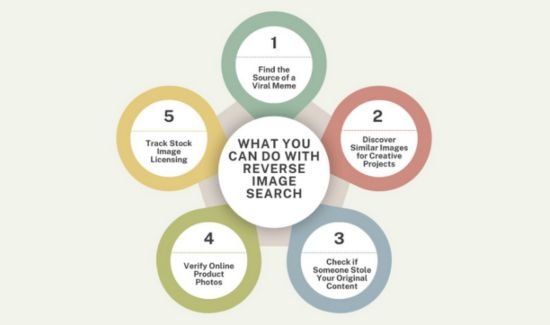
    Use Cases: What You Can Do With Reverse Image Search

    What You Can Do With Reverse Image Search


    1. Find the Source of a Viral Meme

    Meme pages rarely credit original creators. Do a photo lookup or search by image, and you’ll often uncover the first version—sometimes even from Reddit or Tumblr.

    2. Discover Similar Images for Creative Projects

    Need an image like the one you found, but can’t use it due to copyright? A similar image search will help you find visually similar images that you can search with some keywords.

    Try:

    • Similar image finder
    • Find similar photos
    • Find similar pictures online

    Especially useful for design inspiration, ads, and thumbnails.

    3. Check if Someone Stole Your Original Content

    Photographers, bloggers, and brands can use duplicate image search to scan for websites using their graphics or infographics without credit.

    Turn those results into backlinks or copyright enforcement.

    4. Verify Online Product Photos

    If a seller posts a product image that looks familiar, use a reverse image search free tool to check if it’s stolen from another brand or stock platform. Super helpful for avoiding scams.

    5. Track Stock Image Licensing

    Even when using stock photos, ensure no one is abusing the same image for shady purposes. Use a search by image tool to find sites using the same photo and confirm it to boost your brand with a digital marketing strategy.

    Best Reverse Image Search Tools in 2025


    Tool Best For Link
    Copy Checker Multi-engine visual search copychecker.com
    Google Lens On-the-go mobile scanning Built into Google Photos/Chrome
    TinEye Historical & copyright image tracking tineye.com
    Yandex Images Face recognition & obscure matches yandex.com/images
    Bing Visual Search Commercial, product-based queries bing.com/visualsearch

    Pro Tips for Reverse Image Search Success

    • Use high-resolution images for better matching
    • Crop out text or borders for purer results
    • Search using multiple engines for wider coverage
    • Use variations (e.g., resized or filtered images) if needed

    Want to find relevant pictures online from a single photo? These tricks help widen your net.

    Conclusion


    Whether you’re looking to find similar images online, track stolen content, verify sources, or search using a reference image, reverse image search is your easiest solution tool and insight.

    Let the tools do the work. Use reverse picture lookup, check with an image copyright checker, and uncover where your favorite visuals began.

    Want to try it now? Run a free scan using the AI Reverse Image Search Tool—and see what your image reveals.

    FAQs About Reverse Image Search


    Q: Does reverse image search perform on my phone?

    ▶︎ Yes! These tools can easily perform a reverse image search on mobile using Google Lens, Copy Checker, or TinEye. These tools let you upload a photo or screenshot and instantly search similar images online, making it perfect for social media verification, product research, or content tracking on the go.


    Q: Is reverse image search free?

    ▶︎ Absolutely. Most of the leading tools offer reverse image search for free with no signup required. You can find similar images, search by image, and identify duplicate content with just a few clicks, at zero cost.


    Q: Can reverse image search detect edited images?

    ▶︎ It depends on the tool. Some tools, like Yandex and Google Lens, are good at detecting visually similar images, even if filters or slight edits are applied. For best results, use high-resolution images and try different cropped versions to match variations.

    Reverse Image Search: How to Find the Source of Any Image Read More »

    Business News Update Big Wins and Losses This Week

    Business News Update: Big Wins and Losses This Week

    • Table of Contents

      1. Introduction

        • Importance of Business News in a Fast-Paced Corporate World

        • Role of Financial Reports in Company Growth

      2. Major Corporate Achievements This Week

        • Revenue Growth in the Tech Industry

        • Retail Market Expansion

        • Startup Innovations and Market Disruption

      3. Market Reactions to Recent Developments

        • Stock Market Performance Highlights

        • Investor Sentiment and Economic Impact

        • Sector-Wise Stock Analysis

      4. Key Business Acquisitions and Mergers

        • Major Deals of the Week

        • Strategic Impacts on Industry and Market Trends

        • Company-Specific Case Studies

      5. Challenges Faced by Companies This Week

        • Economic and Regulatory Hurdles

        • Company Responses to Market Fluctuations

        • Insights from Financial Reports

      6. Industry Trends and Insights

        • Rise of Renewable Energy Sector

        • Shifts in Consumer Behavior

        • Sustainability and Technology Adoption

      7. Looking Ahead: What to Watch for Next Week

        • Upcoming Earnings Reports

        • Expert Predictions Based on Current Market Trends

        • Potential Industry Shifts

      8. Frequently Asked Questions (FAQs)

        • Summary of This Week’s Business Highlights

        • Market Reactions and Investor Sentiment

        • Key Takeaways for Businesses and Investors

    Business News Update: Big Wins and Losses This Week

    What drives the success of companies in today’s fast-paced business world, and how do financial reports impact their growth? Staying informed about the latest updates in Business News is crucial for understanding the ever-changing landscape of the corporate world. The ability to adapt to new trends and developments is key to thriving in this environment.

    Business News

    As we delve into the world of Business News, it becomes clear that companies must be able to navigate financial reports and make informed decisions based on the latest updates in the industry. This requires a deep understanding of the market and the ability to analyze Business News to make strategic decisions.

    Key Takeaways

    • Staying informed about Business News is essential for success in the corporate world
    • Financial reports are essential for promoting company expansion.
    • Companies must be able to adapt to new trends and developments in the industry
    • Analyzing latest updates in Business News is crucial for making informed decisions
    • Understanding the market and its trends is key to thriving in the business world

    Major Corporate Achievements This Week

    This week has seen significant corporate developments, with several companies making headlines for their achievements. Market trends have been favorable, with industry insights suggesting a positive outlook for the future. Corporate developments have been driven by innovation and strategic decision-making, leading to notable successes in various sectors.

    Some of the key achievements include:

    • Increased revenue and profitability for tech giants, driven by demand for their products and services
    • Successful expansion into new markets by retail companies, resulting in increased market share and customer base
    • Notable startups making waves in their respective industries, with innovative solutions and business models

    These achievements have been influenced by market trends, with companies adapting to changing consumer behavior and preferences. Industry insights have also played a crucial role, with companies using data and analysis to inform their decision-making. As a result, corporate developments have been focused on driving growth, innovation, and sustainability.

    Overall, this week’s corporate achievements demonstrate the importance of staying ahead of market trends and leveraging industry insights to drive success. By doing so, companies can position themselves for long-term growth and profitability, ultimately benefiting investors and consumers alike.

    industry insights

    Company Achievement Impact
    Tech Giant Increased revenue by 20% Driven by demand for products and services
    Retail Company Expanded into new markets Resulted in increased market share and customer base
    Notable Startup Launched innovative solution Received positive feedback from customers and investors

    Market Reactions to Recent Developments

    The recent developments in the business world have sent ripples through the stock market, with investors closely watching the stock market news for any signs of change. As the market reacts to these developments, it is essential to analyze the economic analysis and financial reports to understand the implications for the economy and the business world.

    According to recent data, the stock market has experienced a significant shift in recent weeks, with some stocks performing well and others experiencing a decline. Some significant highlights of the stock performance are as follows:

    • Increased trading volume in the tech sector
    • Improved stock prices for companies in the renewable energy sector
    • Stock price declines for businesses involved in the fossil fuel industry

    Investor sentiment analysis also reveals that investors are becoming increasingly cautious, with many opting for safer investment options. The financial reports from major companies have also shown a mixed bag, with some companies performing well and others experiencing a decline in profits.

    As the market continues to react to recent developments, it is essential to stay informed about the latest stock market news and economic analysis to make informed investment decisions. By analyzing the financial reports and staying up-to-date with the latest market trends, investors can navigate the complex and ever-changing world of finance.


    stock market news

    Overall, the market reactions to recent developments have been significant, and it is crucial to continue monitoring the situation to understand the implications for the economy and the business world.

    Company Stock Price Change
    Company A $50 10%
    Company B $30 -5%
    Company C $20 5%

    Key Business Acquisitions and Mergers

    Recent corporate developments have been shaping the industry landscape, with several major deals announced in the past week. These acquisitions and mergers are expected to have significant implications for industry leaders, influencing market trends and providing valuable industry insights. The driving force behind these developments is the desire to expand market share, improve efficiency, and stay competitive in a rapidly evolving business environment.

    Some notable examples of recent acquisitions include:

    • Microsoft’s acquisition of Nuance Communications, a leading provider of artificial intelligence and machine learning solutions
    • Amazon’s acquisition of MGM Studios, a major film and television production company
    • Fitbit, a prominent wearable technology business, was acquired by Google.

    These deals demonstrate the ongoing trend of consolidation in the industry, as companies seek to leverage their resources and expertise to drive growth and innovation. By analyzing these corporate developments, businesses and investors can gain valuable industry insights and stay ahead of the curve in terms of market trends.

    As the industry continues to evolve, it is essential to stay informed about the latest corporate developments and their potential impact on market trends. By doing so, businesses and investors can make informed decisions and stay competitive in a rapidly changing environment, ultimately driving growth and success in their respective fields.

    Company Acquisition Industry
    Microsoft Nuance Communications Artificial Intelligence
    Amazon MGM Studios Entertainment
    Google Fitbit Wearable Technology

    Challenges Faced by Companies This Week

    As we delve into the world of business news, it’s essential to examine the challenges faced by companies. Economic analysis plays a crucial role in understanding these challenges, as it provides insights into the factors affecting businesses. Financial reports are also vital, as they offer a glimpse into a company’s financial health.

    Companies are facing numerous challenges, including economic factors that impact their operations. Some of the key challenges include:

    • Fluctuations in market trends
    • Increased competition
    • Regulatory hurdles

    Regulatory hurdles are a significant challenge for companies, as they must navigate complex laws and regulations to operate effectively. Business news often highlights the impact of these regulations on companies, and economic analysis helps to understand the implications of these regulations.

    According to recent financial reports, many companies are struggling to adapt to the changing economic landscape. It’s essential for companies to stay informed about the latest business news and economic trends to make informed decisions. By doing so, they can better navigate the challenges they face and stay ahead of the competition.


    economic analysis

    In conclusion, companies face numerous challenges, and economic analysis, financial reports, and business news are essential tools for understanding these challenges. By staying informed and adapting to the changing economic landscape, companies can overcome these challenges and achieve success.

    market trends

    Company Challenge Response
    Company A Fluctuations in market trends Diversification of products
    Company B Increased competition Investment in marketing and advertising
    Company C Regulatory hurdles Establishment of a compliance department

    Industry Trends and Insights

    In the fast-paced business world of today, being ahead of the curve is essential. Businesses can promote growth and success by making well-informed decisions by examining market trends and industry information. Recent business news highlights the importance of adapting to changing consumer behaviors and technological advancements.

    Growth in Renewable Energy Sector

    The renewable energy sector has experienced significant growth in recent years, driven by increasing demand for sustainable solutions. Among the major developments in this field are:

    • Investment in solar and wind energy
    • Development of energy storage technologies
    • Government initiatives to promote renewable energy adoption

    Changes in Consumer Behavior

    Changes in consumer behavior are also driving market trends and business news. Customers are looking for goods and services that reflect their values as they become more ecologically conscious. Businesses will be in a strong position to succeed if they can adjust to these developments.

    Trend Description
    Rise of sustainable products Customers are looking for sustainable and ecologically friendly items.
    Increased demand for energy-efficient solutions Energy-efficient solutions are being developed by businesses to satisfy the increasing demand.

    Looking Ahead: What to Watch for Next Week

    As we wrap up this eventful week in the business world, all eyes now turn to the upcoming week and the new developments that are likely to unfold. The upcoming earnings reports from several major companies will undoubtedly be a significant focus, providing insights into the financial health and performance of some of the industry’s key players.

    Upcoming Earnings Reports

    Next week, investors will be closely watching the earnings announcements from tech giants Apple and Microsoft, as well as retail powerhouses Walmart and Target. These reports will shed light on how these companies have navigated the breaking news, stock market news, and financial reports that have shaped the past few months.

    Predictions Based on Current Trends

    Based on the trends we’ve observed this week, industry analysts are predicting continued volatility in the stock market as investors react to the latest financial reports and economic data. Additionally, the ongoing shifts in consumer behavior, particularly the increased focus on sustainability and e-commerce, are expected to drive further changes in the retail and technology sectors.

    FAQ

    What are the key business news highlights this week?

    This week’s business news saw major corporate achievements, particularly among tech giants, retail success stories, and notable startups making waves. The stock market also reacted to recent developments, with investor sentiment and stock performance analyzed. Additionally, there were significant business acquisitions and mergers, as well as challenges faced by companies due to economic factors and regulatory hurdles.

    What are some of the major corporate achievements highlighted in the article?

    The article showcases the accomplishments of prominent startups, retail businesses, and tech behemoths. It provides an analysis of the factors that contributed to their achievements and the impact on the respective industries.

    How did the stock market react to recent developments?

    The article analyzes the stock market performance and investor sentiment in response to the latest business news and developments. It discusses the potential implications for the economy and the business world.

    What were some of the key business acquisitions and mergers mentioned?

    The article covers the major deals announced, including the implications for industry leaders and the potential impact on the market as a whole.

    What challenges were companies facing this week?

    The article highlights the economic factors and regulatory hurdles that companies have been grappling with, and how they are responding to these challenges.

    What industry trends and insights were highlighted in the article?

    The article discusses the growth in the renewable energy sector and changes in consumer behavior, providing an analysis of the factors driving these trends and the potential impact on the industry.

    What can we expect in the upcoming week?

    The article provides an outlook for the upcoming week, including the anticipated earnings reports and predictions based on current market trends. It discusses the potential developments that could impact the business world and the stock market.

    Business News Update: Big Wins and Losses This Week Read More »

    Entrepreneurship Secrets No One Tells You

    Entrepreneurship Secrets No One Tells You

    Table of Contents

    1. Introduction

      • What It Takes to Start a Business

      • Why Entrepreneurship is Worth It

    2. Entrepreneurship at a Glance

      • The Reality of Starting a Business

      • Key Takeaways for Small Business Owners

    3. Understanding the Mindset of Successful Entrepreneurs

      • Growth vs. Fixed Mindset

      • Traits That Set Entrepreneurs Apart

    4. The Importance of Networking in Entrepreneurship

      • Building Genuine Relationships

      • Using Social Media for Business Connections

      • Finding Mentors and Industry Support

    5. The Role of Passion in Starting a Business

      • Identifying Passion and Purpose

      • Aligning Passion with Market Demand

    6. Navigating Financial Challenges

      • Understanding Startup Costs

      • Grants vs. Loans: Pros and Cons

      • Building a Solid Financial Plan

    7. Time Management Strategies for Entrepreneurs

      • Creating a Productive Schedule

      • Prioritizing Tasks for Growth

      • The Power of Delegation

    8. Developing a Unique Value Proposition

      • What Makes Your Business Stand Out

      • Crafting a Strong Brand Story

      • Connecting Emotionally with Customers

    9. Continuous Learning and Adaptation

      • Embracing Change and Technology

      • Staying Ahead of Industry Trends

      • Building a Culture of Lifelong Learning

    10. Frequently Asked Questions (FAQ)

    Entrepreneurship Secrets No One Tells You

    What does it take to start a business and become a successful small business owner? Is it the right mindset, a solid business plan, or a combination of both? Entrepreneurship is a challenging but rewarding journey, and understanding the skills required is crucial for success. Many people dream of starting their own business, but few know the secrets to making it happen.

    Entrepreneurship

    It’s critical for small business owners to understand the opportunities and difficulties associated with entrepreneurship. It takes a certain combination of hard work, enthusiasm, and dedication to launch a firm. But what sets successful entrepreneurs apart from those who struggle to start a business? The answer lies in their ability to adapt, innovate, and stay focused on their goals.

    Key Takeaways

    • Entrepreneurship requires a unique mindset and set of skills
    • Starting a business involves a combination of passion, dedication, and hard work
    • Adaptability and innovation are key to success in entrepreneurship
    • Small business owners must comprehend the opportunities and difficulties of entrepreneurship.
    • Staying focused on goals and being open to learning is essential for entrepreneurial success

    Understanding the Mindset of Successful Entrepreneurs

    To succeed in business, one must cultivate an entrepreneurial mindset. It involves cultivating entrepreneurial skills that enable individuals to navigate challenges and capitalize on opportunities. Business development is a key aspect of entrepreneurship, and understanding the mindset and skills required is vital for success.

    Entrepreneurs need to have a growth mentality since it enables them to adjust and evolve from their experiences. Entrepreneurs with this mindset are resilient, creative, and receptive to new concepts. In contrast, a fixed mindset can limit their potential and hinder their growth. Entrepreneurs that adopt a growth mentality are able to overcome challenges and accomplish their objectives.

    Growth Mindset vs. Fixed Mindset

    Embracing failure as a learning tool is also critical for entrepreneurs. It enables them to take risks and experiment with new ideas, which is essential for business development. Entrepreneurs can improve their chances of success by honing their strategy and learning from their mistakes.

    Some key characteristics of a successful entrepreneur mindset include:

    • Resilience and adaptability
    • Strong work ethic and discipline
    • Ability to learn from failure and setbacks
    • Effective communication and leadership skills

    By developing these characteristics and cultivating an entrepreneur mindset, individuals can set themselves up for success in business and achieve their goals through effective business development and utilization of their entrepreneurial skills.

    The Importance of Networking in Entrepreneurship

    Networking is a vital component of entrepreneurship, as it provides opportunities for growth and development. By building genuine relationships with other entrepreneurs, investors, and industry experts, individuals can gain valuable insights and access to resources that can help drive business growth and startup success.

    Effective networking can lead to various business opportunities, including partnerships, collaborations, and mentorship. It can also provide a platform for promoting one’s business and increasing visibility in the market. In today’s digital age, leveraging social media for connections is crucial, as it can help expand an entrepreneur’s network and provide access to a wider audience.

    Building Genuine Relationships

    Building genuine relationships is key to successful networking. This involves being authentic, transparent, and willing to help others. By doing so, entrepreneurs can establish trust and credibility, which are essential for building strong relationships and achieving business growth.

    Leveraging Social Media for Connections

    Social media platforms can be a powerful tool for networking. By creating a strong online presence and engaging with others on these platforms, entrepreneurs can increase their visibility, build their brand, and connect with potential partners, investors, and customers. This can ultimately lead to new business opportunities and contribute to startup success.

    business opportunities

    Finding Mentorship Opportunities

    Finding mentorship opportunities can be particularly beneficial for entrepreneurs. Experienced mentors can offer guidance, support, and valuable insights, helping entrepreneurs navigate the challenges of starting and growing a business. By leveraging these networking opportunities, entrepreneurs can increase their chances of success and achieve business growth.

    • Attend industry events and conferences
    • Join online communities and forums
    • Speak with seasoned businesspeople and seek their guidance.

    By following these tips and being proactive in their networking efforts, entrepreneurs can unlock new business opportunities, drive business growth, and achieve startup success.

    Importance of Networking

    Networking Strategy Benefits
    Building genuine relationships Establishes trust and credibility
    Leveraging social media for connections Increases visibility and expands network
    Finding mentorship opportunities Provides guidance and valuable insights

    The Role of Passion in Starting a Business

    When it comes to starting a business, passion plays a significant role in driving success. Identifying one’s passion and purpose is essential for creating a business that is meaningful and fulfilling. Many entrepreneurs have turned their passions into successful businesses, and it’s clear that this approach can lead to a more satisfying and profitable venture.

    To start a business, one needs to have strong entrepreneurial skills, including the ability to develop a business plan, secure funding, and manage operations. However, passion is what sets a business apart and gives it a unique edge in the market. By combining passion with business development strategies, individuals can create a successful and sustainable business that meets the needs of its target market.

    Identifying Your Passion and Purpose

    Identifying one’s passion and purpose is a crucial step in starting a business. This involves reflecting on one’s values, interests, and strengths to determine what kind of business would be a good fit. It’s also important to consider market demand and ensure that the business idea has the potential to be profitable. By taking the time to identify their passion and purpose, entrepreneurs can create a business that is both fulfilling and successful.

    Balancing Passion with Market Demand

    While passion is essential for starting a business, it’s also important to balance it with market demand. A business that doesn’t meet the needs of its target market is unlikely to succeed, no matter how passionate the entrepreneur is. By conducting market research and analyzing industry trends, entrepreneurs can ensure that their business idea has the potential to be successful and sustainable. With the right combination of passion, entrepreneurial skills, and business development strategies, anyone can start a business that is both fulfilling and profitable.

    Navigating Financial Challenges

    A small business owner’s ability to comprehend the financial environment is essential to the expansion and success of their enterprise. Financial challenges can be overwhelming, but with the right knowledge and planning, entrepreneurs can overcome these obstacles. A key aspect of navigating financial challenges is understanding startup costs, which can vary greatly depending on the industry and business model.

    Securing funding is another critical component of financial planning. Entrepreneurs must compare the benefits and drawbacks of grants and loans, taking into account variables including interest rates, conditions of repayment, and possible effects on the expansion of their businesses. For instance, grants can provide non-repayable funds, but may have strict eligibility criteria, while loans offer more flexibility but require repayment with interest.

    • Making a thorough business plan that details anticipated costs and income
    • Increasing access to financial choices by establishing a high credit score
    • Exploring alternative funding sources, such as crowdfunding or investors

    By taking a proactive approach to financial planning, small business owners can set themselves up for success and achieve business growth. With careful consideration and strategic planning, entrepreneurs can navigate financial challenges and achieve startup success.

    Financial Option Pros Cons
    Grants Non-repayable funds, flexible use of funds Strict eligibility criteria, limited availability
    Loans More flexible repayment terms, wider availability requires interest-bearing payments and has the potential to accrue debt.

    Time Management Strategies for Entrepreneurs

    Effective time management is crucial for entrepreneurs, as it enables them to prioritize tasks, manage their workload, and achieve their goals. By developing an entrepreneur mindset, individuals can cultivate the skills necessary to succeed in business development. This involves creating a schedule and sticking to it, while also being flexible enough to adapt to changing circumstances.

    Entrepreneurial skills, such as prioritizing tasks and managing time, are essential for business development. To prioritize tasks effectively, entrepreneurs should focus on the most critical tasks first, and then allocate their time accordingly. Utilizing productivity tools, such as calendars and to-do lists, can also help entrepreneurs streamline their workflow and increase their efficiency.

    The art of delegation is also vital for entrepreneurs, as it allows them to focus on high-priority tasks and free up time for other activities. By delegating tasks to others, entrepreneurs can leverage their team’s skills and expertise, while also developing their own entrepreneurial skills. Some key strategies for effective time management include:

    • Creating a schedule and sticking to it
    • Prioritizing tasks based on importance and urgency
    • Utilizing productivity tools to streamline workflow
    • Delegating tasks to others to free up time and leverage team skills

    By implementing these strategies, entrepreneurs can develop the right mindset and skills to achieve business development and success. With the right entrepreneur mindset and entrepreneurial skills, individuals can overcome the challenges of time management and achieve their goals.

    Developing a Unique Value Proposition

    To achieve business growth and startup success, it’s essential to develop a unique value proposition that sets your business apart from competitors. This involves identifying what makes your business unique and communicating that to your target market. By doing so, you can create an emotional connection with your customers and establish a strong brand identity, ultimately leading to increased business opportunities.

    Offering a product or service is only one aspect of a distinct value proposition; other aspects include the experience and advantages that accompany it.. It’s about understanding the needs and desires of your target market and tailoring your offering to meet those needs. By crafting a compelling brand story, you can differentiate your business from competitors and establish a strong reputation in the market.

    business opportunities

    When creating a distinctive value proposition, some important factors to take into account are:

    • Identifying your target market and their needs
    • Developing a unique and compelling brand story
    • Creating an emotional connection with your customers
    • Establishing a strong brand identity

    By focusing on these areas, you can develop a unique value proposition that drives business growth and startup success, and sets your business up for long-term success in the market.

    Continuous Learning and Adaptation

    Successful entrepreneurs understand that continuous learning and adaptation are essential for long-term success. As industries and technologies evolve rapidly, small business owners must stay abreast of the latest industry trends and be proactive in adopting new tools and platforms. By embracing a culture of lifelong learning, entrepreneurs can anticipate market shifts, identify emerging opportunities, and position their businesses for sustainable growth.

    Staying updated with technology changes is particularly crucial in today’s digital landscape. Leveraging innovative solutions can streamline operations, enhance customer experiences, and provide a competitive edge. Regularly reviewing industry publications, attending conferences, and networking with peers can help entrepreneurs gain valuable insights and stay ahead of the curve.

    Ultimately, the ability to continuously learn and adapt is a hallmark of successful entrepreneurship. By fostering a growth mindset and a willingness to embrace change, entrepreneurs can navigate the dynamic business landscape, seize new possibilities, and achieve long-term success.

    Mindset of Successful Entrepreneurs

    FAQ

    What is the most important mindset for successful entrepreneurs?

    Successful entrepreneurs possess a growth mindset, which allows them to adapt and learn from their experiences. In contrast, a fixed mindset can limit their potential and hinder their growth. Embracing failure as a learning tool is also critical, as it enables entrepreneurs to take risks and experiment with new ideas.

    How can networking help entrepreneurs achieve business growth?

    Networking is a vital component of entrepreneurship, as it provides opportunities for growth and development. Building genuine relationships with other entrepreneurs, investors, and industry experts can help individuals gain valuable insights and access to resources. Leveraging social media for connections can also expand an entrepreneur’s network and provide a platform for promoting their business. Finding mentorship opportunities can be particularly beneficial, as experienced mentors can offer guidance and support.

    What is the role of passion in starting a successful business?

    Passion is a driving force behind many successful businesses. Identifying one’s passion and purpose is essential for creating a business that is meaningful and fulfilling. However, it’s also important to balance passion with market demand, as a business that doesn’t meet the needs of its target market is unlikely to succeed. By combining passion with entrepreneurial skills and business development strategies, individuals can create a successful and sustainable business.

    How can entrepreneurs navigate financial challenges?

    Financial challenges are a common obstacle for many entrepreneurs. Understanding startup costs is crucial for creating a realistic business plan and securing funding. Securing funding can be a daunting task, and entrepreneurs must weigh the pros and cons of grants vs. loans. As a small business owner, it’s essential to be aware of the financial options available and to create a solid financial plan.

    What time management strategies can help entrepreneurs succeed?

    Effective time management is critical for entrepreneurs, as it enables them to prioritize tasks, manage their workload, and achieve their goals. Prioritizing tasks effectively requires a clear understanding of what needs to be done and when. Utilizing productivity tools can also help entrepreneurs streamline their workflow and increase their efficiency. The art of delegation is also essential, as it allows entrepreneurs to focus on high-priority tasks and free up time for other activities.

    How can entrepreneurs develop a unique value proposition?

    Developing a unique value proposition is essential for differentiating a business from its competitors. By crafting a compelling brand story, entrepreneurs can create an emotional connection with their target market and establish a strong brand identity. This requires a deep understanding of the market and the ability to identify what sets the business apart from others.

    Why is continuous learning and adaptation important for entrepreneurs?

    Continuous learning and adaptation are critical for entrepreneurs, as they enable them to stay ahead of the curve and respond to changing circumstances. The impact of industry trends can be significant, and entrepreneurs must be aware of the latest developments and advancements in their field. Staying updated with technology changes is also essential, as it allows entrepreneurs to leverage new tools and platforms to grow their business.

    Entrepreneurship Secrets No One Tells You Read More »

    Entrepreneurship Mistakes That Can Ruin Your Success

    Entrepreneurship Mistakes That Can Ruin Your Success

    Table of Contents

    1. Introduction

      • The Difference Between Success and Struggle in Entrepreneurship

      • Why Avoiding Mistakes Matters

    2. Key Takeaways

      • Quick Highlights for Every Small Business Owner

    3. Mistake 1: Ignoring Market Research

      • Why Market Research Matters

      • Tools to Understand Your Audience

      • Competitor Analysis for Better Positioning

    4. Mistake 2: Failing to Understand Your Target Audience

      • Using Surveys and Social Media Data

      • Identifying Customer Pain Points and Preferences

    5. Mistake 3: Overextending Financial Resources

      • The Danger of Poor Budgeting

      • Crafting a Realistic Financial Plan

      • Common Overhead Costs to Watch

    6. Mistake 4: Neglecting Networking Opportunities

      • How Networking Fuels Growth

      • Events That Matter for Entrepreneurs

      • Building Long-Term Business Relationships

    7. Mistake 5: Failing to Adapt to Change

      • Embracing Innovation and Flexibility

      • Staying Ahead of Industry Shifts

      • Creating a Culture of Feedback

    8. Mistake 6: Underestimating the Power of Branding

      • The Role of Brand Identity in Business Success

      • Key Elements of a Memorable Brand

      • Consistency Across Marketing Channels

    9. Frequently Asked Questions (FAQs)

    10. Conclusion

    • Recap of Common Mistakes

    • Final Advice for Long-Term Startup Success

    Entrepreneurship Mistakes That Can Ruin Your Success

    What separates successful entrepreneurs from those who struggle to get their business startup off the ground? As a small business owner, it’s essential to understand that entrepreneurship is a challenging and rewarding journey, but it can be fraught with mistakes that can ruin a business’s chance at success. Entrepreneurship requires careful planning, execution, and a willingness to learn from mistakes. The question is, what are the most common entrepreneurship mistakes that can ruin your success, and how can you avoid them as a small business owner in the competitive world of business startup?

    Financial Resources

    Entrepreneurship

    Key Takeaways

    • Avoiding common entrepreneurship mistakes is crucial for the success of your business startup
    • Understanding your target audience is essential for any small business owner
    • Effective financial planning can make or break your entrepreneurship journey
    • Developing a solid network is essential to the success of your new company.
    • Adapting to change and learning from feedback is critical for entrepreneurship success
    • Creating a strong brand identity can help your small business stand out in a competitive market

    Ignoring Market Research

    Developing strong entrepreneurial skills is crucial for startup success. One common mistake that many entrepreneurs make is ignoring market research. This oversight can lead to a lack of understanding about the target audience and competitors, ultimately affecting the business’s ability to create products or services that meet the needs of its customers.

    Conducting market research is essential to gain valuable insights into the target audience’s needs, preferences, and behaviors. By analyzing this data, entrepreneurs can create products or services that meet the needs of their customers, staying ahead of the competition. Understanding the target audience is key to developing effective marketing strategies and creating a successful business.

    Understanding Your Target Audience

    To develop a deep understanding of the target audience, entrepreneurs should conduct surveys, focus groups, and gather data from social media and online reviews. This information can help identify trends, preferences, and pain points, enabling entrepreneurs to create products or services that meet the needs of their customers.

    Analyzing Competitors

    Analyzing competitors is also vital for startup success. By researching the competition, entrepreneurs can identify gaps in the market and opportunities to differentiate their business. Additionally, by offering insights into the competitive environment, this study can help entrepreneurs create plans to keep one step ahead of their rivals.

    entrepreneurial skills

    By combining market research with strong entrepreneurial skills, startups can increase their chances of success. Developing a deep understanding of the target audience and analyzing competitors can help entrepreneurs create effective marketing strategies, develop innovative products or services, and stay ahead of the competition, ultimately leading to startup success.

    Overextending Financial Resources

    When starting new business ventures, entrepreneurs often overlook the importance of managing their financial resources effectively. This can lead to overextending themselves, resulting in financial strain that can be detrimental to the business. An entrepreneur mindset is crucial in avoiding such mistakes, as it enables business owners to make informed decisions about their financial capabilities.

    A key aspect of managing financial resources is being aware of overhead costs, such as rent, utilities, and equipment. These costs can quickly add up, and if not accounted for, can lead to financial difficulties. By crafting a realistic budget, entrepreneurs can ensure that their business has the necessary resources to succeed. This involves carefully planning and allocating funds to different areas of the business, such as marketing, production, and staffing.

    Some key considerations for entrepreneurs to keep in mind when managing their financial resources include:

    • Conducting thorough market research to understand the financial landscape of their industry
    • Creating a comprehensive budget that takes into account all overhead costs and expenses
    • Regularly reviewing and adjusting their budget to ensure it remains realistic and effective

    new business ventures

    By adopting an entrepreneur mindset and being mindful of their financial resources, business owners can avoid overextending themselves and ensure that their new business ventures have the best chance of success.

    Neglecting Networking Opportunities

    Networking is a crucial aspect of business growth strategies, as it allows entrepreneurs to connect with like-minded individuals, share innovative business ideas, and stay updated on industry trends. By attending conferences, trade shows, and other industry events, business owners can establish valuable relationships with potential partners, investors, and customers.

    Building a strong network can provide access to new markets, technologies, and talent, ultimately driving business growth and innovation. Effective networking requires a strategic approach, including identifying key events, preparing a clear pitch, and following up with new contacts. By leveraging these opportunities, entrepreneurs can gain a competitive edge and stay ahead of the curve in their respective industries.

    • Gaining insights into industry trends and technologies
    • Accessing new markets and customer bases
    • Establishing partnerships and collaborations
    • Identifying potential investors and funding opportunities

    By prioritizing networking and incorporating it into their business growth strategies, entrepreneurs can unlock new opportunities for innovation and success.

    Failing to Adapt to Change

    Adaptability is a crucial aspect of achieving startup success. It enables entrepreneurs to respond quickly to new opportunities and challenges, staying ahead of the competition. By being flexible and open to change, entrepreneurs can navigate the ever-changing market landscape and make data-driven decisions to drive their business forward.

    Developing strong entrepreneurial skills is essential for adapting to change. This includes being able to pivot when necessary, learning from feedback, and continuously evaluating and improving business strategies. By doing so, entrepreneurs can ensure their business remains relevant and competitive in an ever-evolving market.

    Some key strategies for adapting to change include:

    • Staying informed about industry trends and developments
    • Encouraging a culture of innovation and experimentation
    • Encouraging candid feedback and discussion within the company

    By embracing change and being adaptable, entrepreneurs can set their business up for long-term success and achieve their goals. As the business landscape continues to evolve, it’s essential for entrepreneurs to prioritize adaptability and stay focused on driving their business forward.

    Ultimately, failing to adapt to change can have serious consequences for a business. By prioritizing adaptability and developing strong entrepreneurial skills, entrepreneurs can ensure their business remains competitive and achieves long-term startup success.

    Underestimating the Power of Branding

    Building a successful business requires more than just providing great products or services. It’s also crucial to establish a strong brand identity that resonates with your target audience. Many entrepreneurs make the mistake of underestimating the power of branding, failing to realize its importance in attracting and retaining customers.

    Creating a Memorable Brand Identity

    Your brand is the foundation of your business, and it’s what sets you apart from the competition. By investing time and resources into developing a unique and recognizable brand identity, you can create a lasting impression on your customers. This includes elements like your logo, color scheme, and overall visual aesthetic, as well as the tone and messaging you use in your marketing and communication.

    Consistency is Key

    Consistency is essential when it comes to branding. From your website and social media accounts to your product packaging and customer support, your brand identity should be consistent throughout all of your marketing platforms. Maintaining a consistent brand image helps to build trust and credibility with your audience, making them more likely to remember and engage with your business.

    By understanding the importance of branding and taking the necessary steps to build a strong, consistent brand identity,

    small business owner and entrepreneurs

    can set themselves up for long-term

    business startup

    success. Investing in your brand is an investment in the future of your company.

    new business ventures

    FAQ

    What is the importance of conducting market research for entrepreneurs?

    Conducting market research is crucial for entrepreneurs to understand their target audience, analyze their competitors, and identify gaps in the market. By gaining valuable insights into customer needs, preferences, and behaviors, entrepreneurs can create products or services that effectively meet their target audience’s demands and stay ahead of the competition.

    How can entrepreneurs avoid overextending their financial resources?

    Entrepreneurs should be mindful of their financial resources and avoid overextending themselves. This includes being aware of overhead costs, such as rent, utilities, and equipment, and crafting a realistic budget that takes into account the business’s financial capabilities. By managing their finances carefully, entrepreneurs can avoid financial strain and ensure that their business has the resources it needs to succeed.

    Why is networking important for entrepreneurs?

    Networking is crucial for entrepreneurs to build valuable connections with other entrepreneurs, investors, and industry experts. These connections can provide access to new ideas, resources, and opportunities, helping entrepreneurs stay up-to-date on the latest trends and technologies in their industry. By leveraging industry events and building relationships, entrepreneurs can identify new growth opportunities and stay ahead of the competition.

    How can entrepreneurs adapt to change and learn from feedback?

    The ability to adapt to change is essential for entrepreneurs to stay competitive in the market. By being flexible and open to change, entrepreneurs can respond quickly to new opportunities and challenges. Additionally, learning from feedback, whether it’s from customers, employees, or mentors, can help entrepreneurs identify areas for improvement and make data-driven decisions to enhance their business strategies.

    What is the importance of branding for small business owners?

    Branding is a powerful tool for small business owners to differentiate their business from the competition and build a loyal customer base. Creating a strong brand identity, including a distinct logo, website, and marketing materials, can help establish trust and credibility with the target audience. Maintaining consistency across all brand touchpoints is key to successful branding, as it reinforces the business’s unique identity and positioning in the market.


    Entrepreneurship Mistakes That Can Ruin Your Success Read More »

    How to Master Entrepreneurship and Build Wealth

    Table of Contents

    1. Introduction

      • What is Entrepreneurship?

      • The Path to Wealth through Entrepreneurship

    2. Understanding the Basics of Entrepreneurship

      • Definition of Entrepreneurship

      • Key Traits of Successful Entrepreneurs

      • The Importance of Entrepreneurial Skills

    3. Developing a Business Idea

      • Identifying Market Needs

      • Conducting Effective Market Research

      • Creating a Unique Selling Proposition

    4. Business Development Strategies

      • Expanding Product Lines

      • Entering New Markets

      • Forming Strategic Partnerships

    5. Creating a Solid Business Plan

      • Essential Components of a Business Plan

      • Market Analysis and Financial Projections

      • Setting Clear Goals and Objectives

    6. Funding Your Venture

      • Popular Funding Sources

      • Pitching to Investors

      • Finding the Right Investment Fit

    7. Growing Your Entrepreneurial Skills

      • Importance of Continuous Learning

      • Networking and Mentorship Opportunities

      • Leveraging Technology for Business Growth

    8. FAQs

    How to Master Entrepreneurship and Build Wealth

    What does it take to succeed in entrepreneurship and build wealth? Mastering entrepreneurship requires a combination of skills, knowledge, and dedication. Entrepreneurship is the process of designing, launching, and running a new business startup, which can be a challenging but rewarding experience. A business startup is a company in its early stages of development, typically characterized by high growth potential and innovative products or services.

    Entrepreneurship

    To succeed in entrepreneurship, it is essential to understand the basics of business, including marketing, finance, and management. Entrepreneurship and business startup require a deep understanding of the market and the ability to adapt to changing circumstances. In this article, we will explore the key aspects of entrepreneurship and provide guidance on how to build a successful business startup.

    Key Takeaways

    • Mastering entrepreneurship requires a combination of skills, knowledge, and dedication
    • Understanding the basics of business is essential for success in entrepreneurship and business startup
    • A business startup requires innovative products or services and high growth potential
    • Designing, starting, and managing a new company are all part of entrepreneurship
    • Adapting to changing circumstances is crucial for success in entrepreneurship and business startup
    • Entrepreneurship and business startup require a deep understanding of the market

    Understanding the Basics of Entrepreneurship

    As a small business owner, it’s essential to understand the fundamentals of entrepreneurship to succeed in today’s competitive market. Entrepreneurship is about creating and managing a new business, which involves taking risks, innovating, and adapting to changing market conditions. Developing strong entrepreneurial skills, such as leadership, communication, and problem-solving, is crucial for success.

    A small business owner must be able to wear multiple hats, handling tasks such as marketing, accounting, and customer service. By possessing a strong work ethic, resilience, and the ability to think creatively, entrepreneurs can increase their chances of building a thriving business. Among the essential characteristics of prosperous businesspeople are:

    • Strong communication skills
    • Ability to think creatively and innovate
    • Adaptability and resilience in the face of difficulties
    • Strong leadership and problem-solving skills

    By understanding the basics of entrepreneurship and developing essential entrepreneurial skills, small business owners can set themselves up for success and build a strong foundation for their business.

    entrepreneurial skills

    Definition of Entrepreneurship

    Entrepreneurship is the process of designing, launching, and running a new business, which involves taking calculated risks and innovating to create a successful venture. As a small business owner, it’s essential to understand this definition and develop the necessary entrepreneurial skills to succeed.

    Key Traits of Successful Entrepreneurs

    Successful entrepreneurs possess a unique combination of skills, traits, and characteristics that enable them to build and grow a successful business. By developing these traits, small business owners can increase their chances of success and build a thriving business.

    Developing a Business Idea

    When it comes to business development, identifying market needs is a crucial step in the entrepreneurial process. This involves researching and analyzing the target audience to determine what products or services are in demand. By understanding the needs of the market, entrepreneurs can create a business idea that meets those needs, ultimately leading to startup success.

    Effective market research is crucial to achieving this. This can be done by gathering data on the competition, market trends, and customer preferences.Entrepreneurs can improve their business idea and develop a distinctive selling proposition that makes them stand out from the competition with the aid of market research.

    Some key considerations for developing a business idea include:

    • Identifying a gap in the market that your product or service can fill
    • Getting input from prospective clients through focus groups or surveys
    • Analyzing industry trends and predicting future demand

    Entrepreneurs can improve their chances of creating a profitable company by implementing these strategies.

    business development

    Effective business development involves creating and implementing strategies to grow the business, such as expanding product lines, entering new markets, or forming partnerships. By continuously innovating and improving the business model, entrepreneurs can achieve startup success and establish a strong presence in the market.

    Basics of Entrepreneurship

    Business Development Strategies Description
    Market Research Gathering data on the competition, market trends, and customer preferences
    Product Development Developing new goods or services to satisfy shifting consumer demands
    Partnerships Forming strategic partnerships to expand the business and increase revenue

    Creating a Solid Business Plan

    Developing a comprehensive business plan is crucial for entrepreneurs looking to establish a successful venture. By understanding current entrepreneurship trends, such as the growth of e-commerce and the importance of sustainability, entrepreneurs can create a plan that sets them apart from the competition. An entrepreneur mindset involves being open to new ideas, taking calculated risks, and being adaptable in the face of change.

    Several essential components should be included in a well-written business strategy, including:

    • Market analysis
    • Financial projections
    • Marketing and sales strategies
    • Operational plans

    By setting clear goals and objectives, entrepreneurs can create a roadmap for success and measure their progress along the way. This includes identifying target markets, establishing revenue projections, and outlining key performance indicators.An effective business plan can assist entrepreneurs in attracting investors, securing capital, and assembling a capable staff.

    Ultimately, a well-planned business strategy is essential for entrepreneurs looking to build a successful and sustainable business. By staying up-to-date with the latest entrepreneurship trends and maintaining an entrepreneur mindset, entrepreneurs can create a plan that drives growth and innovation.

    Business Plan Element Description
    Executive Summary Overview of the business and its goals
    Market Analysis Analysis of the target market and competition
    Financial Projections Revenue and expense projections for the business

    Funding Your Venture

    One of the most important steps in making a company idea a reality is obtaining money. The entrepreneurial community plays a significant role in providing support and resources to help entrepreneurs find the right funding options. From venture capital to crowdfunding, there are various funding sources available, each with its own advantages and disadvantages.

    Some popular funding options include:

    • Small business loans
    • Crowdfunding
    • Venture capital
    • Angel investors

    When pitching to investors, it’s essential to have a clear and concise business plan, a strong team, and a deep understanding of the market and competition. The entrepreneurial community can provide valuable guidance and support to help entrepreneurs prepare for these pitches.

    By exploring different funding sources and being prepared to pitch their business, entrepreneurs can increase their chances of securing the funding they need to grow and succeed. The key is to find the right fit for their business and to be persistent in their efforts to secure the necessary funding.

    Funding Option Advantages Disadvantages
    Small business loans Easy to apply, quick access to funds High interest rates, strict repayment terms
    Crowdfunding Low risk, flexible funding goals High competition, platform fees
    Venture capital Access to expertise, large funding amounts Loss of control, high expectations

    Growing Your Entrepreneurial Skills

    As an entrepreneur, your journey is never truly complete. Continuous growth and skill development are essential for navigating the ever-evolving business landscape. By focusing on networking and mentorship opportunities, you can gain valuable insights, support, and resources to propel your venture forward. Connecting with experienced entrepreneurs and industry leaders can open doors to new possibilities and help you avoid common pitfalls.

    Alongside networking, continuous learning and improvement are key components of entrepreneurial success. Keep up with the most recent developments in your industry’s best practices, technology, and trends. Attend workshops, webinars, or enroll in online courses to expand your knowledge and sharpen your skills. This commitment to lifelong learning will enable you to adapt quickly and seize emerging opportunities.

    Furthermore, leveraging technology in your business can significantly enhance efficiency, productivity, and reach. Explore innovative tools and platforms that can streamline your operations, improve customer experience, and unlock new avenues for growth. By embracing technological advancements, you can gain a competitive edge and position your venture for long-term success.

    Definition of Entrepreneurship

    FAQ

    What is entrepreneurship?

    Entrepreneurship is the process of designing, launching, and running a new business, which can be a challenging but rewarding experience. It involves taking risks, innovating, and adapting to changing market conditions.

    What are the key traits of successful entrepreneurs?

    Successful entrepreneurs possess certain key traits, including a strong work ethic, resilience, and the ability to think creatively. They must also be able to wear multiple hats, handling tasks such as marketing, accounting, and customer service. Entrepreneurial skills, such as leadership, communication, and problem-solving, are also essential for success.

    How can I develop a successful business idea?

    Developing a successful business idea involves identifying market needs, conducting effective market research, and understanding the competition and market trends. Business development also involves creating and implementing strategies to grow the business, such as expanding product lines, entering new markets, or forming partnerships.

    What are the essential elements of a business plan?

    A well-crafted business plan should include the company’s mission, goals, and objectives, as well as its marketing, financial, and operational strategies. Understanding entrepreneurship trends and adopting an entrepreneur mindset can also help entrepreneurs create a roadmap for success and measure their progress.

    How can I fund my business venture?

    Entrepreneurs can explore different funding sources, such as venture capital, crowdfunding, or small business loans. Pitching to investors effectively is crucial, and tips include developing a clear and concise pitch, demonstrating a deep understanding of the market and competition, and showcasing a strong team and business plan. The entrepreneurial community can also provide valuable support and resources for funding.

    How can I grow my entrepreneurial skills?

    Growing entrepreneurial skills is an ongoing process that requires continuous learning, improvement, and adaptation. Networking and mentorship opportunities can provide valuable guidance and support. Leveraging technology in the business can also help entrepreneurs streamline operations, improve efficiency, and reach new customers. By prioritizing growth and development, entrepreneurs can stay ahead of the competition and achieve their goals.


    How to Master Entrepreneurship and Build Wealth Read More »

    Network Marketing Mistakes That Are Killing Your Growth

    Network Marketing Mistakes That Are Killing Your Growth

    Table of Contents

    1. Introduction

      • Understanding Network Marketing
      • Common Mistakes That Hinder Growth
    2. Understanding Network Marketing Basics

      • What is Network Marketing?
      • The Importance of a Solid Foundation
    3. Common Misconceptions About Network Marketing

      • Myth: Network Marketing is a Get-Rich-Quick Scheme
      • Myth: Network Marketing Provides Passive Income
      • Overcoming Misconceptions for Success
    4. Ignoring Personal Development

      • The Role of Mindset in Success
      • Essential Skills for Network Marketers
      • Resources to Enhance Your Knowledge
    5. Poor Communication Strategies

      • The Importance of Effective Communication
      • Tips to Improve Communication Skills
      • Building Genuine Relationships
    6. Focusing Solely on Sales

      • Balancing Sales and Marketing
      • Developing a Comprehensive Marketing Strategy
      • Building Long-Term Customer Relationships
    7. Neglecting Online Presence

      • Importance of a Strong Online Presence
      • Utilizing Social Media Effectively
      • Building a Personal Brand Online
    8. Lack of Consistency and Commitment

      • Setting Realistic Goals
      • Tracking Your Progress for Growth
      • Celebrating Small Wins
    9. Conclusion

      • Key Takeaways for Success in Network Marketing
      • The Importance of Continuous Learning and Adaptation
    10. FAQ Section

    Network Marketing Mistakes That Are Killing Your Growth

    What is holding you back from achieving success in Network Marketing, a field that has given many entrepreneurs a platform to build a lucrative business through Direct Selling and Multi-Level Marketing (MLM) models? The answer may lie in common mistakes that can hinder growth and limit potential. Understanding the basics of Network Marketing is crucial for building a successful business, and recognizing these mistakes is the first step towards avoiding them.

    Network Marketing, or MLM, is a business model that involves selling products directly to consumers through a network of independent distributors, which is often referred to as Direct Selling. By recognizing the common pitfalls in this field, entrepreneurs can take the necessary steps to correct their approach and achieve success in Network Marketing.

    Key Takeaways

    • Understanding the basics of Network Marketing is essential for success
    • Recognizing common mistakes can help entrepreneurs avoid them
    • Network Marketing, MLM, and Direct Selling are interconnected business models
    • Avoiding common pitfalls is crucial for achieving success in Network Marketing
    • Entrepreneurs must take a proactive approach to correcting their mistakes
    • Success in Network Marketing requires a deep understanding of the business model

    Understanding Network Marketing Basics

    Network marketing, also known as multilevel marketing, is a business model that allows individuals to work from home and build a home business. This model has been gaining popularity over the years, as it provides an opportunity for people to earn a steady income and be their own bosses. To succeed in network marketing, it is essential to understand the basics of this business model and how it works.

    A solid foundation is crucial for success in network marketing. This includes understanding the compensation plan, the product or service being sold, and the target market. By having a clear understanding of these aspects, individuals can make informed decisions and avoid common mistakes. Multilevel marketing is a legitimate way to earn a living, and many people have built successful home businesses using this model.

    What is Network Marketing?

    Network marketing is a business model that involves selling products or services through a network of distributors. These distributors are independent contractors who work on a commission-only basis, and they are responsible for selling the products or services to customers. The distributors also have the opportunity to recruit and train new members to join their network, which can help to increase their earnings.

    The Importance of a Solid Foundation

    A solid foundation is essential for success in network marketing. This includes having a clear understanding of the compensation plan, the product or service being sold, and the target market. By having a solid foundation, individuals can avoid common mistakes and make informed decisions. Work from home opportunities like network marketing can be very rewarding, but they require dedication and hard work.

    Some key benefits of network marketing include the ability to work from home, be your own boss, and earn a steady income. Multilevel marketing is a legitimate way to earn a living, and many people have built successful home businesses using this model. By understanding the basics of network marketing and having a solid foundation, individuals can succeed in this business and achieve their financial goals.

    What is Network Marketing

    Benefits of Network Marketing Description
    Work from Home The ability to work from the comfort of your own home
    Be Your Own Boss The freedom to make your own decisions and run your own business
    Earn a Steady Income The potential to earn a steady income through sales and recruitment

    Common Misconceptions About Network Marketing

    Network marketing is often misunderstood, and many people have misconceptions about what it entails. To achieve Network Marketing Success, it’s essential to separate fact from fiction. One common misconception is that network marketing is a “get rich quick” scheme, where individuals can earn large sums of money with little effort. However, this couldn’t be further from the truth. Network Marketing Tips often emphasize the importance of hard work, dedication, and a well-thought-out strategy.

    Another misconception is that network marketing offers passive income, where individuals can earn money without putting in any effort. While it’s true that network marketing can provide a steady stream of income, it’s not entirely passive. Successful network marketers must continually work to build and maintain their business, providing value to their customers and team members. By following Network Marketing Tips and staying committed to their goals, individuals can achieve Network Marketing Success and build a sustainable business.

    To overcome common misconceptions and achieve success in network marketing, consider the following:

    • Set clear goals and develop a strong support network
    • Continually learn and adapt to changes in the industry
    • Focus on building genuine relationships with customers and team members
    • Stay committed to your goals and persevere through challenges

    By understanding what network marketing is not and following Network Marketing Tips, individuals can set realistic expectations and build a successful business. With dedication and hard work, anyone can achieve Network Marketing Success and enjoy the benefits of a fulfilling career in network marketing.

    Network Marketing Tips Benefits
    Set clear goals Increased focus and motivation
    Develop a strong support network Improved relationships and teamwork
    Continually learn and adapt Stay ahead of industry trends and changes

    Ignoring Personal Development

    Personal development is a crucial aspect of network marketing, as it enables individuals to acquire the skills and knowledge needed to build a thriving business. By investing in personal development, network marketers can overcome obstacles and achieve long-term success. Network Marketing Strategies often emphasize the importance of personal growth and development, as these are key to achieving success in the industry.

    The Role of Mindset in Success

    A positive mindset is essential for success in network marketing. It helps individuals to stay motivated, focused, and committed to their goals. Network Marketing Training programs can provide valuable insights and skills, helping individuals to develop a winning mindset and achieve their goals.

    Essential Skills for Network Marketers

    Some essential skills for network marketers include communication, leadership, and problem-solving. These skills can be developed through Network Marketing Training programs, which provide individuals with the knowledge and skills needed to succeed in the industry. Here are some key skills for network marketers:

    • Communication skills
    • Leadership skills
    • Problem-solving skills

    Resources to Enhance Your Knowledge

    There are many resources available to help network marketers enhance their knowledge and skills. These include Network Marketing Training programs, personal development books, and online courses. By investing in personal development, individuals can acquire the skills and knowledge needed to build a thriving network marketing business.

    Poor Communication Strategies

    Effective communication is crucial in Network Marketing, as it helps build strong relationships with customers and team members. In Direct Selling, excellent communication skills are essential for understanding customer needs and providing personalized solutions. A successful Home Business relies heavily on the ability to communicate effectively with others.

    To improve communication skills, it’s essential to practice active listening. This involves paying attention to what the other person is saying, both verbally and non-verbally. By doing so, you can better understand their needs and provide tailored solutions. Building genuine relationships is also vital in Network Marketing, as it helps establish trust and loyalty with customers and team members.

    Some tips for improving communication skills in Network Marketing include:

    • Practice active listening
    • Ask open-ended questions
    • Provide clear and concise information
    • Be approachable and responsive

    By following these tips, you can develop strong communication skills and build a loyal customer base and a strong team, which are essential for success in-home Business ventures.

    Communication Skill Importance in Network Marketing
    Active Listening Helps understand customer needs and provide personalized solutions
    Clear Communication Ensures that customers and team members understand the value proposition
    Building Relationships Establishes trust and loyalty with customers and team members

    Focusing Solely on Sales

    In the world of network marketing, it’s easy to get caught up in the idea that sales are the only thing that matters. However, this mindset can lead to burnout and stagnation. A successful network marketing business requires a balanced approach that includes both sales and marketing. Multi Level marketing, in particular, benefits from a well-rounded strategy that incorporates both.

    When working from home, it can be tempting to focus solely on sales, but this can lead to an unbalanced business. By incorporating network marketing tips, such as diversifying your income streams and building a strong online presence, you can create a more sustainable business model. This approach will help you to avoid the pitfalls of focusing solely on sales and create a more successful network marketing business.

    • Set clear goals for both sales and marketing
    • Develop a comprehensive marketing strategy that includes social media, content marketing, and email marketing
    • Focus on building relationships with your customers and providing value to them

    By following these tips, you can create a successful network marketing business that incorporates both sales and marketing. Remember, multilevel marketing is a business model that requires a balanced approach to achieve long-term success.

    Marketing Strategy Sales Strategy
    Build a strong online presence Focus on building relationships with customers
    Develop a comprehensive marketing plan Set clear sales goals and track progress

    Understanding Network Marketing Basics

    Neglecting Online Presence

    Having a strong online presence is crucial for Network Marketing Success. In today’s digital age, it’s essential to leverage the internet to reach a wider audience and build a personal brand. Network Marketing Strategies that focus on online presence can help individuals establish themselves as authorities in their field and attract potential customers.

    A key aspect of building a strong online presence is utilizing social media effectively. This can be achieved by creating engaging content, participating in online communities, and leveraging social media platforms to connect with potential customers. For Home Business owners, having a strong online presence can be particularly beneficial, as it allows them to reach customers and team members from all over the world.

    Utilizing Social Media Effectively

    • Create a professional social media profile
    • Share valuable and engaging content
    • Participate in online communities related to your niche

    Building a Personal Brand Online

    Building a personal brand online requires consistency, patience, and effort. It’s essential to establish a unique voice and tone that resonates with your target audience. By doing so, you can differentiate yourself from others in the industry and attract potential customers who are looking for a genuine and authentic experience.

    By neglecting online presence, individuals can miss out on valuable opportunities for growth and exposure. However, by implementing effective Network Marketing Strategies and building a strong online presence, individuals can increase their chances of achieving Network Marketing Success and establishing a thriving Home Business.

    Strategy Benefits
    Utilizing Social Media Increased brand awareness, improved customer engagement
    Building a Personal Brand Established authority, increased credibility

    Lack of Consistency and Commitment

    Consistent effort and unwavering commitment are the cornerstones of a thriving network marketing business. Without these essential elements, even the most promising ventures can falter. To build a lasting MLM or direct selling enterprise, it’s crucial to set realistic goals, meticulously track your progress, and celebrate even the smallest of victories.

    Setting Realistic Goals

    Establishing achievable milestones is the first step towards sustained growth. Avoid the temptation of “get-rich-quick” schemes and instead focus on crafting a long-term strategy that aligns with your personal and professional aspirations. By breaking down your vision into manageable steps, you’ll stay motivated and on track, even in the face of challenges.

    Tracking Your Progress for Growth

    Regularly monitoring your progress is essential for identifying areas of improvement and celebrating your successes. Utilize robust data-driven tools to track key performance indicators, such as sales figures, team growth, and customer engagement. This data-driven approach will empower you to make informed decisions and refine your multilevel marketing tactics for maximum impact.

    Celebrating Small Wins

    In the world of network marketing, it’s easy to get caught up in the pursuit of big, flashy goals. However, it’s the small, consistent wins that often lay the foundation for long-term success. Take the time to acknowledge and reward your progress, no matter how seemingly insignificant. This positive reinforcement will fuel your motivation and inspire you to continue pushing forward.

    FAQ

    What is Network Marketing?

    Network marketing, also known as multi-level marketing (MLM) or direct selling, is a business model where independent distributors sell products or services directly to consumers and recruit other distributors to do the same. The goal is to build a network of distributors who can earn commissions on their own sales as well as the sales of the distributors they recruit.

    What are the common misconceptions about Network Marketing?

    Two common misconceptions about network marketing are that it is a “get rich quick” scheme and that it offers passive income. In reality, network marketing success requires hard work, dedication, and a well-planned strategy. It is not a shortcut to wealth, and building a sustainable network marketing business takes time and effort.

    Why is personal development important in Network Marketing?

    Personal development is crucial in network marketing because it helps develop the mindset, skills, and knowledge needed to be successful. This includes acquiring skills in areas like communication, leadership, and sales, as well as cultivating a positive and resilient mindset. Investing in personal development resources, such as training programs and personal development books, can greatly enhance an individual’s chances of success in network marketing.

    How can poor communication strategies hinder Network Marketing success?

    Effective communication is essential in network marketing, as it involves building relationships with customers, team members, and potential recruits. Poor communication strategies, such as not listening to customers’ needs or failing to build genuine relationships, can severely limit an individual’s success in network marketing. Developing strong communication skills, including active listening and empathy, is crucial for building a thriving network marketing business.

    Why is it important to balance sales and marketing in Network Marketing?

    Many network marketers make the mistake of focusing solely on sales, neglecting the importance of marketing. While sales are essential, a balanced approach that incorporates both sales and marketing strategies is key to long-term success. Marketing helps to attract and engage potential customers and recruits, while sales convert those leads into active distributors or customers. By understanding the difference between marketing and selling, network marketers can develop a comprehensive strategy that drives growth and sustainability in their business.

    How can neglecting an online presence impact Network Marketing success?

    In today’s digital landscape, having a strong online presence is crucial for network marketing success. By neglecting their online presence, network marketers miss out on opportunities to reach a wider audience, build a personal brand, and leverage social media platforms to connect with customers and potential recruits. Developing an effective online strategy, including utilizing social media and creating a personal brand, can greatly contribute to the growth and success of a network marketing business.

    Why is consistency and commitment important in Network Marketing?

    Consistency and commitment are essential in network marketing, as building a successful business in this model requires a long-term approach. Setting realistic goals, tracking progress, and celebrating small wins can help network marketers stay motivated and focused, even in the face of challenges. Maintaining a consistent level of effort and dedication is key to achieving sustainable growth and success in network marketing.


    Network Marketing Mistakes That Are Killing Your Growth Read More »

    Startups That Made Millions With Just One Smart Idea

    Startups That Made Millions With Just One Smart Idea

    Table of Contents

    1. Introduction

      • The Power of One Smart Idea
      • What Sets Successful Startups Apart?
    2. The Success of Startups

      • Key Takeaways
      • How Startups Turn Ideas into Millions
    3. The Power of a Single Idea in the Startup World

      • Characteristics of a Successful Startup Idea
      • Case Studies: Everyday Problems Solved
    4. The Importance of Market Research

      • Identifying Market Opportunities
      • Understanding Consumer Needs
    5. Iconic Startups and Their Game-Changing Concepts

      • Airbnb: Revolutionizing Travel Accommodation
      • Dropbox: Simplifying File Sharing
      • Uber: Transforming Transportation
    6. The Role of Timing in Startup Success

      • Seizing Market Opportunities
      • The Backlash of Timing Missteps
    7. Building the Right Team for Your Startup

      • Key Characteristics of a Successful Team
      • How Passionate Founders Drive Growth
    8. Marketing Strategies That Propel Startups to Success

      • Leveraging Social Media for Brand Awareness
      • The Power of Word-of-Mouth Marketing
    9. Lessons Learned from Failed Startups

      • Common Mistakes to Avoid
      • Pivoting: When and How to Change Course
    10. Tips for Aspiring Entrepreneurs with Big Ideas

      • Brainstorming Unique Concepts
      • Validating Your Idea Before Launch
      • Networking & Seeking Mentorship
    11. FAQ Section

    Startups That Made Millions With Just One Smart Idea

    What sets successful startups apart from others, and how can entrepreneurial ventures turn a single innovative idea into millions of dollars? Many startups have achieved remarkable success with just one smart idea, leaving us to wonder what secrets they uncovered to achieve such growth and profitability.

    Startups and entrepreneurial ventures have changed the way we live and work, with many achieving immense success with a unique concept. The question remains, what makes these startups so successful, and how can others replicate their success?

    The Success of Startups

    By examining the factors that contributed to the growth and profitability of successful startups, we can gain valuable insights into the essential elements that enabled these startups to thrive. From identifying market opportunities to executing a unique concept, understanding the strategies and principles that guided these successful startups is crucial for aspiring entrepreneurs.

    Key Takeaways

    • Successful startups often start with a single innovative idea
    • Understanding market opportunities is crucial for startup success
    • Executing a unique concept requires careful planning and strategy
    • Startups and entrepreneurial ventures can achieve immense success with the right idea
    • Identifying and addressing a specific need in the market is key to startup success
    • Aspiring entrepreneurs can learn from the successes and failures of other startups

    The Power of a Single Idea in the Startup World

    A single idea can be the catalyst for a startup’s success. In the world of tech startups, a unique and innovative idea can disrupt the market and lead to significant business innovation. Many successful startups have been built on a single idea that solved a real problem or met a specific need.

    Characteristics of a Successful Startup Idea

    A successful startup idea typically has several key characteristics, including uniqueness, scalability, and potential for disruption. It should also be able to solve a real problem or meet a specific need in the market. Some examples of successful startup ideas include Uber, which revolutionized the transportation industry, and Airbnb, which changed the way people travel.

    Case Studies: Everyday Problems Solved

    There are many case studies of startups that have solved everyday problems and achieved significant success. For example, Dropbox solved the problem of file sharing and storage, while Instagram solved the problem of photo sharing and social networking. These startups were able to identify a real need in the market and create a solution that met that need.

    The Importance of Market Research

    Market research is a critical component of any startup’s success. It helps entrepreneurs understand their target market, identify potential competitors, and validate their idea. By conducting thorough market research, startups can increase their chances of success and create a thriving business. This is especially important for tech startups, where business innovation is key to staying ahead of the competition.

    Startup Idea Success
    Uber Ride-sharing platform Disrupted transportation industry
    Airbnb Accommodation rental platform Changed the way people travel
    Dropbox File sharing and storage platform Solved problem of file sharing and storage

    Everyday Problems Solved

    Iconic Startups and Their Game-Changing Concepts

    Startup companies have revolutionized various industries with innovative ideas and concepts. The success of these startups can be attributed to their ability to identify gaps in the market and provide solutions that meet the needs of their target audience. One of the key factors that contribute to startup success is the ability to think outside the box and come up with unique solutions to everyday problems.

    Some notable examples of iconic startups include:

    • Airbnb, which has revolutionized the travel accommodation industry by providing a platform for people to rent out their properties to travelers.
    • Dropbox, which has simplified file sharing and storage by providing a cloud-based platform for users to store and access their files from anywhere.
    • Uber, which has transformed the personal transportation industry by providing a platform for people to book rides with drivers in their area.

    These startups have achieved significant success and have become household names. Their success can be attributed to their innovative concepts, which have disrupted traditional markets and created new ones. By studying these iconic startups, we can gain insights into what it takes to create a successful startup company.

    Startup success is not just about having a great idea, but also about executing it well and being able to adapt to changing market conditions. By learning from the experiences of iconic startups, we can increase our chances of achieving startup success and creating a lasting impact in our respective industries.

    Startup Industry Innovation
    Airbnb Travel Accommodation Platform for renting out properties
    Dropbox File Sharing and Storage Cloud-based file storage and sharing
    Uber Personal Transportation Platform for booking rides with drivers

    The Role of Timing in Startup Success

    Timing plays a crucial role in determining the success of a startup. In the ever-changing landscape of the startup ecosystem, identifying trends and opportunities is essential for staying ahead of the competition. A well-timed launch can make all the difference in securing startup funding and gaining traction in the market.

    Seizing market opportunities requires a deep understanding of the industry and the ability to adapt to changing market conditions. Startups that can navigate these challenges effectively are more likely to succeed. On the other hand, timing missteps can have severe consequences, including missed opportunities and wasted resources.

    Seizing Market Opportunities

    To capitalize on market opportunities, startups must be able to identify emerging trends and respond quickly. This requires a combination of market research, customer feedback, and agile product development. By staying attuned to the needs of their target market, startups can develop innovative solutions that meet the demands of the startup ecosystem.

    The Backlash of Timing Missteps

    Conversely, timing missteps can have a significant impact on a startup’s chances of success. A launch that is too early or too late can result in missed opportunities and a failure to secure startup funding. Startups must be able to balance the need for speed with the need for careful planning and execution to avoid these pitfalls.

    By understanding the role of timing in startup success, entrepreneurs can make informed decisions about when to launch, how to allocate resources, and how to adapt to changing market conditions. With the right timing and a deep understanding of the startup ecosystem, startups can secure the startup funding they need to succeed and thrive in a competitive market.

    Startup Stage Timing Considerations
    Launch Market demand, competition, and funding
    Growth Scaling, customer acquisition, and product development
    Expansion Market trends, partnerships, and strategic investments

    How to Approach Networking

    Finding the Right Team for Your Startup Idea

    When it comes to startup growth, having the right team in place is crucial. Passionate founders who are driven to succeed can make all the difference in a startup’s success. A strong team with the right skills and experience can help execute a startup’s vision and drive growth.

    A key factor in a startup’s success is the ability to attract and retain top talent. This can be achieved by offering competitive salaries, benefits, and a positive work culture. Passionate founders who are dedicated to their mission can inspire and motivate their team to work towards a common goal.

    Some key characteristics of a successful startup team include:

    • Strong communication and collaboration skills
    • A readiness to pick up new skills and adjust to new situations
    • A shared vision and goal for the startup’s growth and success

    By building a cohesive team culture and fostering a positive work environment, startups can set themselves up for success and drive startup growth.

    Characteristics of a Successful Startup Team Importance
    Strong communication and collaboration skills High
    A willingness to learn and adapt to new challenges High
    A shared vision and goal for the startup’s growth and success High

    Marketing Strategies That Propel Startups to Success

    Effective marketing is critical for a startup’s success. By implementing the right marketing strategies, entrepreneurs can increase their visibility, drive customer acquisition, and build a loyal customer base. One key aspect of a successful marketing strategy is leveraging social media to reach a wider audience.

    Marketing strategies that incorporate social media can help startups build a strong brand identity and create a community around their product or service. This can be achieved by creating engaging content, responding to customer feedback, and using data-driven marketing techniques to optimize marketing efforts. Some key marketing strategies include:

    • Creating a strong brand identity through consistent messaging and visual branding
    • Building a community around your product or service through social media engagement and customer support
    • Using data-driven marketing techniques to optimize marketing efforts and improve return on investment

    By understanding how to create a successful marketing strategy, entrepreneurs can set their startups up for success. Leveraging social media is a key part of this, as it allows startups to reach a wide audience and build a loyal customer base. As marketing expert notes, “a strong marketing strategy is essential for any startup looking to succeed in today’s competitive market.”

    Word-of-mouth marketing is also a powerful tool for startups, as it allows them to build credibility and trust with potential customers. By leveraging social media and word-of-mouth marketing, startups can create a marketing strategy that drives real results and helps them achieve their goals.

    Lessons Learned from Startups That Failed

    Examining the stories of startups that failed can provide valuable insights into the common mistakes to avoid. By analyzing these failures, entrepreneurs can gain lessons learned and apply them to their own ventures, increasing their chances of success.

    One of the primary reasons startups fail is due to a lack of market demand. This can be attributed to inadequate market research, resulting in a product or service that does not meet the needs of the target audience. To avoid this common mistake, it is essential to conduct thorough market research and gather feedback from potential customers.

    Another critical factor is the ability to pivot when necessary. Startups that are unable to adapt to changing market conditions or customer needs are more likely to fail. By being open to feedback and willing to make changes, entrepreneurs can increase their chances of success.

    Common Mistakes to Avoid

    • Inadequate market research
    • Insufficient funding
    • Poor team management

    Pivoting: When and How to Change Course

    Knowing when to pivot is crucial to a startup’s success. By monitoring key performance indicators and gathering feedback from customers, entrepreneurs can identify areas for improvement and make necessary changes to their business strategy.

    Startup Mistake Lesson Learned
    Airbnb Initial lack of regulation Importance of adapting to changing market conditions
    Uber Failure to expand globally Need for strategic planning and market research

    Tips for Aspiring Entrepreneurs with Big Ideas

    For aspiring entrepreneurs with innovative ideas, the journey to building a successful startup requires strategic planning and a strong execution. By leveraging effective brainstorming techniques, entrepreneurs can generate unique concepts that address unmet market needs. Validating your idea before launch is crucial, as it helps identify potential obstacles and ensures your solution resonates with target customers.

    Networking and seeking mentorship from experienced founders and industry experts can also prove invaluable. Connecting with the right people can open doors to funding opportunities, valuable insights, and guidance on navigating the startup landscape. With a well-researched idea, a dedicated team, and a solid plan for growth, aspiring entrepreneurs can turn their big dreams into thriving, impactful businesses.

    FAQ

    What defines a successful startup idea?

    A successful startup idea is one that is unique, scalable, and has the potential to disrupt the market. It should solve a real problem or address an unmet need in the market.

    How important is market research for validating a startup idea?

    Market research is crucial for validating a startup idea. By understanding the target market, competitors, and potential pain points, entrepreneurs can ensure their idea has a strong foundation and a better chance of success.

    What are some examples of iconic startups that revolutionized their industries?

    Some examples of iconic startups that revolutionized their industries include Airbnb, which disrupted the traditional hotel industry; Dropbox, which simplified file sharing; and Uber, which transformed personal transportation.

    How important is timing in the success of a startup?

    Timing is a critical factor in a startup’s success. Entrepreneurs must be able to seize market opportunities and avoid the pitfalls of timing missteps, which can lead to significant setbacks.

    What skills and characteristics are important for building a successful startup team?

    A successful startup team should possess a combination of relevant skills and experience, as well as a passion for the company’s mission. Building a cohesive team culture is also essential for the team’s success.

    What marketing strategies have helped startups achieve success?

    Effective marketing strategies for startups include leveraging social media platforms to build brand awareness and using word-of-mouth marketing to create a loyal customer base.

    What are some common mistakes that have led to startup failures?

    Some common mistakes that have led to startup failures include poor market research, lack of focus, undercapitalization, and the inability to adapt to changing market conditions. Learning from these failures can help entrepreneurs avoid similar pitfalls.

    What tips can you provide for aspiring entrepreneurs with big ideas?

    Key tips for aspiring entrepreneurs include using brainstorming techniques to generate unique concepts, validating your idea before launch, and actively networking to seek mentorship and support.


    Startups That Made Millions With Just One Smart Idea Read More »

    Scroll to Top