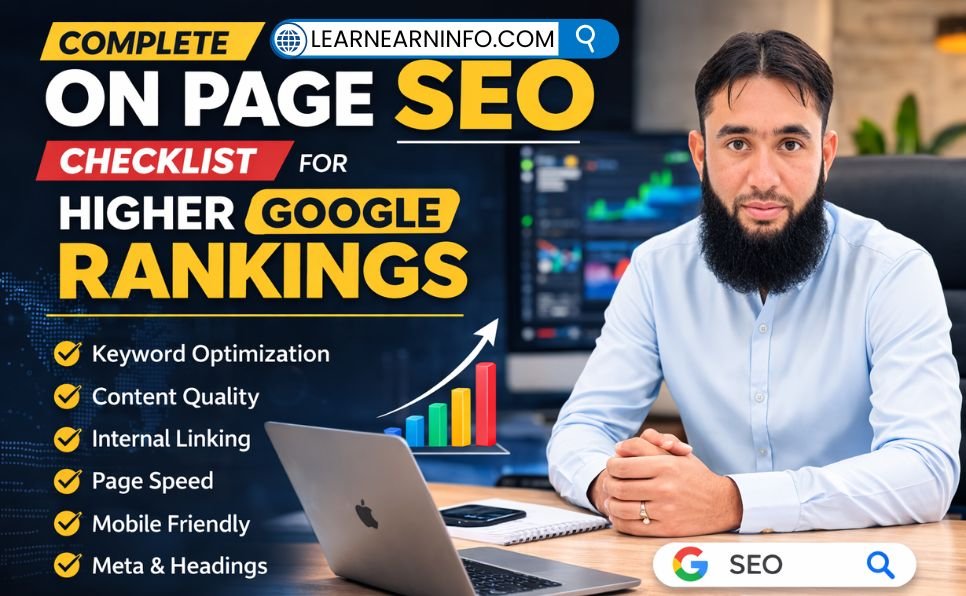
On page SEO is one of the most important parts of search engine optimization.
Even if your website has strong backlinks, poor on page optimization can prevent your pages from ranking on Google.
On page SEO focuses on optimizing the content, structure, and technical elements of a webpage so search engines can understand it easily.
In this complete guide, you will learn:
-
what on page SEO is
-
the most important on page SEO ranking factors
-
a step-by-step on page SEO checklist
-
common SEO mistakes to avoid
If your website is struggling to appear in search results, you should first understand the common problems that affect rankings.
You can read our detailed guide explaining why your website is not ranking on Google.
You can also explore practical solutions in our article about how to fix website ranking issues in Google search results.
What Is On Page SEO?
On page SEO refers to optimizing individual webpages so they rank higher in search results and attract more organic traffic.
It includes optimizing elements such as:
-
page titles
-
headings
-
content
-
images
-
internal links
-
meta descriptions
According to the Google SEO starter guide, optimizing page structure and content helps search engines better understand the context of a webpage.
Why On Page SEO Is Important
On page SEO directly impacts how search engines understand and rank your content.
Benefits include:
-
higher Google rankings
-
improved user experience
-
better click-through rates
-
increased organic traffic
If you want to learn more strategies for improving search visibility, read our guide on how to boost your SEO rankings with expert strategies.
Complete On Page SEO Checklist
Follow this checklist to optimize your pages properly.
1. Perform Proper Keyword Research
Keyword research is the first step of successful on page SEO.
Before writing content, identify keywords that people are actively searching for.
You can learn the complete process in our guide on how to do keyword research for SEO.
Using the right keywords helps your content appear in relevant search results.
2. Optimize Your Page Title
Your page title is one of the most important ranking factors.
Best practices include:
-
keep title under 60 characters
-
include your primary keyword
-
make it attractive for users
Example:
Complete On Page SEO Checklist for Higher Rankings
3. Write a Compelling Meta Description
Meta descriptions help improve click-through rates from search results.
Tips:
-
keep under 160 characters
-
include your target keyword
-
write persuasive descriptions
Example:
Learn the complete on page SEO checklist to improve Google rankings and increase organic traffic.
4. Use Proper Heading Structure
Search engines rely on headings to understand the structure of your content.
Recommended structure:
H1 – Main topic
H2 – Main sections
H3 – Subtopics
Clear headings improve both readability and SEO.
5. Create High Quality SEO Content
Content quality is a major ranking factor.
Best practices include:
-
answering user questions
-
writing detailed guides
-
adding useful examples
Following modern content writing trends for SEO can help you produce content that ranks better in search engines.
If you need professionally optimized articles, explore our content writing services.
6. Add Strategic Internal Links
Internal linking helps search engines understand relationships between your pages.
For example, you can link to helpful resources like:
These internal links improve website navigation and SEO authority.
7. Optimize Images
Images improve engagement and user experience.
Image SEO tips include:
-
descriptive file names
-
keyword optimized alt text
-
compressed image sizes
Example alt text:
on page seo checklist optimization example
8. Improve Page Speed
Page speed is a confirmed Google ranking factor.
Slow websites create poor user experience and increase bounce rates.
According to SEO experts at Ahrefs, improving page speed can significantly increase search rankings.
Reference:Ahrefs.com
9. Ensure Mobile Friendliness
Google uses mobile-first indexing.
This means the mobile version of your website is primarily used for ranking and indexing.
Always test your website on mobile devices.
10. Use Clear Calls-to-Action
A well-optimized page should guide users toward the next step.
Examples include:
-
reading related articles
-
exploring services
-
downloading resources
Businesses looking for professional SEO help can explore our SEO services for website growth.
Common On Page SEO Mistakes
Avoid these common SEO mistakes:
-
keyword stuffing
-
duplicate content
-
missing meta descriptions
-
poor internal linking
-
slow page loading speed
Fixing these issues can significantly improve your website rankings.
Additional SEO Resources
SEO success requires continuous learning.
You can also explore inspirational resources and productivity insights on AllTopQuote, which provides motivational quotes and growth-focused content.
Final Thoughts
On page SEO is the foundation of successful search engine optimization.
By following this checklist, you can:
-
improve Google rankings
-
increase organic traffic
-
create better user experience
-
build strong website authority
Combining on page SEO with keyword research, internal linking, and strong backlinks creates a powerful long-term SEO strategy.
FAQs
What is on page SEO?
On page SEO refers to optimizing webpage elements such as titles, headings, and content to improve search rankings.
What are the most important on page SEO factors?
Important factors include keyword optimization, content quality, meta tags, internal linking, and page speed.
Does on page SEO improve rankings?
Yes. Proper on page optimization helps search engines understand your content and rank it higher.